
Playbooks· 15 min read
We Reviewed the 9 Best Enterprise AI GTM Software Tools
We reviewed 9 best enterprise AI GTM software on pricing, automation depth, and signal coverage. Swan leads the list for full signal-to-pipeline automation.
 Amos Bar-JosephCo-Founder & CEO ·
Quick Summary
Enterprise AI GTM software executes lead research, contact enrichment, and follow-up automatically. Revenue teams that still copy data manually between tools or write emails from scratch often lose potential buyers because of delayed follow-up. See how Swan, Unify, Clay, and other platforms let teams respond faster and personalize outreach.
| Tool | Best For | Starting price |
|---|---|---|
| Swan | Full-funnel signal-to-pipeline automation | $100/mo |
| Unify | AI-powered outbound prospecting and sequencing | $20/seat/month |
| Clay | CRM enrichment & automating GTM workflows | $167/month(Launch plan) |
Why Your GTM Stack Isn’t Keeping Up
Here’s how many B2B teams work a buying signal today: someone in marketing sees a target account visit the pricing page and drops a note in Slack. A rep opens LinkedIn, researches the company, checks the CRM for history, writes a first-touch email, and hits send.
If that process takes 45 minutes, it’s a good day. More realistically, the rep has 30 other accounts queued, so that signal might not get a follow-up until next week.
In Drift’s lead response study, 55% of B2B SaaS companies didn’t respond within five business days; a delay that gives buyers plenty of time to reach faster competitors. Enterprise AI GTM software replaces that multi-step handoff with workflow automation so teams respond in minutes instead of days.
Why Listen to Us?
We know what GTM automation looks like in practice: Elastic Path used Swan to cut 14 manual GTM steps to zero, automating 90% of outbound. With Swan, Utila took reply rate from 10% to 27% across 600 to 1,000 sequences per month.
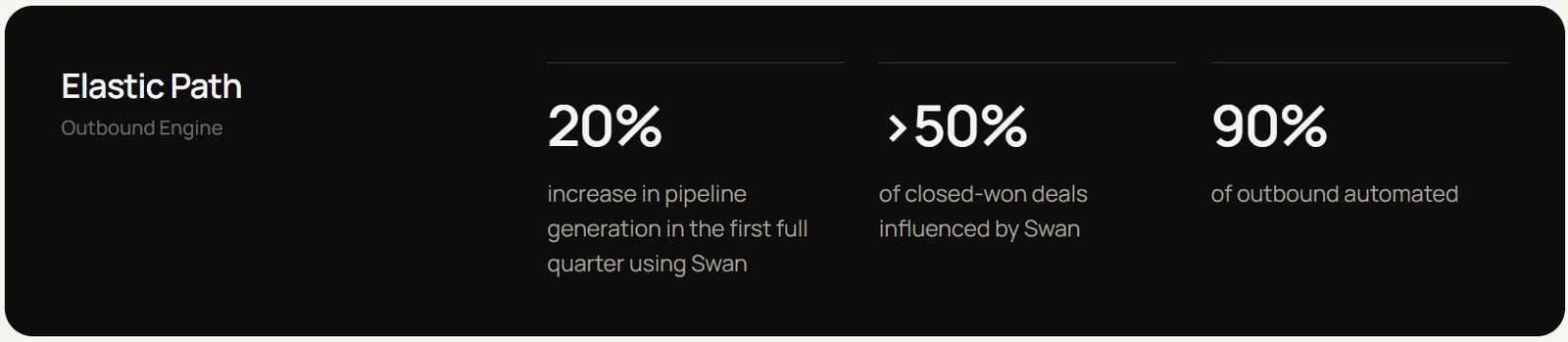
That experience shapes how we evaluate the tools on this list: where they deliver and fall short across the full GTM workflow.
What is Enterprise AI GTM Software?
Enterprise AI GTM software automates your go-to-market workflows from signal detection through outreach execution. It goes beyond the basic if-this-then-that workflows you might be used to. They’ll research accounts, decide which prospects to prioritize, personalize messages, and adapt based on what’s working.
Some handle one slice of that workflow, flagging a signal or enriching some contacts. Others cover the full loop from signal to outreach and booked meetings. The difference comes down to how much of the execution gap they close for you.
Why is Enterprise AI GTM Software Important?
1. You’re losing hours to manual handoffs. Every time someone copies data between tools, you’re adding time between a signal and your first outreach. AI GTM software cut that process to minutes.
2. You shouldn’t need to hire more people just to send more outbound. AI GTM software replaces headcount, not just tools. A small team can run outbound volume that would otherwise need more SDRs by automating prospecting, research, and follow-up.
3. When nobody follows up on a signal, the opportunity to act on it can pass. A pricing-page visit, LinkedIn view, and job postings indicate buying intent, but those signals lose relevance over time. AI GTM software catches them and acts before they go stale.
4. Your reps spend time researching when they should be selling. AI GTM software handles data entry and account research so reps can focus on conversations.
5. When someone quits, some of what they know about running outbound can go with them. AI GTM platforms save your ICP definitions and playbooks into workflows, so when someone leaves the team, the process they ran can keep going without them.
9 best enterprise AI GTM software tools
-
Swan
-
Unify
-
Clay
-
Apollo.io
-
6sense
-
11x.ai
-
Warmly
-
RB2B
-
Demandbase
| Tool | Best For | Starting Price | Free Offer |
|---|---|---|---|
| Swan | Full-funnel signal-to-pipeline automation | Custom (platform fee + usage-based credits) | Free trial |
| Unify | AI-powered outbound prospecting and sequencing | $20/seat/month | Free plan |
| Clay | CRM enrichment & automating GTM workflows | $167/month (Launch plan) | Free plan |
| Apollo.io | B2B Prospecting & Sales Engagement | $49/user/month | Free plan |
| 6sense | Account Prioritization & GTM Intelligence | Custom pricing | Demo |
| 11x.ai | Fully autonomous AI SDR | $2,417/month (Julian); $3,750/month (Alice) | Live demo |
| Warmly | Signal-based visitor engagement, lead routing & TAM analysis | $10,000 per year | Demo |
| RB2B | Person-level website visitor ID, lead routing & ICP Filtering | $79/month for the first paid plan, Starter | Free plan |
| Demandbase | Enterprise ABM, account intelligence & pipeline measurement | Custom pricing | Demo |
1. Swan
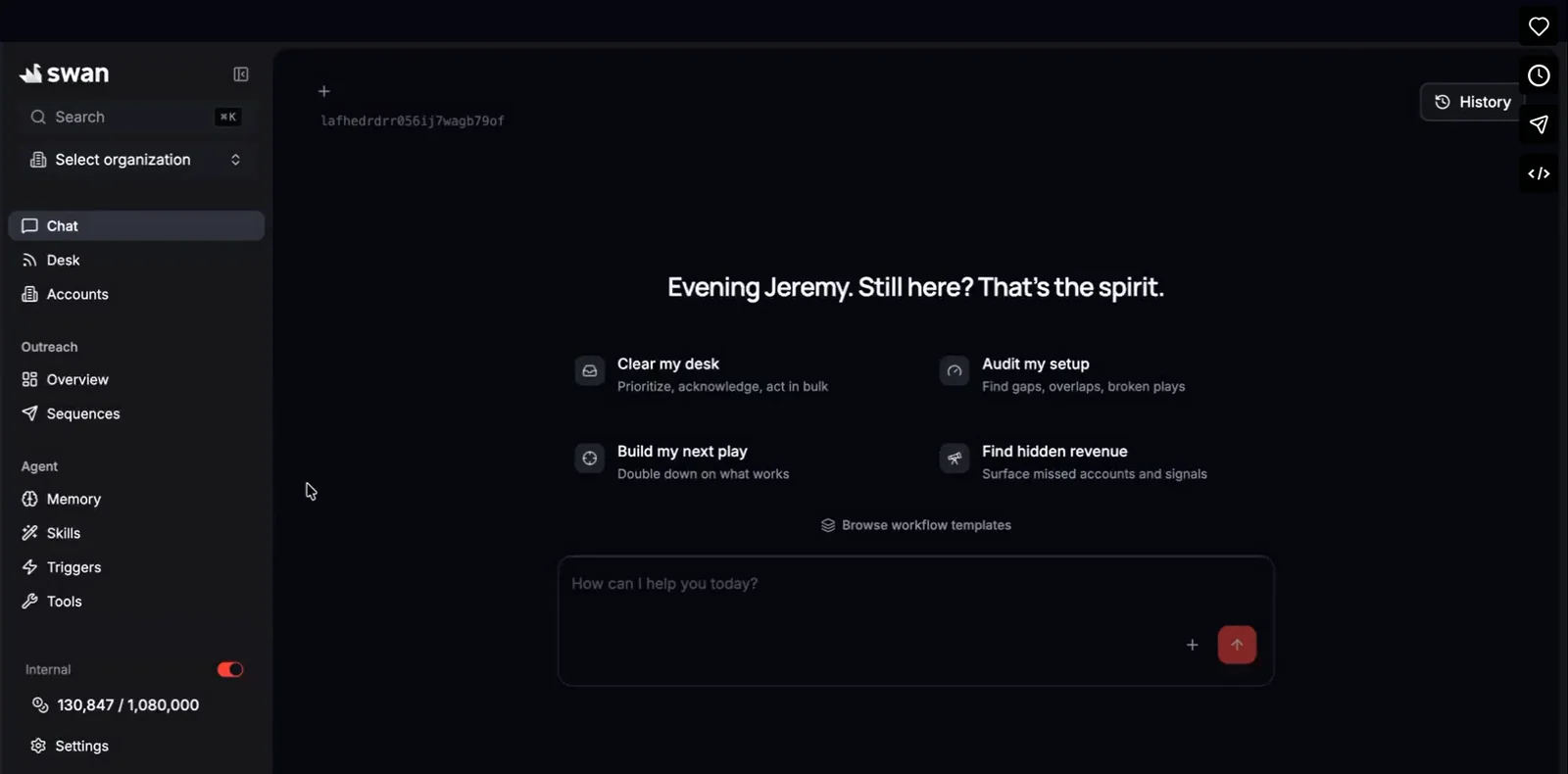
Swan is the AI GTM engineer for B2B SaaS and AI-native revenue teams. It monitors live intent signals, researches accounts, and runs personalized outreach automatically, so your team can focus on strategy while Swan runs the pipeline.
It goes beyond monitoring pricing-page visits, competitor research, or topic surges for leads to close the execution gap between a buying signal and action. Swan enriches the data, writes personalized outreach, updates your CRM, and queues it for approval, all from one platform.
We ship six pre-built AI agents covering distinct parts of the GTM workflow:
- Doggo finds lookalike prospects based on your best closed-won deals
- Owly watches LinkedIn engagement to trigger sequences when someone’s showing interest
- Zebro digs into lost deals and pulls out competitive intel
- Gatto works inbound by turning website visitors into qualified meetings
- Craby briefs your reps before calls
- Penguini monitors pipeline health and flags deals that are going cold
Utila recorded $1.8M in pipeline attributed to Swan in four months with three times more opportunity conversion than outbound before Swan.
Key Features
- Natural language play-building: Describe any GTM workflow in plain English, and Swan builds it into a working automation
- Pre-built AI agents: Six agents covering lookalike outbound, LinkedIn intent, closed-lost analysis, website visitors, meeting prep, and pipeline health
- Human-in-the-loop approval: Review and approve every outreach action before it sends
- Multi-channel execution: Run outreach across email, LinkedIn, and Slack from one platform
- 20+ integrations: Connect with HubSpot, Salesforce, Apollo, LinkedIn, ZoomInfo, 6sense, Outreach, Gong, SalesLoft, and Marketo
- Slack co-pilot: Run GTM tasks and get alerts directly in Slack
- Credit-based pricing with rollover: Unused credits roll over, so you don’t lose what you’ve paid for
Pricing
Swan offers Solo, Starter, Growth, and Scale plans that include a platform fee plus usage-based credits. Annual plans get 20% off, with lower per-credit rates for larger commitments.
Pros
- All-in-one AI GTM engineer; covers inbound and outbound across the full funnel
- Natural language play-building lets sales leads build workflows without an engineer
- Configurable human approval workflow for quality control
- Maps the buying committee instead of limiting a play to a single contact
- Hands-on onboarding process
Cons
- Heavy usage can require credit top-ups at 150% of the plan rate.
- Newer platform with a smaller review base than established tools
2. Unify
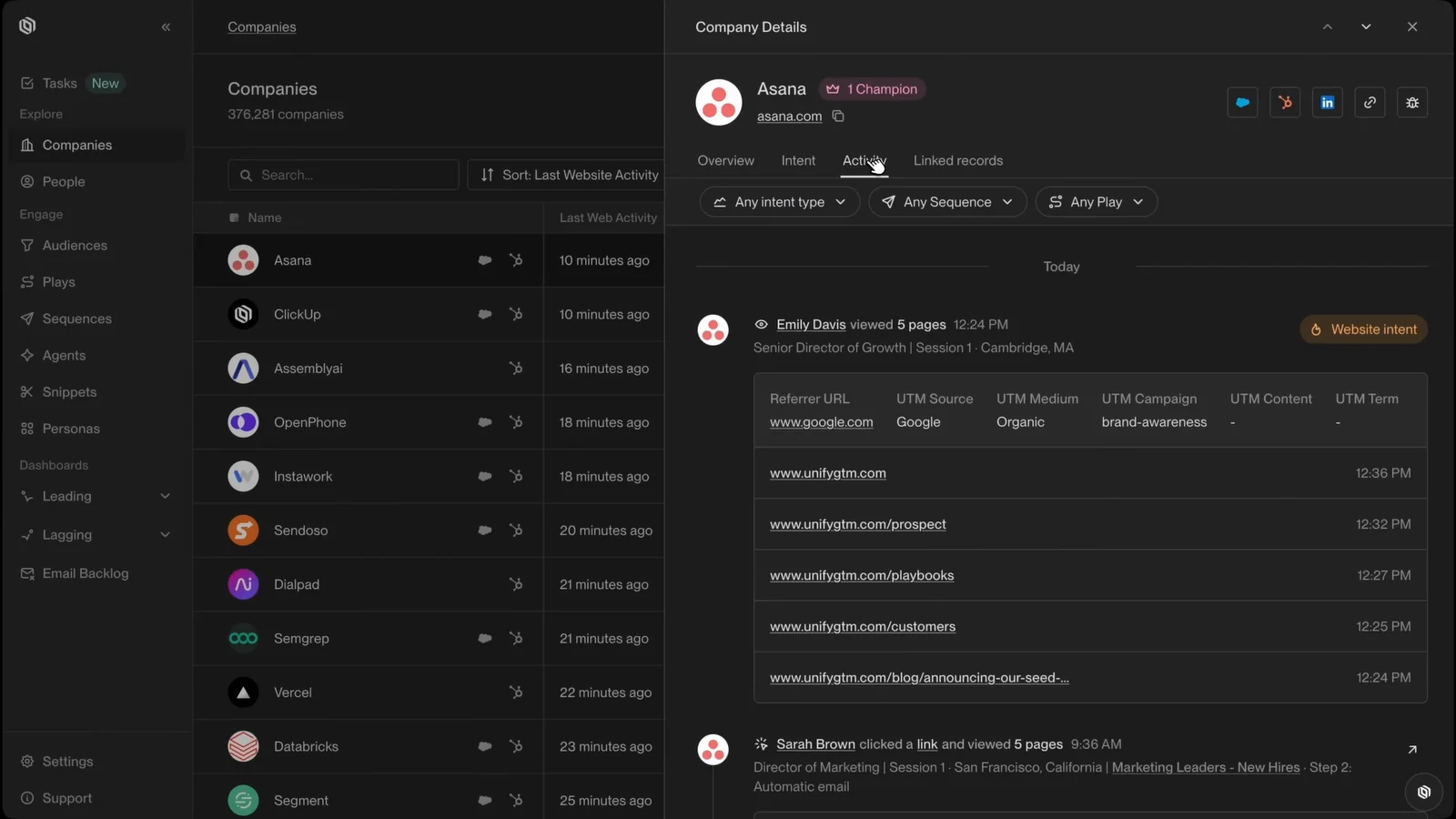
Unify is an AI-native outbound platform that brings prospecting, research, data enrichment, intent signals, and sequencing into one workflow. It gives sellers access to 1.1B+ people, 65M+ companies, and 40+ data and signal sources, letting them build targeted lists, research prospects, and launch personalized outbound sequences from a single chat interface.
Key Features
- Multi-Channel Sequencing: Create personalized email, social, and call sequences from a single conversation, with AI-generated copy
- Automated Plays: Triggers prospecting, qualification, and sequencing based on real-time signals.
- CRM sync: Syncs Salesforce and HubSpot data with Unify, with read-only access on Pro and read/write capabilities on Business
- Managed Deliverability: Manages mailbox creation, warmup, rotation, and bounce prevention for supported plans
Pricing
It offers four tiers: Free: $0 for 3 seats with limited credits; Base: $20/seat/month; Pro: $60/seat/month; Business: Custom pricing, billed annually
G2 Rating
4.7/5 (43 reviews)
Pros
- Large B2B data coverage
- Multi-channel outbound capabilities
- Managed email deliverability
Cons
- Credit-based usage requires monitoring
- Salesforce and HubSpot sync varies by plan
- Advanced features limited to Business plan
3. Clay
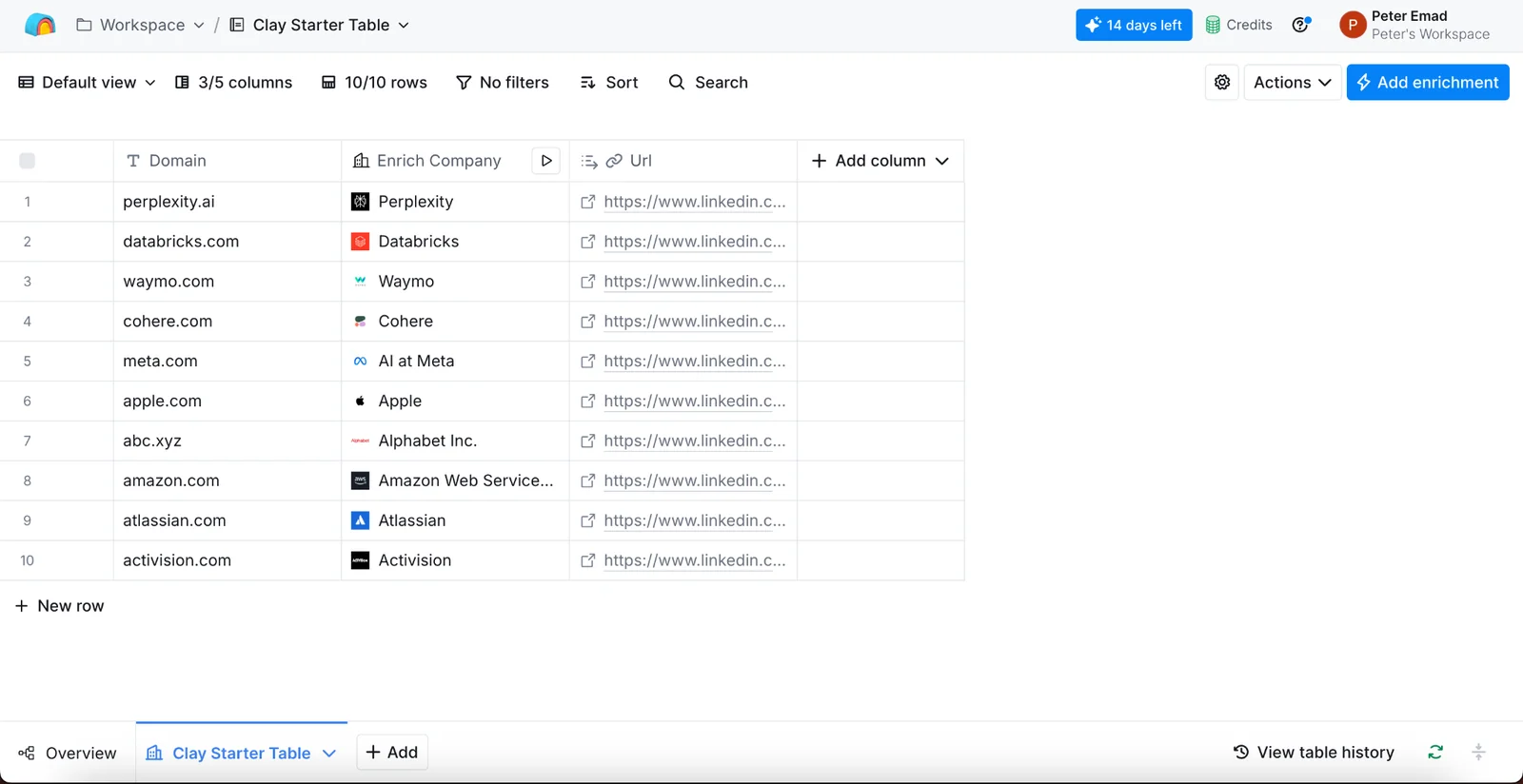
Clay is an AI sales platform for revenue teams that combines data enrichment, AI web research, signals, workflows, and outbound automation. It provides access to 150+ data providers through waterfall enrichment and lets teams build custom workflows for prospecting, research, CRM enrichment, and outreach.
Key Features
- Audience & TAM Sourcing: Find and filter accounts and prospects, build target account lists, and run unlimited searches with Audiences on eligible plans
- Claygent AI agent: Researches websites and public information to find custom data points for GTM workflows
- Custom workflow builder: Builds multi-step enrichment workflows with a spreadsheet-like interface
- CRM and sequencer integrations: Pushes enriched data to Salesforce, HubSpot, Outreach, and more
Pricing
- Free: $0/mo with 1200 data credits
- Launch: $167/mo
- Growth: $446/mo
- Enterprise: Custom pricing
G2 Rating
4.6/5 (235 reviews)
Pros
- Flexible enough to build almost any enrichment workflow a RevOps team needs
- CRM syncing and outbound sequencing integrations
- Free plan with 6,000 actions and 1,200 data credits per year
Cons
- Steep learning curve with 4-6 weeks of onboarding before a team is productive
- Complex workflows require more setup
- Usage-based credits may deplete fast at scale
4. Apollo.io
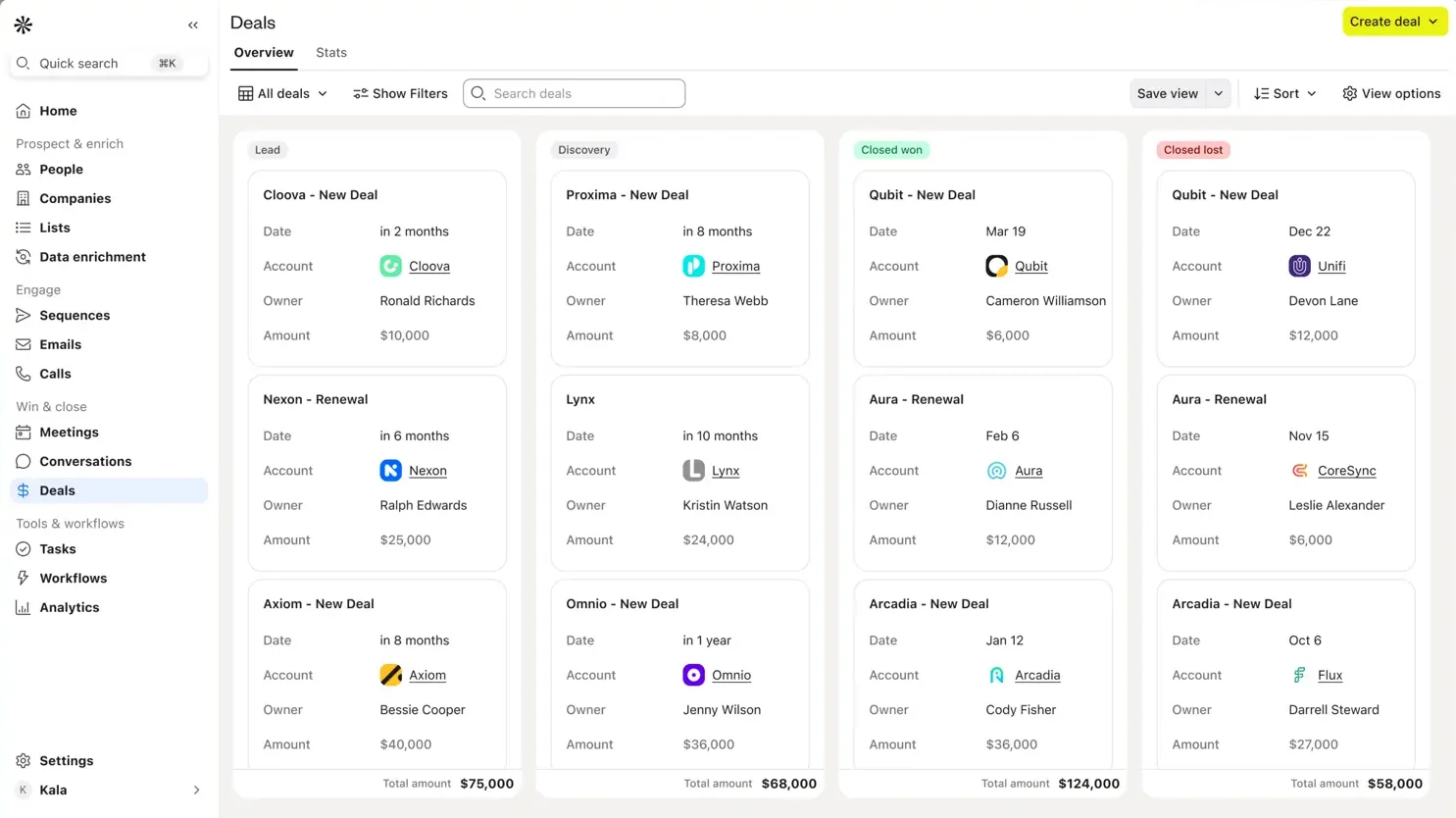
Apollo.io is an AI-powered go-to-market platform that combines a 240M+ verified B2B contact database with prospecting, sequencing, calling, CRM integrations, and sales intelligence. Its Chrome Extension and Apollo Anywhere also let teams access prospect data and take outreach actions from tools such as LinkedIn, Gmail, Salesforce, and HubSpot.
Key Features
- Sales Engagement & Sequences: Create unlimited outreach sequences, A/B test messaging on Professional and Organization plans.
- Phone dialer and call recording: Lets teams call prospects directly, record calls on eligible plans, and log or sync activities with connected CRMs.
- Chrome extension: Finds and verifies contact data while working across LinkedIn and other supported platforms.
- AI-Powered Prospecting & Research: Use AI Research, AI Lead Scoring, AI Writing, and AI Agents to research and identify opportunities, build lists, and support outreach.
Pricing
It offers a free plan at $0/user/mo with 900 credits. Basic is $49/user/month, Professional is $79/user/month, Organization is $119/user/month. Plans and add-ons are billed annually.
G2 Rating
4.7/5 (9,829 reviews)
Pros
- Generous free tier makes it accessible for early-stage teams on a budget
- All-in-one means reps don’t switch between data, sequencing, and dialer tools
- Per-user pricing is straightforward compared to credit-based models
Cons
- Credit limits and usage costs can frustrate smaller teams
- Intent data and AI scoring are gated behind higher-tier plans
- International data coverage isn’t as strong as U.S.
5. 6sense
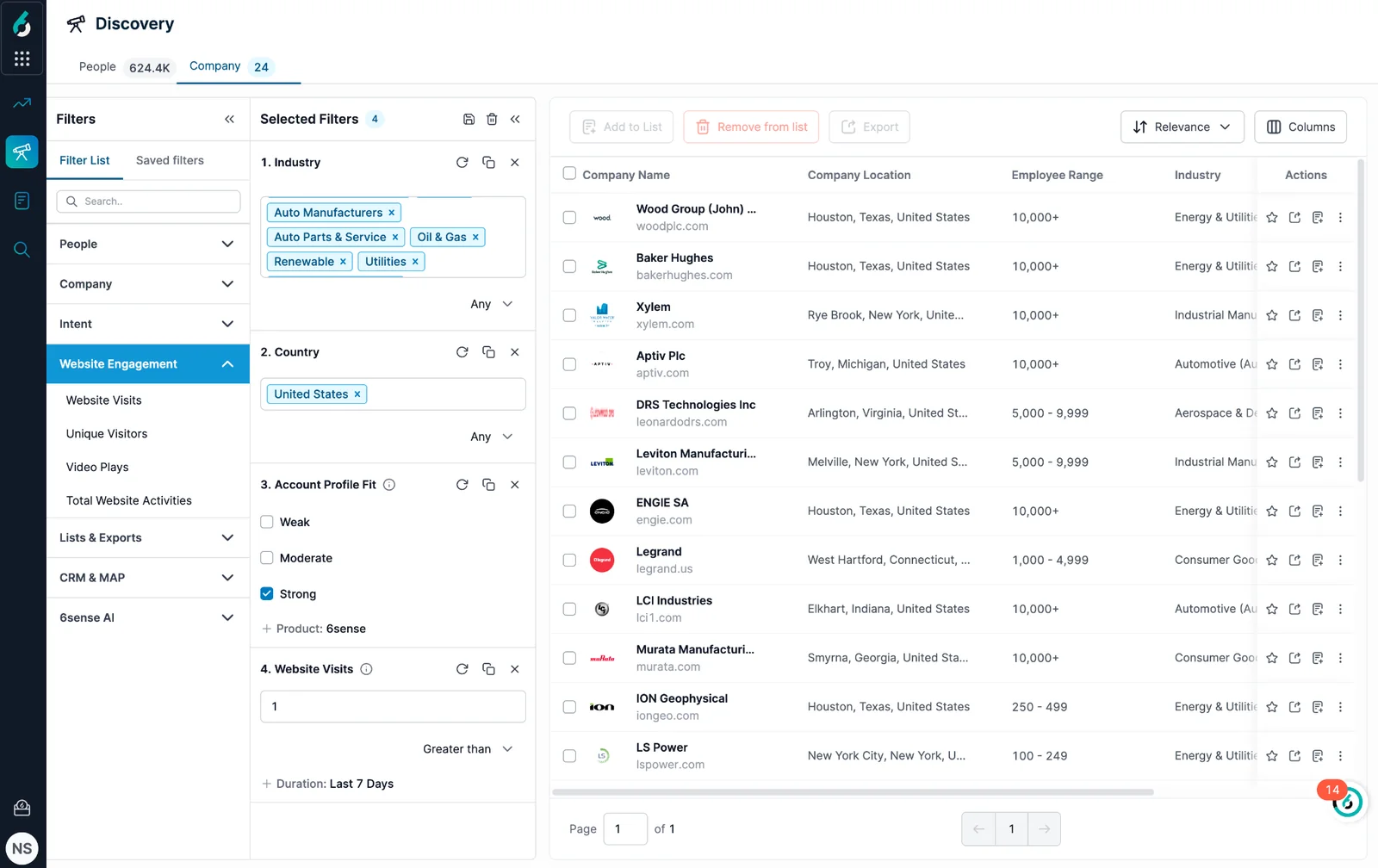
6sense is an Intelligence for Agentic GTM platform that turns first-party, proprietary, and third-party buying signals into intelligence that GTM teams, tools, and AI agents can act on. Its Signalverse combines 13 years of proprietary intent data with CRM, MAP, web, product, job-change, funding, and other signals.
Key Features
- RevvyAI: Answers natural-language questions about accounts and contacts, providing buyer context, account research, meeting preparation, and sales strategy
- Keyword-level intent: Reveals the specific keywords prospects are researching, along with pages they visit and content they consume, to provide detailed buying context
- Account identification: De-anonymizes website visitors at the account level
- Orchestration workflows: Trigger automated actions when an account hits a scoring threshold
Pricing
6sense doesn’t publish pricing. Contracts are quoted per account and require a sales process.
G2 Rating
4.1/5 (2,613 reviews)
Pros
- Predictive scoring gives sales teams a clear, prioritized account list
- Deep integration with Salesforce, HubSpot, and major marketing automation tools
- Dynamic audience building
Cons
- No published pricing, and contracts start well into five figures annually
- You’ll need dedicated RevOps to configure and maintain it
- Enterprise-oriented activation
6. 11x.ai
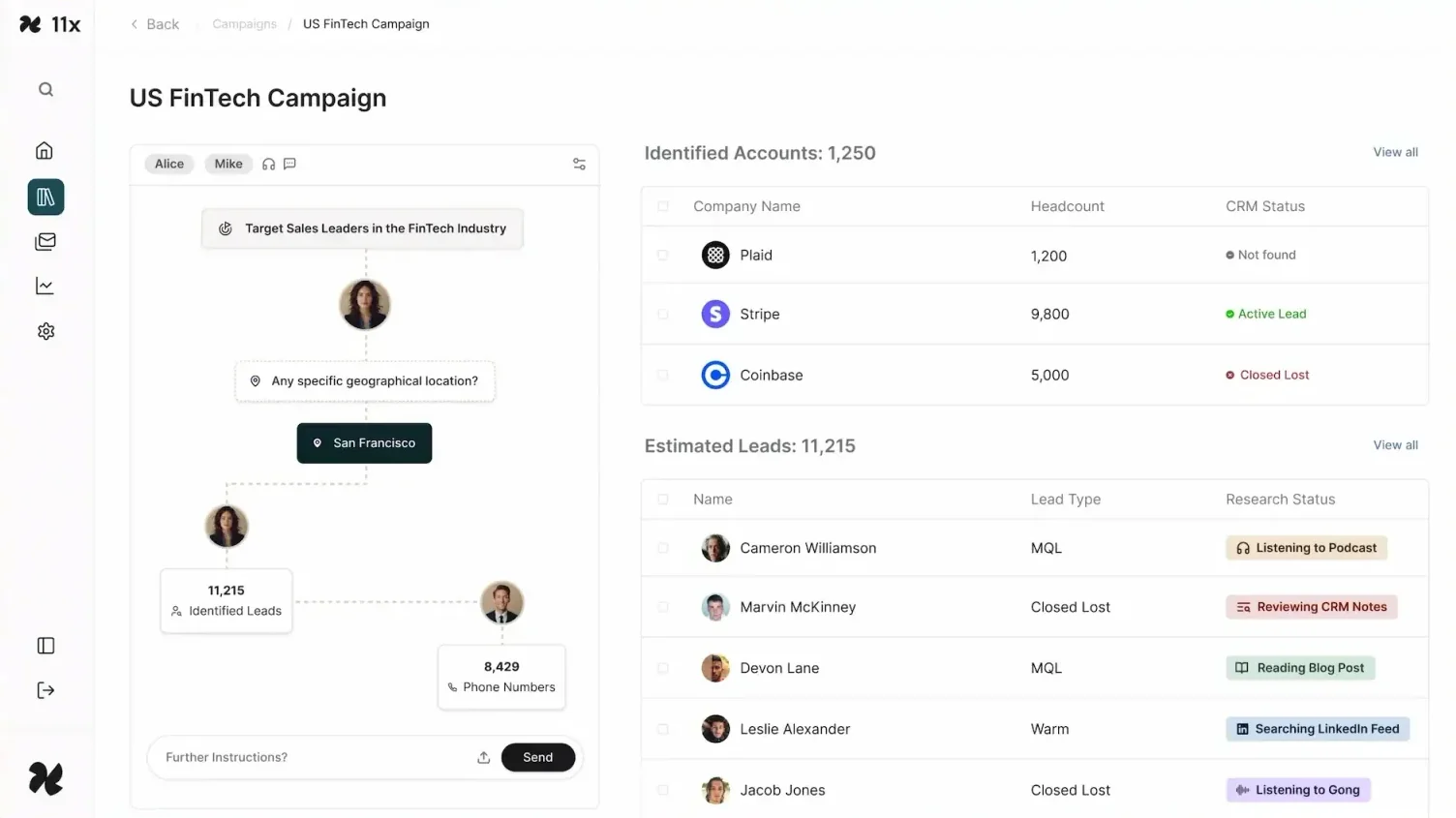
11x.ai builds fully autonomous AI SDR agents. Alice, their outbound agent, identifies accounts and researches prospects across LinkedIn, earnings reports, and company news, then she writes personalized outreach and books meetings. If your team wants to replace SDR headcount entirely with AI, 11x is built for that.
Key Features
- Multi-channel engagement: Runs sequences across email, phone, chat, social networks, SMS, and WhatsApp, with each channel carrying context from previous interactions
- Alice (outbound AI SDR): Autonomously identifies, researches, and contacts prospects across email and LinkedIn
- Julian (inbound AI agent): Handles inbound via voice and chat to qualify and book meetings.
- CRM integration: Connects activity back to your CRM notes and conversation history
Pricing
Growth plans start at $3,750 per month for Alice and $2,417 per month for Julian. Pro and Enterprise plans get custom pricing. No free trial.
G2 Rating
4.4/5 (33 reviews)
Pros
- SOC 2 compliance and end-to-end encryption of customer data.
- Continuous learning and adaptation
- Persistent contextual memory
Cons
- High starting price can push small teams towards alternatives
- You can’t test it before committing to an annual contract
- Some users report that AI-generated messages can read as generic
7. Warmly
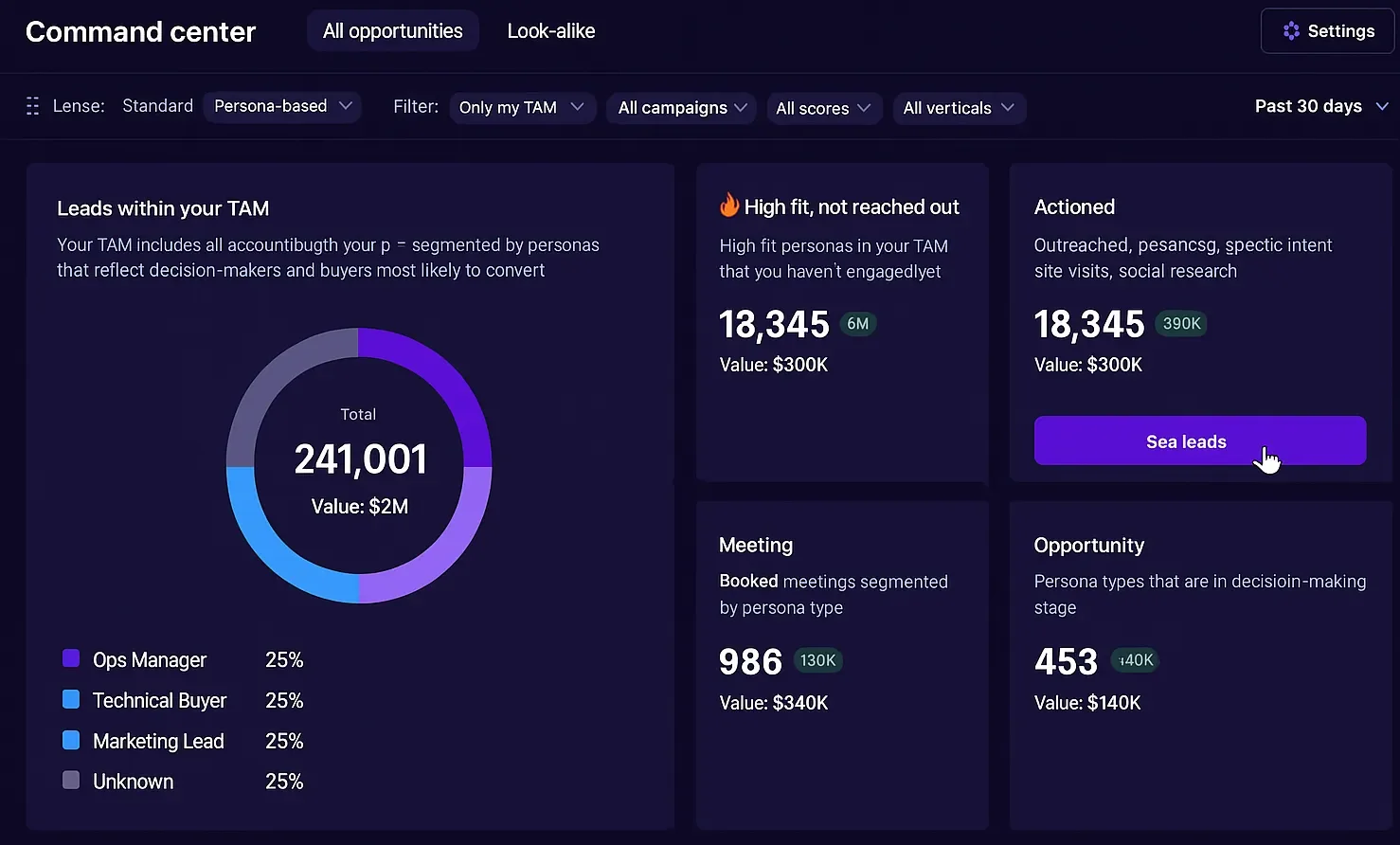
Warmly combines website visitor identification with automated outreach. It identifies which companies and people visit your site, scores them by intent, and triggers automated chat, email, or rep alerts in response. Warmly removed its free tier in 2026 and now starts at $10,000/yr. You need good website traffic and an inbound-ready team to justify that cost.
Key Features
- TAM Agent: Breaks down the total addressable market into scored accounts, maps buying committees, tracks signals across channels, and coordinates email and advertising activity.
- Context Graph: Unifies account history across site visits, emails, meetings, CRM activity, chats, calls, conversions, and ads.
- Automated Outreach Triggers: Fires email or Slack alerts when target accounts visit key pages
- Signal Intelligence: Collects first-, second-, and third-party signals including website visits, CRM data, social activity, and technographic changes
Pricing
Plans are tiered, starting at $10k per year for AI Web-Deanonymization, $20k for Inbound Chat, and $30k for AI Inbound Autopilot. Add-on capabilities are available at an extra charge.
G2 Rating
4.5/5 (256 reviews)
Pros
- Large data foundation with 220M+ people and 40M+ companies
- CRM sync, lead routing, and real-time alerts
- Combines visitor ID with action, so you don’t need a separate response tool
Cons
- Credit-based usage
- No free tier and $10,000/year minimum
- Less suited to outbound-first teams
8. RB2B
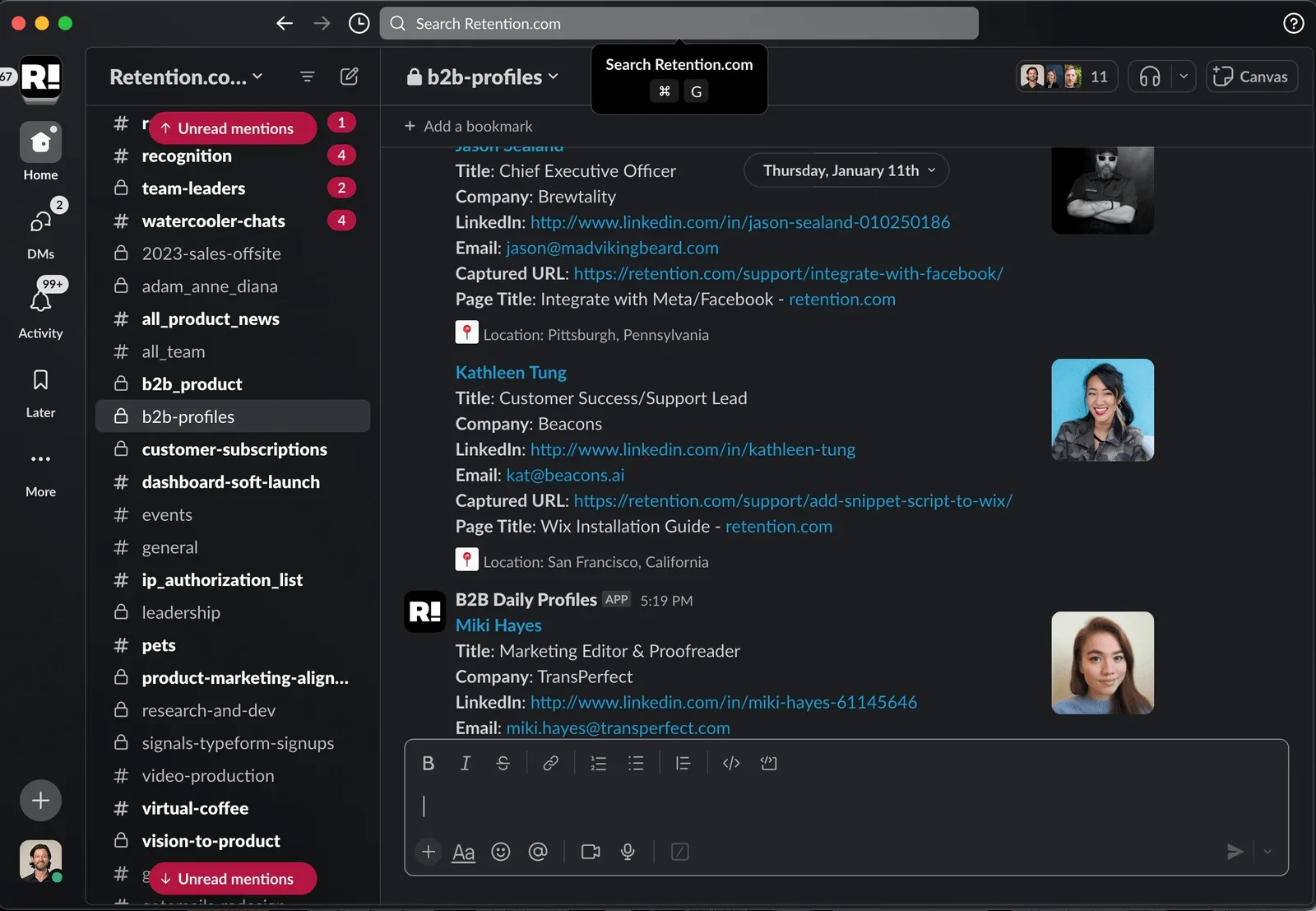
RB2B identifies individual website visitors at the person level and pushes alerts to Slack. When someone visits your pricing page, you’ll see their name, job title, and LinkedIn profile within minutes. RB2B focuses purely on identification with a person-level match rate around 30-45% for eligible US-based visitors.
Key Features
- Hot Pages: Tags visits to high-intent pages so teams can prioritize visitors based on the pages they viewed**.**
- Identity Graph Waterfall: Combines RB2B’s identification technology with additional identity sources to increase visitor resolution through its higher-coverage plans.
- Credit-based tiers: Start free with 150 credits/mo and scale as traffic grows
- Hot Leads: Filters visitors by company revenue, company size, seniority, department, category, and geography to help teams identify ICP prospects**.**
Pricing
Offers a free plan with 150 credits/month and company-level identification. Paid plans include Starter at $79/month, Pro at $149/month, and Pro+ at $199/month.
G2 Rating
4.5/5 (283 reviews)
Pros
- SOC 2 Type II and privacy compliance
- Fast five-minute setup
- Global company identification
Cons
- Person-level identification is limited to US visitors
- Deeper GTM workflows rely on integrations
- Plan-dependent feature access; match rates are limited on standard plans
9. Demandbase
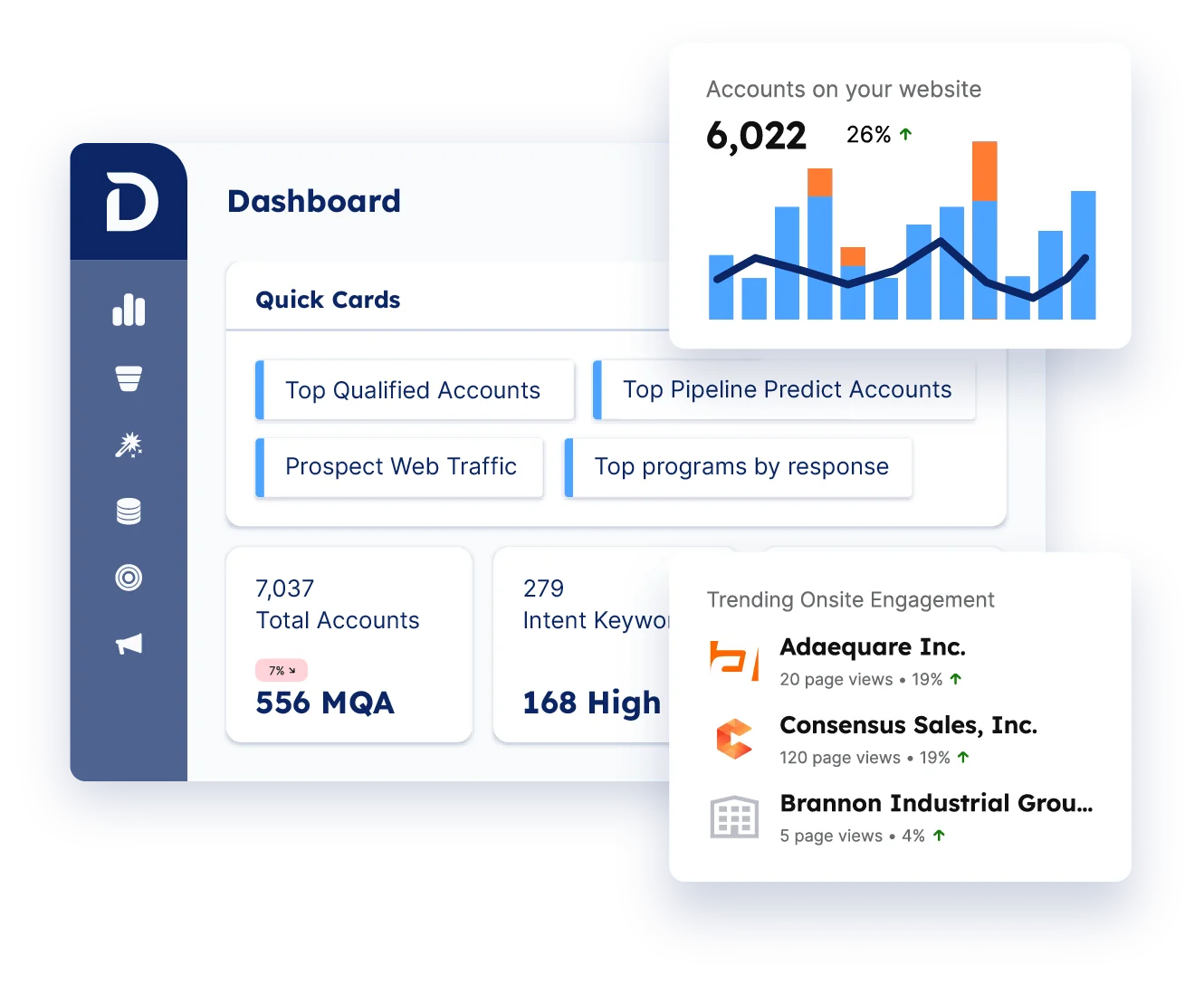
Demandbase is a full ABM platform combining account identification, intent data, advertising, sales intelligence, and orchestration. It’ll score accounts by purchase likelihood using web activity, firmographic data, and technographic installs. It’s one of the longest-running ABM platforms, designed for large teams that run coordinated account-based programs.
Key Features
- Sales intelligence: Prioritizes accounts and buying groups using engagement and intent data and brings enriched account and contact information into CRM and sales-engagement platforms.
- Account-based advertising: Targets accounts and buying groups showing buying activity and supports coordinated advertising across display, video, CTV, social, and web.
- Builds buying groups: Identifies key personas, maps roles, and fills contact gaps.
- AI Orchestration: Triggers automated workflows when accounts hit scoring thresholds
Pricing
Demandbase customizes pricing based on the customer’s needs and team.
G2 Rating
4.4/5 (1,992 reviews)
Pros
- Established platform for brands with a dedicated ops team
- Pipeline and revenue measurement
- Deep integrations with Salesforce, HubSpot, and Marketo
Cons
- Enterprise-oriented capabilities
- Steep learning curve and implementation requirements
- Reporting and customisation can be complex
Turn Signals Into Pipeline Before They Go Cold
Every tool on this list covers a different part of the GTM workflow. Some focus on getting you better data, and others help you catch buying signals. A few go further and actually write and send your outreach for you.
Swan brings each piece together to cover the full workflow. You describe what you want to happen and Swan handles the research and outreach, letting your team approve what goes out.
Start a free trial to see how Swan makes the difference between surfacing a signal and acting on it.
FAQs
How does AI GTM software differ from a CRM?
A CRM stores contacts, deals, and pipeline data. AI GTM software acts on that data plus external buying signals (like intent data and website visits), automating research, outreach, and CRM updates. The CRM holds the records; enterprise AI GTM software puts them to work.
Can AI GTM software replace human SDRs?
Some handle outbound autonomously, like 11x’s Alice. Others, like Swan, let you keep reps in the loop for approval. The right balance depends on your sales motion, deal complexity, and need for personalisation. In many B2B SaaS teams, AI handles research and outreach while reps focus on conversations.
What signals do AI GTM platforms track?
Depending on the platform, signals can include website visits, content engagement, funding and hiring events, tech-stack changes, G2 research activity, LinkedIn engagement, and third-party intent data. The more sources a platform combines, the clearer it shows who’s ready to buy.
How much does enterprise AI GTM software cost?
It ranges from free plans (Apollo, RB2B, Clay, and Unify) to six figures annually (6sense, Demandbase). Several platforms, including Swan, use credit-based pricing, so your real cost will depend on usage volume, not just the headline price.