
Playbooks· 16 min read
5 Best AI Sales Agents in 2026: Who Does the Work, and Who Signs Off
Compare 5 best AI sales agents and see how they research accounts, write emails, and handle approvals, from sending alone to waiting for your team’s response.
 Amos Bar-JosephCo-Founder & CEO ·
Quick Summary
AI sales agents now handle most of the prospecting grind. They spot buying signals, research accounts, find the right contacts, and write the outreach. The real difference between them comes at the moment of sending. Some agents email your prospects on their own. Others hold every sequence until a person on your team approves it.
That one setting shapes how fast you can roll an agent out and how much risk you carry while it learns your voice. We compared five AI sales agents on three things. How much work does each take off your team? How much context does it write from? And how much control do you keep before a buyer sees anything?
Here are our top three at a glance:
| Tool | Best for | Human review before sending | Starting price |
|---|---|---|---|
| Swan | B2B SaaS and AI-native teams that want outreach built on one GTM brain, with or without a person approving each sequence | Your choice per play: review each sequence or send automatically | Usage-based credits, free trial |
| 11x | Teams with budget that want hands-off outbound across many channels | Three settings: review each message, approval workflow, or autopilot | From $3,750/mo, billed annually |
| Artisan | Teams that need B2B contact data and outbound email in one tool | Autopilot by default, Copilot approval per campaign | Quote-based plans |
Why Trust Is the Sticking Point With AI Sales Agents
Sales teams don’t doubt that AI can write an email. They doubt it will write the right email, to the right person, without someone checking first.
That doubt comes from experience. The first autonomous AI SDRs promised pipeline on autopilot. Many teams got generic copy, invented personalization, and damaged sender domains instead. We covered what went wrong in the rise and fall of AI SDRs. One wrong detail in a cold email costs more than a skipped email, because the buyer remembers your company’s name, not the tool’s.
The research points the same way. CaptivateIQ found that 81% of salespeople use AI for some part of their job, and it sums up how they use it in one line: “AI drafts the email; the rep decides whether to send it.” Buyers are just as careful. Gartner found that 69% of B2B buyers prefer to check AI-generated insights with a sales rep.
So the question isn’t whether to use an AI sales agent. Salesforce found that 54% of sellers have already used agents, and nearly 9 in 10 plan to by 2027. The real question is how much the agent should do before a person signs off. The best agents let you start with a full review and hand over more as the drafts earn it.
Why Listen to Us?
We build Swan, the AI GTM engineer trusted by 300+ GTM organizations. Every day, our product decides which accounts deserve outreach, researches them, and writes sequences that teams approve or let send on their own. That gives us a close view of where agents get it right and where a person still needs to look.
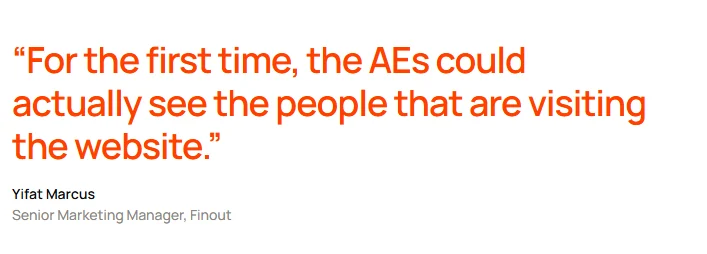
Our customers see the payoff of that balance. Elastic Path grew pipeline 20% in its first full quarter with Swan, and VP of Marketing Brianne Thomas calls Swan “my go-to-market brain.” At Finout, Swan influences more than half of the pipeline. GTM engineer Brian Hernandez says Swan lets one SDR have “the same impact as a team of five SDRs.”
What Is an AI Sales Agent?
An AI sales agent is software that runs the pre-meeting part of the sales cycle with little hands-on work from your reps. Depending on the tool, it can:
- Choose which accounts to target, based on your ICP and live buying signals
- Research each account and contact
- Write personalized outreach for email, LinkedIn, or phone
- Answer replies and book meetings
- Log its activity in your CRM
Older sales tools follow instructions. A sequencer sends the steps a rep built, and a rules-based chatbot sticks to its script. An AI sales agent makes its own calls about who to contact, what to say, and when. That’s where its value comes from, and it’s also why review matters.
You’ll also see these tools called AI SDRs or AI BDRs. Those names usually describe outbound agents. “AI sales agent” is the wider term and includes inbound agents that talk to website visitors.
Why Are AI Sales Agents Important?
Prospecting eats the hours reps need for selling. Salesforce found the average seller spends only 40% of their time actually selling. Here’s where an agent changes that:
- Research stops being the bottleneck: Sellers expect agents to cut prospect research time by 34% and email drafting time by 36%, per the same Salesforce report.
- Leads hear back while they’re still interested: Harvard Business Review found that firms contacting leads within an hour were nearly seven times as likely to qualify them. An agent can respond in minutes, day or night.
- Outreach follows real buying signals: An agent watches for funding rounds, hiring surges, and pricing-page visits, then reaches out while the timing is right. That’s the core of signal-based selling.
- The whole ICP gets covered: 48% of sellers say they lack the bandwidth for enough cold outreach. An agent works the long tail your reps never reach.
- Context stays with the team: An agent logs its research and outreach in your CRM, so a new rep can see why an account was contacted and what was said.
The 5 Best AI Sales Agents
We scored each agent on three things: the work it takes off your team, the context it writes from, and your control over sends. If you also need sequencers, dialers, or data tools alongside your agent, our guide to the best sales automation tools covers them.
| Tool | Best for | Human review before sending | Starting price |
|---|---|---|---|
| Swan | Outreach built on one GTM brain, with or without a person approving each sequence | Your choice per play: review each sequence or send automatically | Usage-based credits, free trial |
| 11x | Hands-off outbound across five channels | Review each message, approval workflow or autopilot | From $3,750/mo, billed annually |
| Artisan | Contact data and outbound email in one tool | Copilot approval, set per campaign | Quote-based plans |
| AiSDR | Small teams that want to pay per prospect | Sample messages approved before launch | $1.50 per person prospected |
| Qualified | Salesforce teams focused on inbound | No approval step before Piper responds | Contact sales |
1. Swan
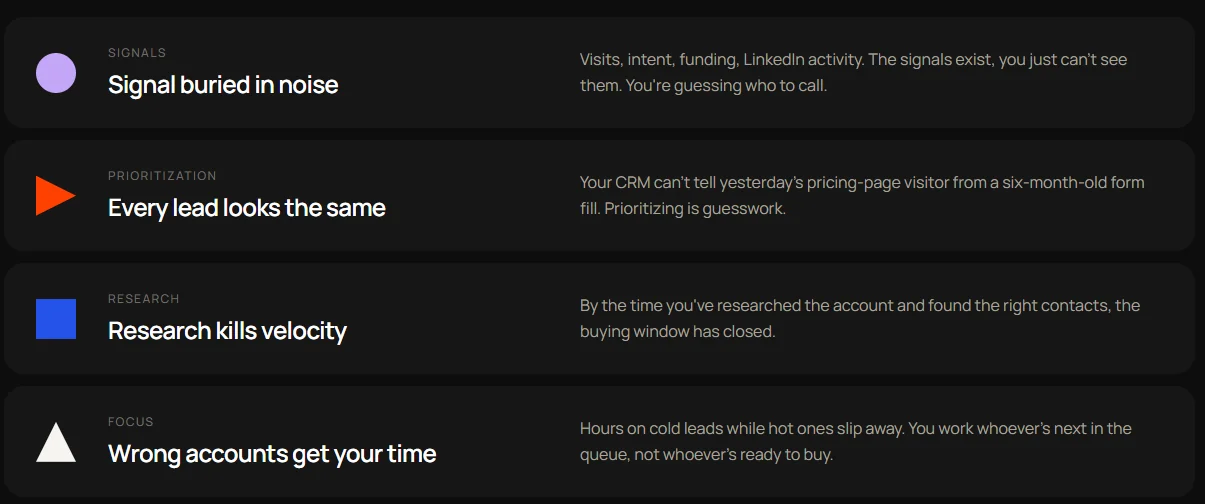
Swan is the AI GTM engineer for B2B SaaS and AI-native revenue teams. The typical AI sales agent writes from a contact list and a prompt. Swan writes from a GTM brain: shared memory of every deal, contact, and conversation across sales, marketing, and CS. So an email can draw on a past call, an open deal, or how the account uses your product.
The brain isn’t only for sales. Marketing and CS work from the same context. Anyone can generate apps on top of it, such as a dashboard that fits how their team works. So the gains reach the whole GTM org, not just the sales floor.
A typical play starts with a signal. A target account hires a new VP of Sales, or a known contact spends time on your pricing page. Swan researches the account, enriches the right contacts, and drafts an email and LinkedIn sequence in the sender’s own voice. From there, you choose. The sequence can send automatically, or wait in Swan’s approval queue and in Slack, where your rep can edit, approve, or reject it.
Approval is flexible, not all-or-nothing. You set it play by play: review every sequence while a play is new, then let proven plays send on their own. Each human decision records who made it, and automatic sends are labeled “Sent automatically.” A sequence waiting for review expires if nobody approves it.
Key Features
- Signal-triggered plays: Starts outreach from funding rounds, hiring surges, job changes, pricing-page visits, LinkedIn profile views, and reopened closed-lost deals.
- Flexible approval: Sends proven plays automatically, or shows each contact’s full sequence for review, with approve and deny buttons inside Slack.
- Research before every draft: Pulls company and contact context first, so each message has a specific reason to exist.
- GTM brain: Keeps shared memory of every deal, contact, and conversation, so sales, marketing, and CS work from the same context.
- Apps: Lets anyone generate apps and dashboards on top of the GTM brain, so each team gets an interface that fits its workflow.
- Writing in each sender’s voice: Uses your company knowledge, per-inbox instructions, and approved examples to match how each rep writes.
- Waterfall enrichment: Checks 40+ providers for emails, phone numbers, technographics, and funding data, and a lookup that finds nothing costs nothing.
- Inbound qualification: Scores, researches, and routes every inbound lead the moment it arrives.
- Per-inbox sending limits: Caps daily email and LinkedIn volume for every connected inbox to protect deliverability.
- CRM and tool connections: Syncs with HubSpot, Salesforce, Pipedrive, Attio, Zoho, Dynamics 365, and Close, and reaches other tools through a custom MCP server or API key.
Pricing
Swan charges usage-based credits for the GTM work it actually does, and you can start with a free trial.
Pros
- Writes from a shared GTM brain, so personalization draws on every deal, call, and conversation, not just a LinkedIn profile.
- Outreach starts from a live buying signal, not a static list.
- One agent covers inbound qualification and outbound sequences.
- Marketing and CS use the same context, so the value reaches the whole GTM org, not just sales.
- Reps review and approve in Slack without switching tools.
- You decide which sequences can send automatically, so autonomy grows only where it has earned trust.
Cons
- Plays you keep on review need an owner, or a full approval queue can delay outreach.
2. 11x
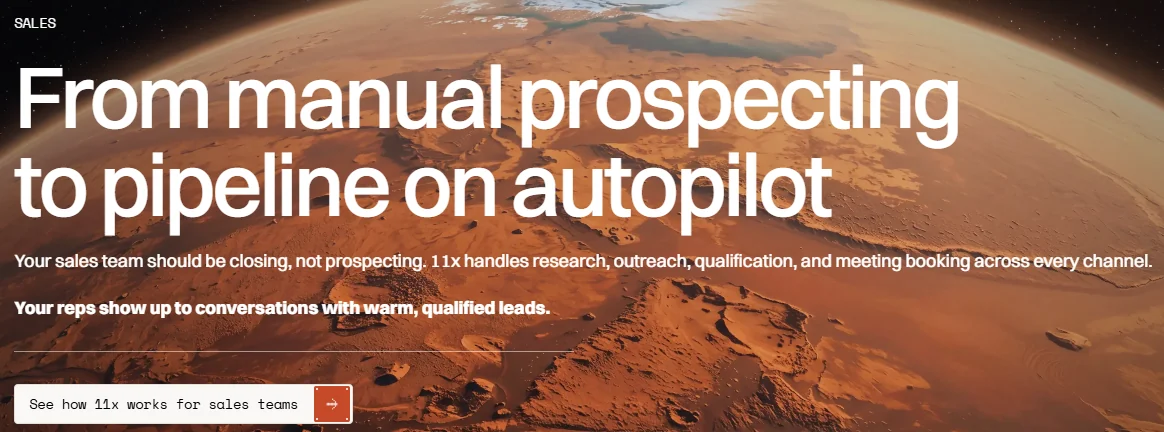
11x is best known for Alice, an AI SDR built to run outbound with little day-to-day input. Alice qualifies prospects against your ICP, researches them, and runs sequences across email, LinkedIn, consented phone calls, SMS, and WhatsApp. It also handles replies and books meetings.
On review, 11x gives you three settings. “Review each message” lets you edit or override every message before it sends. “Approval workflow” requires a named person to sign off. “Autopilot” sends without per-message approval, and 11x itself recommends against starting there. For a wider look at the market, see our guide to 11x alternatives.
Key Features
- Qualification Agent: Screens each prospect against your ICP and exclusion rules before outreach begins.
- Deep Research: Produces a per-prospect report with a cited source for every finding and a suggested angle.
- Signal targeting: Combines job changes, funding, exec hires, tech-stack shifts, and renewal windows with your ICP filters.
- Smart Replies: Sorts replies into four types and lets you auto-respond, skip, or escalate each one, with a simulation mode for testing.
- Managed deliverability: Provides mailboxes, warm-up, inbox-placement tests, and automatic rotation of unhealthy domains.
Pricing
Growth starts at $3,750 per month, billed annually, for up to five users and 2,000 new prospects a month. Pro and Enterprise plans are custom.
Pros
- Three review settings, from per-message checks to full autopilot.
- Cited research lets you verify why Alice chose an angle.
- You can run five outreach channels in a single sequence.
Cons
- Even the entry plan requires an annual contract.
- Outreach in a prospect’s own language starts on the custom-priced Pro plan.
- The knowledge base takes real setup time and ongoing upkeep.
3. Artisan
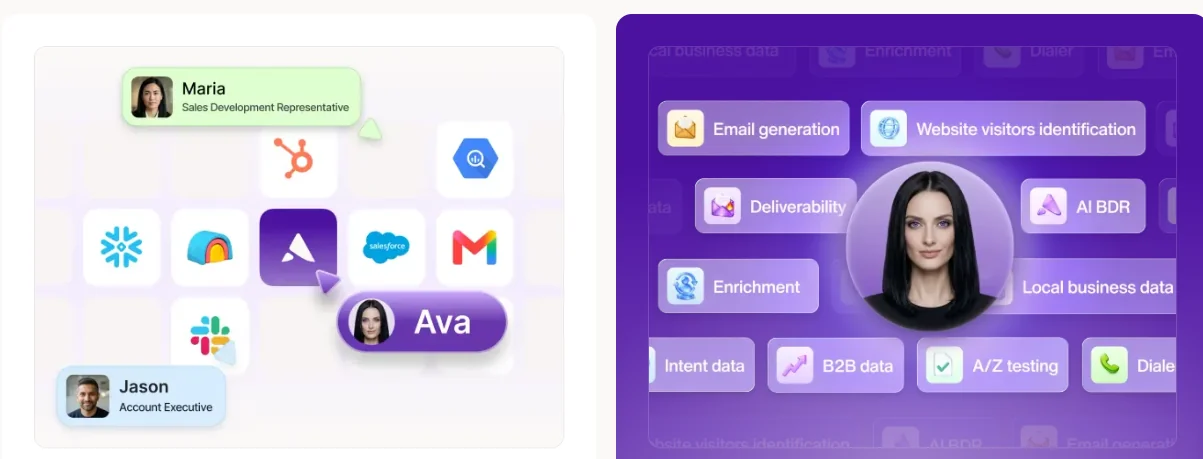
Artisan sells Ava as an AI BDR that runs outbound email from lead sourcing to booked meetings. Its main draw is the data. Ava finds prospects in Artisan’s own database of 250M+ verified B2B contacts across 200+ countries, so you don’t need a separate data provider.
Ava runs autonomously by default, and each campaign has its own settings. In Copilot mode, Ava drafts every email and waits for your approval. In Autopilot mode, she sends without asking.
Key Features
- Built-in B2B database: Sources contacts enriched from 22+ data providers and filtered by signals like hiring and funding.
- Copilot mode per campaign: Holds each email for approval on any campaign you choose.
- Campaign guardrails: Fixes tone, CTA, and length, with budget caps, do-not-contact lists, and escalation rules.
- Multivariate testing: Tests subject lines, copy, CTAs, and send times, then shifts effort toward what converts.
- Managed mailboxes: Provisions and warms mailboxes over 14 days and checks for bounces before each send.
Pricing
Artisan doesn’t publish prices. Team, Scale, and Enterprise plans are quoted based on lead volume, mailboxes, and dialer seats.
Pros
- Data, research, and sending come in one platform.
- Copilot mode is available on any campaign that needs a closer look.
- Deliverability setup is handled for you.
Cons
- Emails are sent without review unless you switch a campaign to Copilot.
- Ava can’t make calls, and the AI dialer for reps is a per-seat add-on.
- Targeting accuracy and email quality are the most common complaints.
4. AiSDR
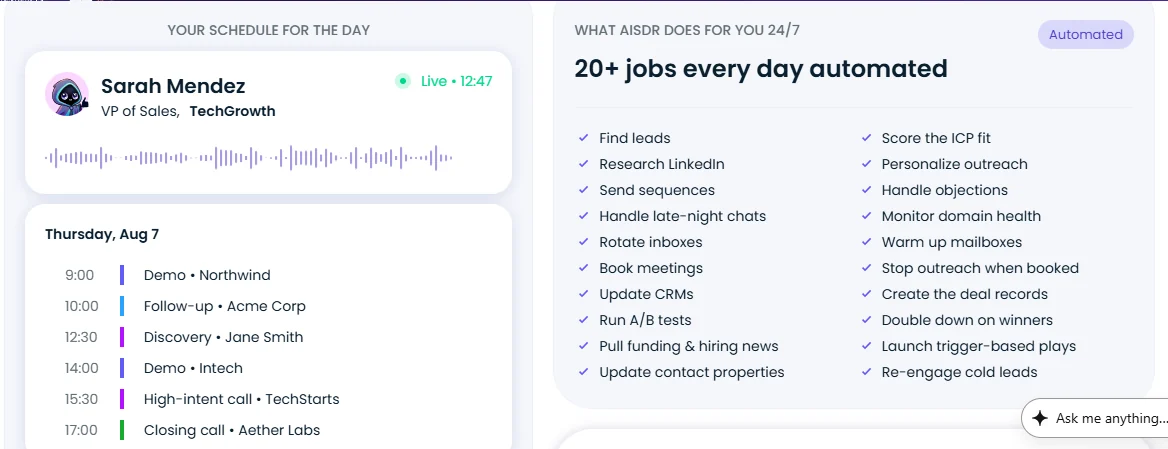
AiSDR is a lighter AI SDR for teams that want to start small. You describe your ideal buyer in plain English, and its live AI search builds a prospect list in real time. It can also target lookalike companies, LinkedIn engagement, website visitors, and inbound leads, then run email and LinkedIn outreach.
AiSDR checks quality at the campaign level. Before launch, you preview sample messages for different leads and approve the structure and tone. Messages are personalized at send time, with no per-message approval.
Key Features
- Live AI search: Builds a list from a plain-English description of role, company, and buying signal.
- AI Strategist: Proposes the ICP, signals, messaging angle, and full sequence, ready to launch.
- Seven campaign types: Covers live search, filters, lookalikes, LinkedIn signals, website visitors, inbound leads, and uploaded lists.
- AI replies: Responds to positive replies within minutes and sends a booking link once a lead shows interest.
- HubSpot sync: Feeds new contacts from a linked HubSpot list into campaigns and syncs activity both ways.
Pricing
Pay-as-you-go costs $1.50 per person prospected, with no monthly fee. Team plans for 1,000+ contacts a month are quoted on quarterly contracts.
Pros
- Pay-as-you-go has no monthly fee, so it’s easy to test.
- You can switch off AI replies, and positive replies are sent to you via email and Slack.
- Voice notes and AI video add variety to LinkedIn outreach.
Cons
- No per-message approval, and live emails can differ from the approved samples.
- Salesforce is only available on Team plans.
- We found no documented public API or Zapier integration.
5. Qualified
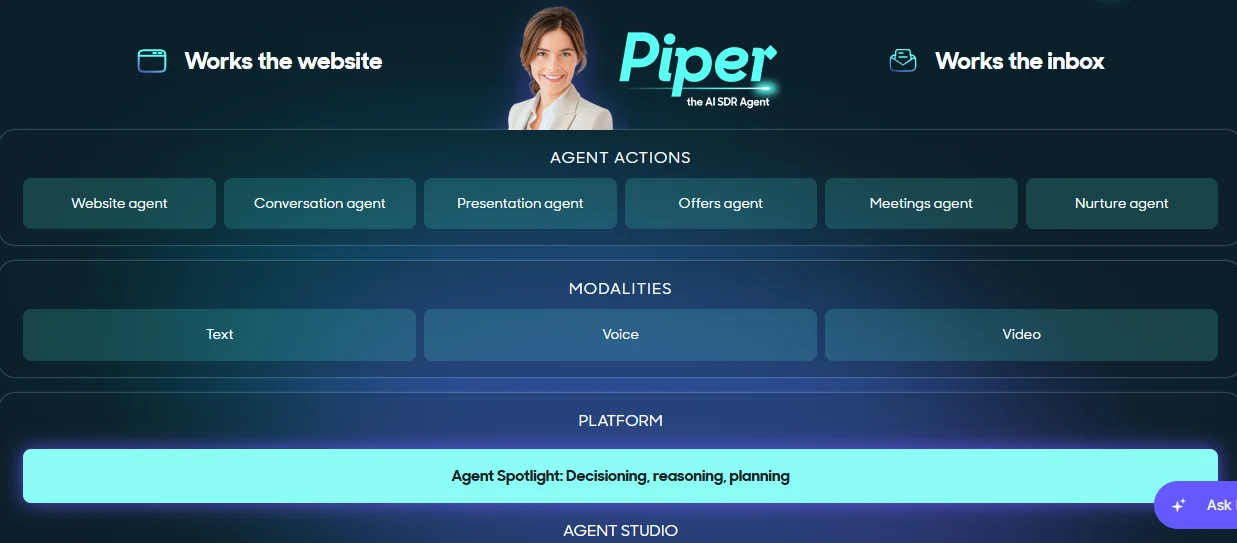
Qualified’s Piper is an AI SDR for inbound demand. Salesforce completed its acquisition of Qualified on April 1, 2026, and Piper is built natively on the Salesforce Platform. Piper engages website visitors by chat, voice, and video, follows up with inbound leads by email, and books meetings with the right account owner.
Piper works in real time, so there’s no approval step before it responds. You shape its behavior with guardrails and messaging settings, and higher plans let a rep take over live conversations.
Key Features
- Live website engagement: Holds chat, voice, and video conversations in 180+ languages.
- Piper Email: Follows up instantly with inbound leads and nurtures them by email.
- Piper Presentations: Delivers a first-call sales pitch on your website.
- Salesforce-native routing: Uses Salesforce data, including custom fields, to route buyers and book with account owners.
- Piper for Slack: Gives reps alerts, live monitoring, and two-way chat with Piper.
Pricing
Qualified doesn’t publish prices. Premier, Enterprise and Ultimate plans scale with monthly web sessions and email contacts.
Pros
- Tight Salesforce integration keeps routing aligned with account ownership.
- Covers chat, voice, and video in one inbound agent.
- Strong support ratings across review platforms.
Cons
- Inbound only, with no outbound prospecting.
- Live handoff to a rep requires the Enterprise or Ultimate plan.
- High cost, with no published pricing.
Selection Criteria
How We Evaluated
We evaluated each agent as a revenue leader would before handing it real accounts. Six questions shaped the ranking:
- What does it do without help? We mapped how far each agent goes, from spotting signals to booking meetings.
- What does it know before it writes? We checked whether it works from shared context across your GTM org or only from a list and a prompt.
- Who sees a message before the buyer does? We checked whether review exists, whether it’s on by default, and whether sign-off is tied to a named person.
- What starts the outreach? Agents that act on buying signals ranked above those that work through static lists.
- Does it fit the stack you already run? We checked CRM sync, Slack access, and channel coverage.
- Can you predict the cost? We noted published pricing, contract length, and how usage is billed.
How to Choose
Match the agent to your situation:
- You want outreach built on your full GTM context: Choose Swan. It writes from a GTM brain your whole org shares, and you decide which plays need approval and which send on their own.
- You have budget and want the widest channel mix: Pick 11x. Start Alice on “Review each message” and plan for an annual contract.
- You don’t have a contact database yet: Go for Artisan. Ava’s built-in data saves a separate subscription, but switch campaigns to Copilot if you want review.
- You want to test an AI SDR with no monthly fee: Choose AiSDR. You pay per prospect and approve sample messages, but live emails send unchecked.
- Your pipeline is mostly inbound, and you run Salesforce: Select Qualified. Piper answers visitors in real time, so focus on its guardrails rather than approvals.
Where to Start With AI Sales Agents
Roll out an AI sales agent the way you’d onboard a new SDR. Give it one clear job, check its work closely, and widen its scope as it proves itself.
In week one, connect your CRM and pick one signal you already trust, like a pricing-page visit or a new champion at a target account. For the first month, keep approval on for every sequence and edit drafts freely, because your edits show where the agent needs better instructions. After that, let sequences send automatically only for the plays where you’ve stopped making changes.
Swan is built for exactly this rollout. It researches every account from a shared GTM brain and writes in your reps’ voice. Each play moves from review to automatic sending when you’re ready.
Start the free trial and run your first signal-based play this week.
FAQs
Can AI Sales Agents Replace Human SDRs?
Not entirely. They take over repetitive work like research, list building, first drafts, and follow-ups. Gartner found AI already saves sellers an average of 4.8 hours a week. Reps still own discovery, objection handling, and the relationships.
Is It Safe To Let An AI Sales Agent Send Emails From My Domain?
It can be, with the right guardrails. Look for per-inbox sending limits, mailbox warm-up, and approval you can switch on before messages go out. Start with review on, and only allow automatic sending for plays with a proven track record.
How Much Do AI Sales Agents Cost?
Pricing varies widely. AiSDR charges $1.50 per prospect with no monthly fee, 11x starts at $3,750 a month billed annually, and inbound platforms like Qualified are quote-based. Swan uses usage-based credits and offers a free trial.
What’s The Difference Between An AI Sales Agent And An AI SDR?
Most vendors use the terms interchangeably. An AI SDR usually means an outbound agent that prospects and books meetings. An AI sales agent can also cover inbound work, like answering website visitors or qualifying form fills.
Do AI Sales Agents Make Phone Calls?
Some do. 11x’s Alice makes outbound calls with consent, but Artisan’s Ava doesn’t call prospects. In the US, the FCC ruled in 2024 that AI-generated voices count as “artificial” under robocall rules, so AI voice calls need the person’s prior consent.