AI-Powered Cold Outreach That Books Meetings From Live Buying Signals
Personalization gets you noticed. Relevance gets you replies. Swan's AI agent detects buying signals, enriches matched accounts, and fires email and LinkedIn sequences the moment a prospect is ready.




Trusted By
.avif)







Why Most SDR Cold Outreach Never Gets the Response It Deserves
Cold outreach fails when it's personalized but not relevant. Most SDRs write for the prospect's profile, not a pain they're feeling TODAY. Signals change that.
Volume without relevance fails
Most SDRs blast personalized messages to accounts that aren't in-market. Thousands of emails, single-digit reply rates, and no signal that any of them were ready to buy.
Personalization isn't enough
Knowing a prospect's title and company isn't relevance. Relevance is hitting a pain they feel today. Without a live signal, even well-written outreach lands at the wrong moment.
Channels drift without orchestration
Email and LinkedIn touchpoints need to work as one sequence, not two separate efforts. When SDRs manage both manually, timing drifts and follow-ups get forgotten.
AI-Powered Cold Outreach Built on Signals, Not Guesswork
Swan handles the full outreach motion: signal detection, account enrichment, and personalized email and LinkedIn sequences, fired at the moment intent is highest. SDRs approve and send, or configure Swan to send autonomously.
Relevant, not just personal

Swan writes from the signal that triggered the account, not a template. Every message hits a pain the prospect is feeling right now, at the exact moment the signal fires.
Email and LinkedIn, coordinated

Swan orchestrates email and LinkedIn as a single timed sequence. Each touch references the previous one, personalized to the contact's function and the signal that triggered the workflow.
Approve or send autonomously

Some teams review every message. Others set autonomous send for signals they trust. SDRs approve in one click from Slack or configure full autonomy by account tier.
Let the numbers talk
Before & After Swan
Before Swan
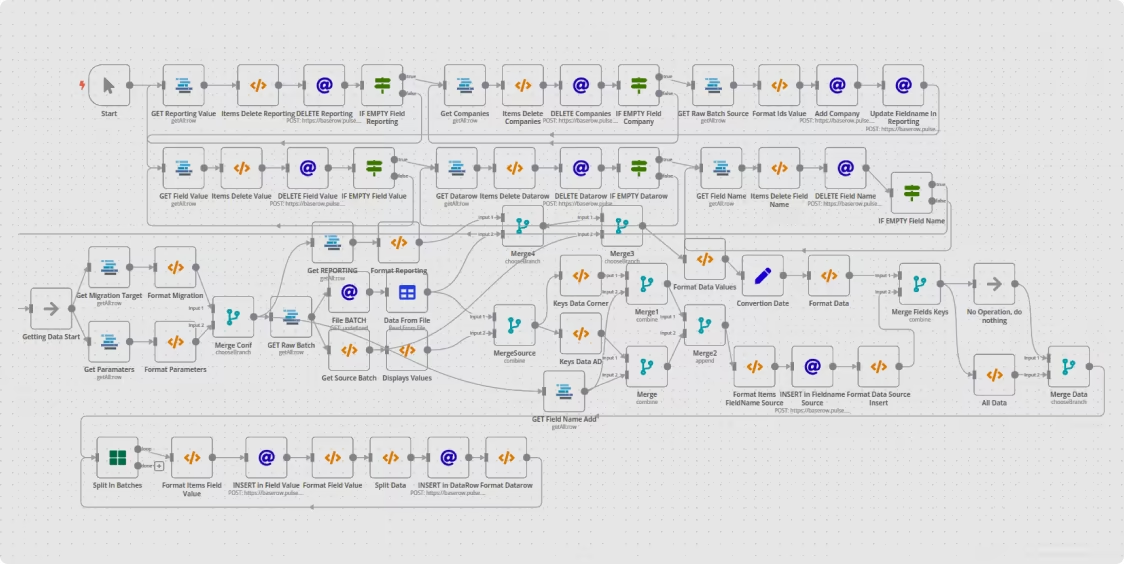
An SDR builds a list of 100 accounts, spends three hours writing personalized emails, and sends them all. Two replies. Ninety-eight ignored. The emails felt personal but landed at the wrong moment. None of those accounts were in-market.
After Swan

Stop sending to everyone. Swan surfaces accounts showing intent right now and reaches out with messages relevant to this moment. More replies. More meetings. Less noise.

If You Can Write It,
Swan Can Build It.
Describe your cold outreach logic like you're briefing a senior SDR. Swan turns your words into a live, signal-triggered outreach workflow instantly.
Intelligence,
Not Automation.
Traditional outreach tools fill variables into templates. Swan reads the signal, the contact's background, the ICP data, and relationship history, then writes a message that could only be written for that person at that moment.
Adapts in seconds,
not months.
Your outreach strategy evolves as you learn what gets replies. Just tell Swan what changed and every future sequence reflects it instantly.














Connects Every Layer of Your ABM Stack
Swan pulls contact data, account history, and signal context from your outreach stack and coordinates send timing across your engagement tools. Personalization never breaks at the tool boundary.
Loved by teams scaling smarter, not bigger











FAQs
What is AI-powered cold outreach?
AI-powered cold outreach is the practice of using an AI agent to research, write, and send personalized outbound sequences at scale, without manual research or copywriting from the rep.
- It uses signal context, ICP data, and contact background to write messages that feel individually researched
- It coordinates multi-channel sequences across email and LinkedIn from a single workflow
- It fires at the moment a signal triggers, not when a rep finds time to write
- It supports both human-in-the-loop approval and fully autonomous send, depending on account tier or rep preference
- It learns from response data and adapts personalization logic as you refine criteria
The difference from template-based automation is grounding: every message is written from real account context, not a mail merge.
How is Swan different from tools like Outreach or Salesloft?
Outreach and Salesloft manage the delivery of sequences you build. Swan writes the sequences from context before they're enrolled.
- Outreach and Salesloft are execution rails; Swan is the layer that populates them with personalized content
- Traditional sequence tools require a rep to select a template, personalize variables, and enroll manually
- Swan reads the signal, the ICP data, and the contact record and writes the sequence without rep input
- Swan coordinates timing and channel sequence across email and LinkedIn as one motion, not two separate tools
- Swan can push finalized sequences into Outreach or Salesloft as the delivery layer if that's already in your stack
Think of Swan as what runs before Outreach: the research and writing step that most teams still do manually.
What does "human-in-the-loop" mean in Swan's cold outreach workflow?
Human-in-the-loop means Swan drafts the full sequence and routes it to the SDR for review before anything sends. The rep reads, edits if needed, and approves in one click.
- Drafts appear in the SDR's Slack or Swan desk queue within minutes of an account being added
- The rep can approve as-is, edit inline, or reject and give feedback that improves future drafts
- Approval is one click from Slack, not a multi-step UI workflow
- Human-in-the-loop is the default; autonomous send is configured per account tier or signal type
- Teams typically start with full approval mode and shift high-confidence signal types to autonomous over time
The goal is to eliminate the writing and research work, not the rep's judgment.
Can Swan personalize cold outreach at scale without sounding generic?
Yes, because Swan writes from context rather than variables. Personalization at scale fails when it relies on inserting a company name into a fixed sentence. Swan avoids that entirely.
- Each step one is grounded in the specific signal that triggered the account, not a generic opener
- Contact personalization pulls from role tenure, company stage, tech stack, and recent activity
- Proof points are matched to the contact's industry and growth stage, not pulled at random
- Step two and step three maintain continuity with step one, referencing the same context thread
- Sequences written by Swan are reviewed by your SDR team, so any message that misses the mark gets flagged and improves future output
The volume is high. The quality holds because the source material is real.
Does Swan send cold outreach without any SDR involvement?
Only when you configure it to. Autonomous send is an option, not the default.
- New accounts default to human-in-the-loop approval unless you set a specific tier or signal type to autonomous
- Diamond accounts or high-trust signal types like pricing page visits are common candidates for autonomous send
- Every send, whether approved or autonomous, is logged in HubSpot with the full sequence and send timestamps
- SDRs can review all autonomous sends in the Swan desk and flag any message that should have been reviewed
- Autonomous send is reversible: you can shift any signal type or account tier back to approval mode at any time
Most teams run a hybrid: approval for new segments, autonomous for proven ones.
We're spending hours on research and personalization but reply rates are still under 3%. What are we doing wrong?
Timing kills more deals than bad copy. Most cold outreach lands when the buyer isn't in-market.
Here's why it fails:
- Emails are written before checking if the account has any active buying signal
- "Personalization" means name and job title, not what's happening at the company right now
- You're interrupting, not catching
How Swan fixes it:
- Monitors accounts for buying signals (pricing page visits, funding rounds, hiring spikes)
- Triggers outreach the moment intent is detected
- Matches the message to the signal, not just the persona
The result: outreach that feels relevant because the moment is right, not just because you did research.