
Playbooks· 18 min read
10 Best B2B Data Enrichment Tools for Revenue Teams in 2026
Compare the best B2B data enrichment tools for revenue teams, including Swan, Apollo, ZoomInfo, Clay, and more, across features, pricing, and use cases.
 Amos Bar-JosephCo-Founder & CEO ·
Quick Summary
The best B2B data enrichment tools differ in what happens after the data arrives. Swan enriches accounts, then runs outreach itself; ZoomInfo pairs enrichment with broader sales intelligence; Apollo offers an all-in-one solution. The right choice depends on your post-enrichment needs: cleaner records, context, or automated execution.
| Tool | Best For | Starting Price | Free Trial/Plan |
|---|---|---|---|
| Swan | Enrichment that triggers outreach automatically | Custom quote | Free trial |
| Apollo.io | Prospecting, enrichment, and outreach in one platform | $49/user/mo, billed annually | Free plan |
| ZoomInfo | Enrichment with broader sales intelligence | Custom quote | - |
Clean Data is Expensive to Skip
Bad B2B data isn’t a minor annoyance; it’s a cost you’re probably not tracking. Gartner estimates poor data quality costs organizations at least $12.9 million a year on average.
The people in your database keep changing roles. U.S. employers recorded 63 million hires and 62.8 million separations in 2025, including 38 million voluntary quits. That churn can quickly make company, title, and contact data outdated.
Some data enrichment tools simply fill those gaps. Others use enriched data to trigger the next step in lead generation. This guide compares ten of them.
Why Listen to Us?
We work with B2B revenue teams using enrichment in live GTM workflows, generating about $1.2 million in pipeline with zero SDRs. Machinery Partners, SalesDesk, and Elastic Path are among the customers behind those results.
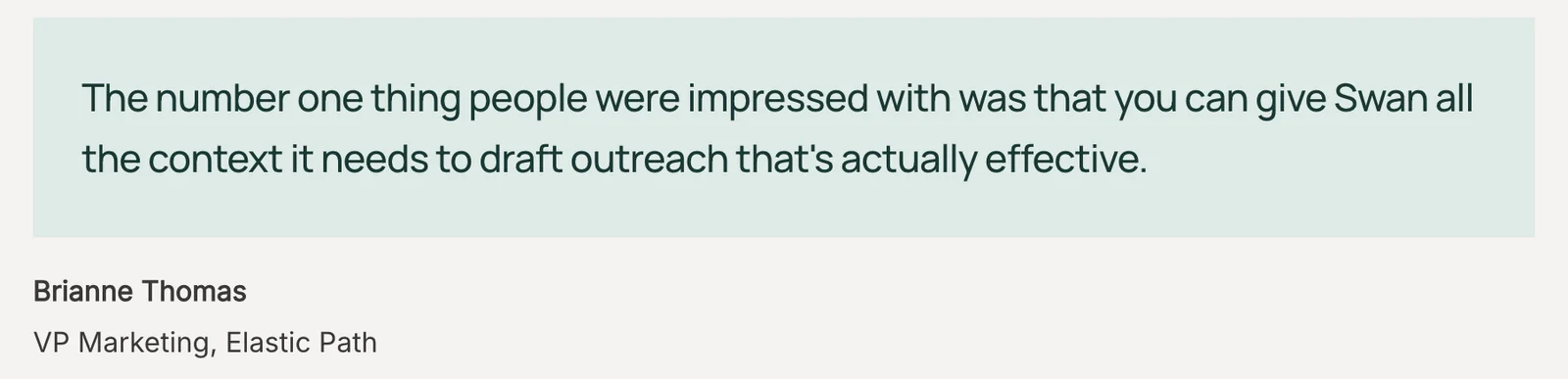
With Swan, Elastic Path automated 90% of outbound and cut a seven-tool, 14-step process down to review and send. That experience gives us a practical view of where enrichment ends, and execution begins — a distinction we apply to this lineup.
What Is B2B Data Enrichment?
B2B data enrichment takes a thin record, often just a name or an email, and fills in details a sales or marketing team can use, such as job title, company size, industry, and tech stack. It does this by matching an existing record against external data sources and appending relevant fields.
Enrichment can also add context to live signals, such as a job change, funding round, or website visit, so your team knows more about the person or account behind the activity.
Why Data Enrichment Matters in B2B
It saves reps from manual research. Instead of looking up titles, company size, industry, and tech stack for each prospect, reps start with that context already attached to the record.
It keeps your CRM useful. People change jobs, companies grow, and roles change. Enrichment replaces outdated fields and fills missing ones before stale data reaches the rest of your GTM workflow.
It makes personalization possible at volume. “Someone at a mid-size SaaS company” isn’t much to work with. Firmographic, technographic, and contact data give your team specific context to personalize against.
It makes signals more actionable. A funding round or job change tells you something happened. Enrichment tells you more about the company and people involved, giving your team the context to decide what to do next.
10 Best B2B Data Enrichment Tools
-
Swan
-
Apollo.io
-
ZoomInfo
-
Cognism
-
Lusha
-
Clay
-
People Data Labs
-
Coresignal
-
HubSpot Breeze Intelligence
-
RB2B
This is how they stack up before we get into each one.
| Tool | Key Features | Starting Price | Free Trial/Plan |
|---|---|---|---|
| Swan | Signal monitoring, autonomous enrichment, outreach, CRM auto-update | Custom quotes | Free trial |
| Apollo.io | Prospecting database, CRM enrichment, sequencing, waterfall enrichment | Basic $49/user/mo, billed annually | Free plan |
| ZoomInfo | Contact and company data, intent signals, org charts, CRM enrichment | Custom quotes | No public offers |
| Cognism | Diamond Data, CRM enrichment, DNC screening, prospecting database | CRM Enrichment from $12,000/year | Free data sample |
| Lusha | Browser extension, bulk enrichment, CRM integrations, buying signals | Starter $37.45/mo, billed annually | Free plan |
| Clay | 150+ data providers, waterfalls, Claygent AI research | Launch $167/mo, billed annually | Free plan; 14-day trial |
| People Data Labs | Person and company APIs, bulk enrichment, Person Search API | Self-Serve from $98/mo | Free plan |
| Coresignal | Employee, company, and jobs APIs, dataset subscriptions | Mini $49/mo | 7-day free trial |
| HubSpot Breeze Intelligence | Contact/company enrichment, form shortening, Buyer Intent | From $15/seat/mo via eligible HubSpot plan | No free plan |
| RB2B | Person-level visitor ID, Slack/Teams alerts, LinkedIn matching | Starter $79/mo | Free plan; 7-day Pro trial |
All-in-one GTM Platforms (enrichment plus action)
1. Swan
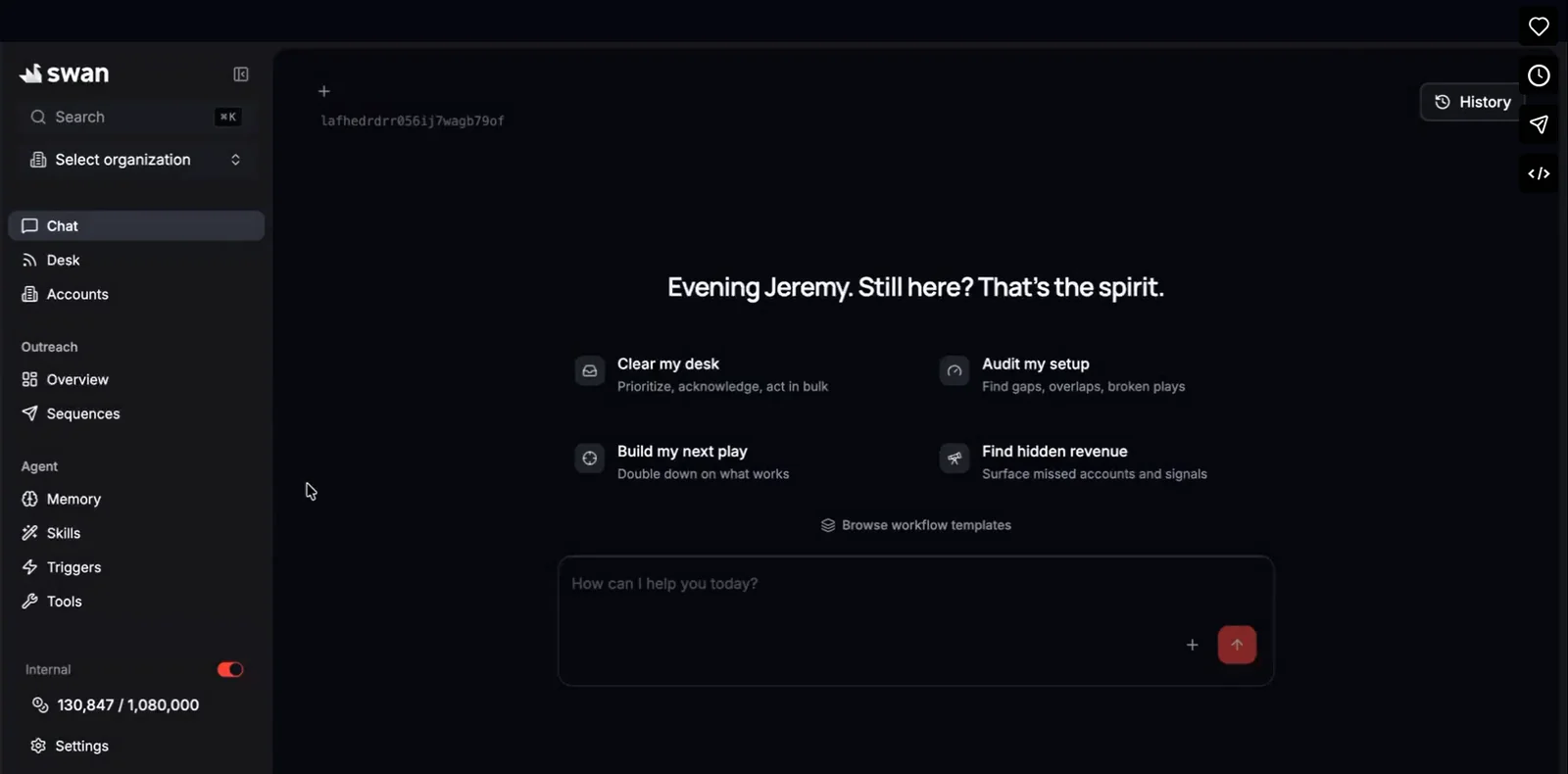
Swan’s an AI GTM engineer for B2B SaaS and AI-native revenue teams. It monitors signals like website visits, LinkedIn engagement, and funding events, researches the account in real time, then executes outreach automatically.
Unlike many enrichment tools, Swan doesn’t stop at handing you a clean record. It connects to providers you may already use, including RB2B, Apollo, ZoomInfo, and 6sense, then uses that data across the GTM workflow. It can enrich and qualify accounts, build outreach, and write activity back to your CRM.
If you only need cleaner records, a dedicated enrichment tool may be enough. Swan is built for teams whose bottleneck comes after enrichment. In its first full quarter using Swan, Elastic Path increased pipeline generation by 20% through intent-informed outbound campaigns.
Key Features:
- Signal Monitoring: Detect website visits, LinkedIn engagement, funding events, hiring activity, and other buying signals
- Autonomous Enrichment: Pull firmographic and contact data from connected providers automatically
- Buying Committee Mapping: Identify additional stakeholders at an account instead of stopping at the first known contact
- CRM Auto-Update: Create and update CRM records and log activity automatically across systems like HubSpot and Salesforce
- Multi-Provider Enrichment: Pull enrichment and context from providers including RB2B, Apollo, ZoomInfo, and 6sense inside the same workflow
- Context-Aware Execution: Evaluate account context and signals before deciding what action a workflow should take
Pricing:
Swan uses credit-based pricing tied to the GTM work it performs. Teams can start with a free trial.
Pros:
- Maps additional stakeholders at an account instead of limiting a play to the first known contact
- Natural-language workflow building lets non-technical GTM teams launch and change plays
- Institutional memory; context stays with the account even when reps leave
- Covers both inbound and outbound workflows, unlike single-channel AI SDR tools
- Hands-on onboarding
Cons:
- Doesn’t yet have the large third-party review footprint of established data platforms
- Not positioned for consumer apps or businesses
2. Apollo.io
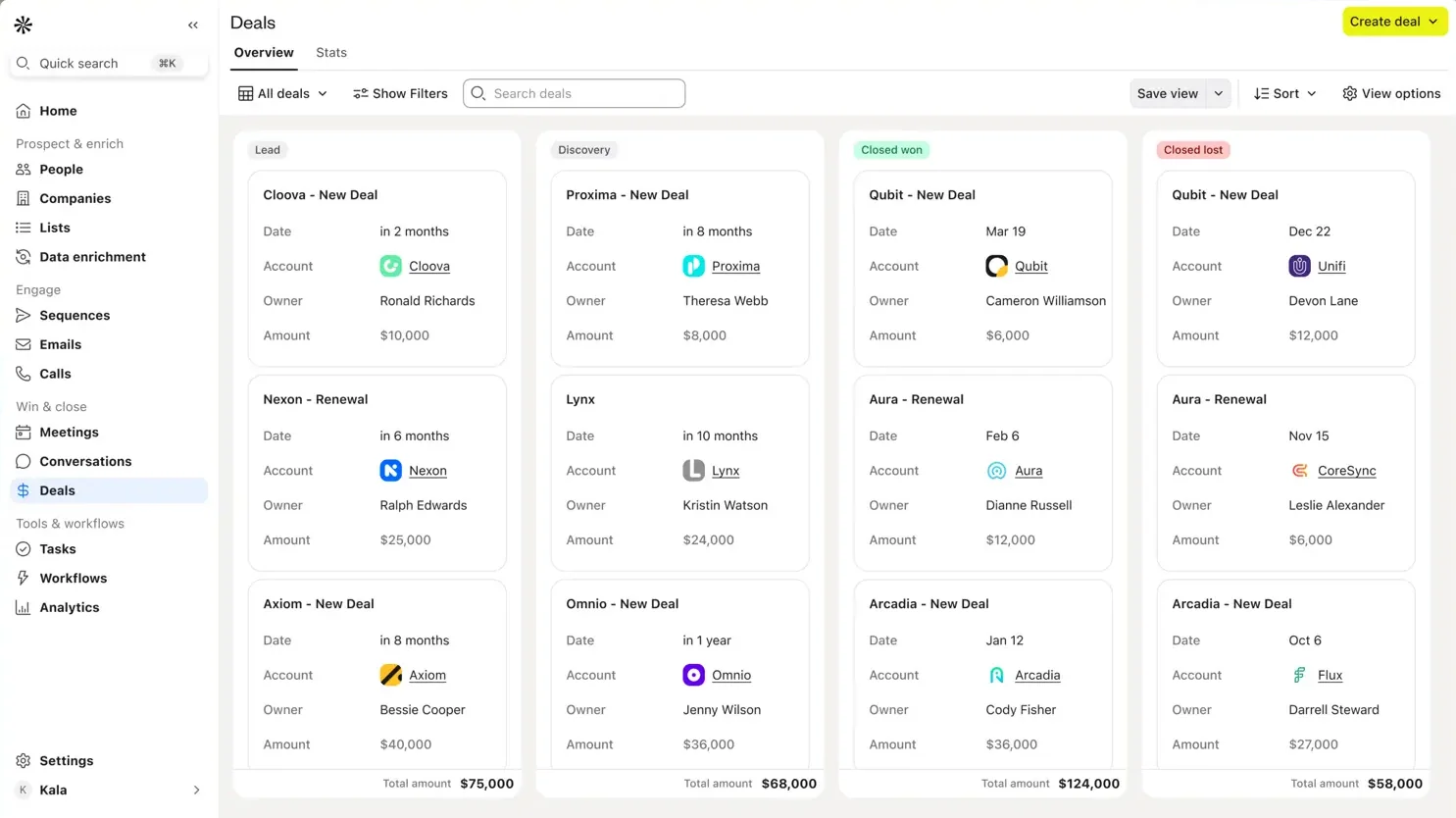
Apollo.io combines a B2B prospecting database with enrichment and sales engagement tools, so teams can find contact and company data and act on it in the same platform.
Its enrichment goes beyond filling in a missing email. Apollo can enrich Salesforce and HubSpot records, detect job changes, enrich form submissions, and refresh contact data before outreach. Its newer Waterfall Enrichment also checks connected third-party data sources when Apollo doesn’t have the email or phone number you need.
Key Features:
- Contact and Company Database: Search prospects by attributes including title, industry, company size, funding, and technologies used
- Waterfall Enrichment: Check Apollo first, then connected third-party sources in a defined order until an email or phone number is found
- CRM Enrichment: Update connected Salesforce and HubSpot records with demographic, firmographic, and technographic data
- Data Health: Find contacts with job changes or missing emails and refresh those records manually or on a schedule
Pricing:
Free plan available. Basic is $49/user/month, Professional is $79/user/month, Organization is $119/user/month; billed annually.
G2 Rating:
4.7/5 (9,825 reviews).
Pros:
- Optional email and phone validators add another verification layer before enriched data reaches reps
- Apollo reported 5% more email coverage, 7% more phone numbers, and 45% lower email bounce rates during two months of Waterfall Enrichment beta usage
- Enrichment can run across CRM records, CSV imports, form submissions, saved contacts, and contacts entering outreach sequences
Cons:
- Waterfall enrichment uses credits when Apollo or a connected provider successfully returns an email or phone number
- Third-party providers connected through an external API key can carry their own usage costs outside Apollo
- Getting the most from waterfall enrichment requires an admin to configure data sources, their order, and optional validation rather than relying on a single source out of the box
Sales Intelligence and Contact Databases
3. ZoomInfo
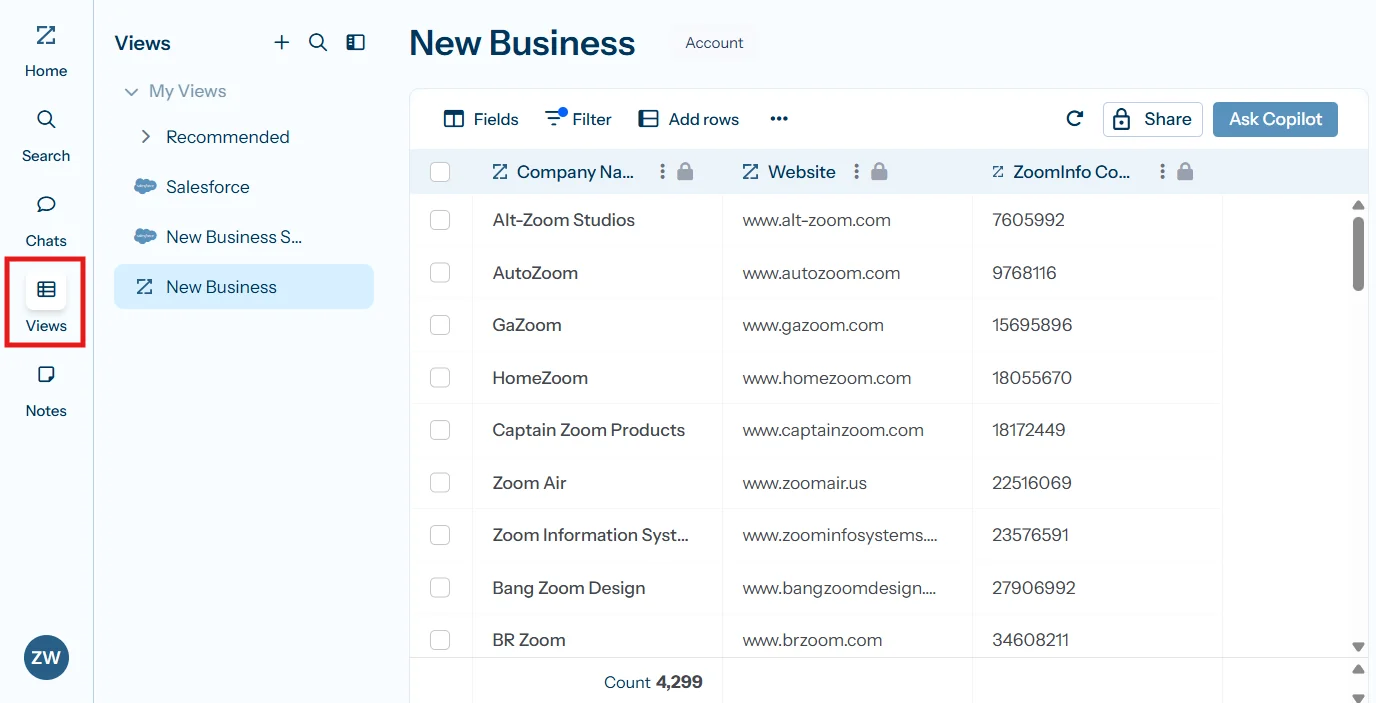
ZoomInfo combines B2B contact and company data with firmographic, technographic, organizational, and buyer-intent intelligence. Its current GTM Workspace brings that data together with CRM records, engagement history, and buying signals, giving sales teams more account context than a contact record alone.
For enrichment, ZoomInfo can add its firmographic, technographic, and intent data alongside existing CRM fields. That makes it a stronger fit for teams that want enrichment and sales intelligence in the same system rather than a tool focused solely on filling missing contact fields.
Key Features:
- CRM Enrichment: Add ZoomInfo intelligence to existing CRM records so reps can work with richer account and contact profiles
- Org Charts: Map reporting structures and relationships between people inside an account
- Buyer Intent Data: Surface accounts showing research activity around topics relevant to your market
- WebSights Visitor Identification: Identify companies visiting your website and connect that activity with account intelligence
Pricing:
ZoomInfo doesn’t publish fixed prices on its website. Pricing is quote-based, so teams need to contact ZoomInfo for the cost of the package, data access, and functionality they need.
G2 Rating:
4.5/5 (9,149 reviews).
Pros:
- Brings contact data, firmographics, technographics, intent signals, and organizational context into the same sales environment
- Org charts give reps reporting-line context beyond the individual contacts returned by enrichment
- Large G2 review base gives buyers substantial user feedback to examine before committing
Cons:
- No public fixed pricing, making it harder to estimate costs before speaking with sales
- Some G2 reviewers report outdated contact details, including incorrect emails, job titles, locations, and phone information
- Its breadth may be unnecessary for teams that only need straightforward contact or company enrichment rather than a wider sales-intelligence workspace
4. Cognism
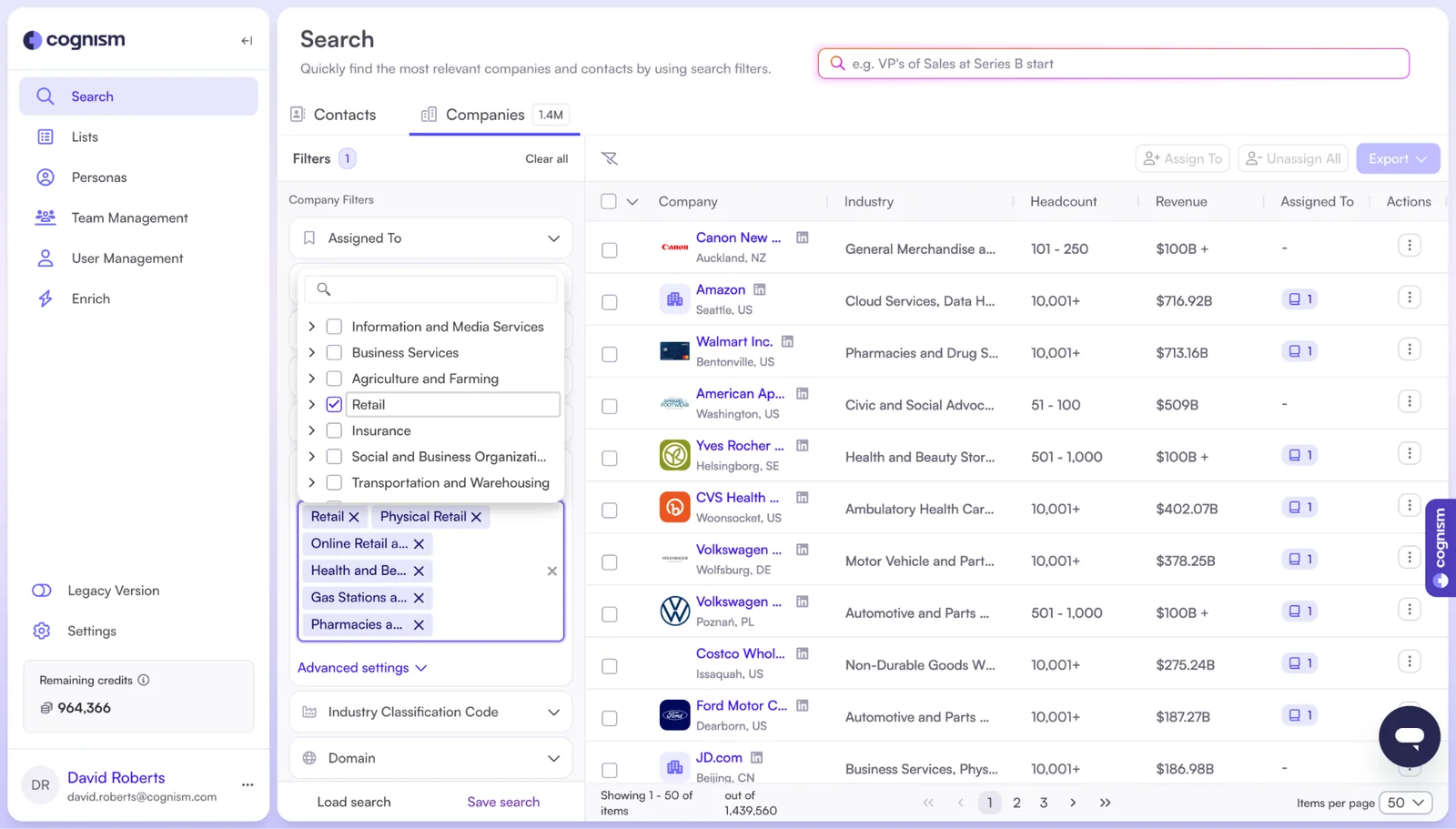
Cognism focuses on verified contact data and compliance, with particular emphasis on teams prospecting across Europe. Its Diamond Data mobile numbers are phone-verified, while contact data is separately screened against global do-not-call registries.
Cognism also enriches CRM records and CSV lists or delivers data through an API or bulk export.
Key Features:
- Diamond Data Mobile Numbers: Phone-verified numbers designed to reduce incorrect or dead-end calls
- CRM Enrichment: Append and maintain contact and company data across existing CRM records
- Sales Prospecting Database: Search contacts and companies using firmographic, technographic, and signal-based filters
- Compliance Screening: Screen contact data against global do-not-call registries before it reaches sales teams
Pricing:
Cognism’s Standard and Pro prospecting plans are quote-based. CRM Enrichment starts at $12,000/year and is available standalone or as an add-on. Data-as-a-Service is priced by factors including data volume and delivery method.
G2 Rating:
4.5/5 (1,365 reviews).
Pros:
- Phone-verified mobile numbers add another validation layer before reps start calling
- DNC screening and Cognism’s European focus suit teams prospecting across regulated markets
- Ongoing maintenance is included after enrichment, with credits reused only when key contact details change
Cons:
- Standard and Pro prospecting prices aren’t public, so teams need a quote to establish their total cost
- Advanced capabilities such as intent data and on-demand mobile verification require the Pro package
- Credits are consumed when new contacts are revealed, enriched, or exported, so usage affects how far an allocation goes
5. Lusha
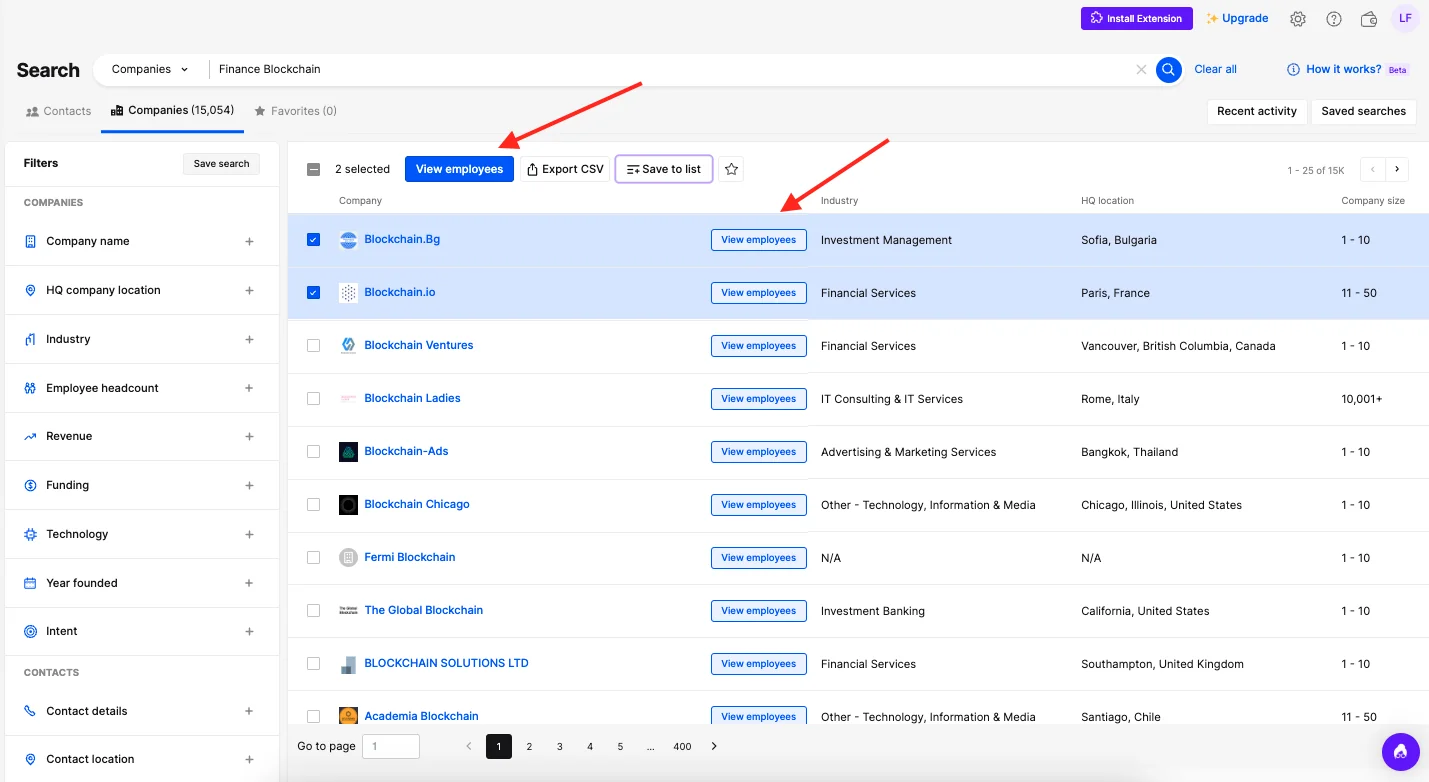
Lusha combines quick contact lookups with prospecting and enrichment at scale. Its browser extension reveals verified emails and phone numbers while you browse LinkedIn, Sales Navigator, your CRM, or company websites, while its Workspace handles larger prospect lists and enrichment workflows.
Key Features:
- Browser Extension: Reveal emails, direct dials, and mobile numbers without leaving the page you’re browsing
- Credit-Based Reveals: Spend 1 credit for a verified email and 5 credits for a phone number; unsuccessful lookups don’t consume credits
- Bulk Enrichment: Enrich lists and existing CRM records rather than looking up contacts individually
- CRM Integrations: Export and enrich records across systems including Salesforce, HubSpot, and Pipedrive
- Buying Signals: Track events such as job changes, headcount growth, and hiring surges
Pricing:
On annual billing, Starter costs $37.45/month, Professional $52.45/month, and Premium $299.95/month. Monthly billing costs more, while Scale is custom-priced.
G2 Rating:
4.3/5 (1,668 reviews)
Pros:
- Permanent free plan lets teams test the data and extension without a credit card
- CRM exports support up to 10,000 contacts at once in Salesforce and 1,000 in HubSpot
- CRM integrations let reps enrich existing records without relying on CSV transfers
Cons:
- Phone numbers cost 5 credits each versus 1 credit for an email, making phone-heavy prospecting more credit-intensive
- G2 reviewers report occasional outdated or incorrect contact details, so important records may still need validation
- API-based enrichment and automation require the Scale plan
Developer-first Data APIs
6. Clay
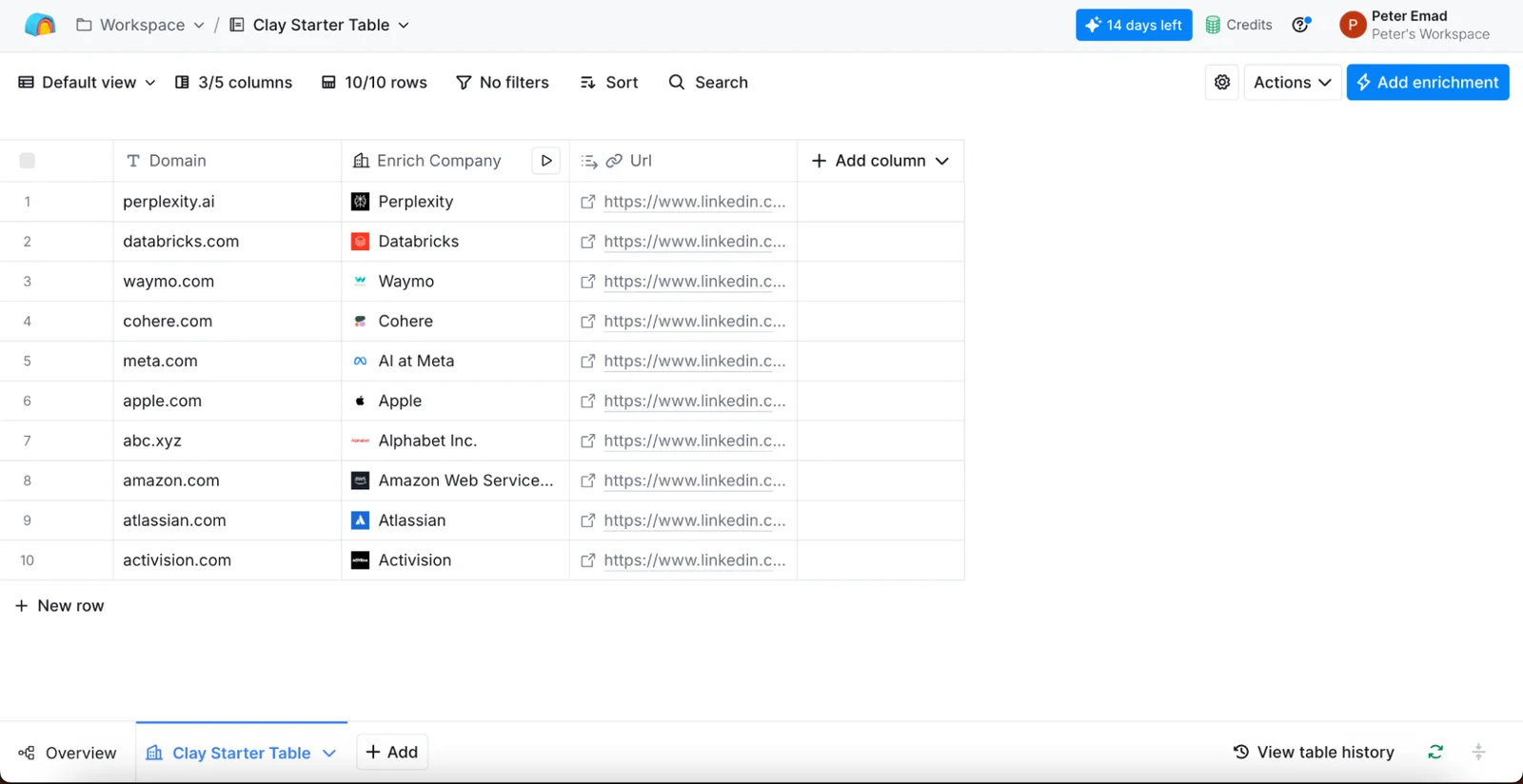
Clay lets teams combine enrichment from multiple sources in one workflow instead of relying on a single database. It gives users access to 150+ data providers and can waterfall across selected sources sequentially until it finds a match.
Claygent also researches the web and turns unstructured information into custom data points.
Key Features:
- Claygent AI Research: Research the web and turn unstructured information into custom enrichment fields
- Table-Based Workflows: Build and manage enrichment logic in a spreadsheet-style workspace
- CRM Integrations: Enrich records and sync data back to systems including HubSpot and Salesforce
- Scheduled Enrichment: Re-run enrichment automatically to refresh records as company and contact data changes
Pricing:
Launch costs $167/month annually or $185 monthly for 3,000 credits and 15,000 actions. Growth costs $446/month annually or $495 monthly for 6,000 credits and 40,000 actions. Enterprise is custom-priced.
G2 Rating:
4.6/5 (234 reviews).
Pros:
- Scheduled enrichment can refresh CRM records as job and company data changes
- Claygent can research custom information that standard enrichment databases don’t store
- Waterfalls stop once they find a match, avoiding unnecessary provider calls for the same data point
Cons:
- Teams have to configure their own providers and enrichment logic, requiring more setup than a searchable contact database
- CRM integrations and other advanced capabilities require the Growth plan or above
- Pricing uses separate Actions and Data Credits, so teams need to account for both when forecasting usage
7. People Data Labs
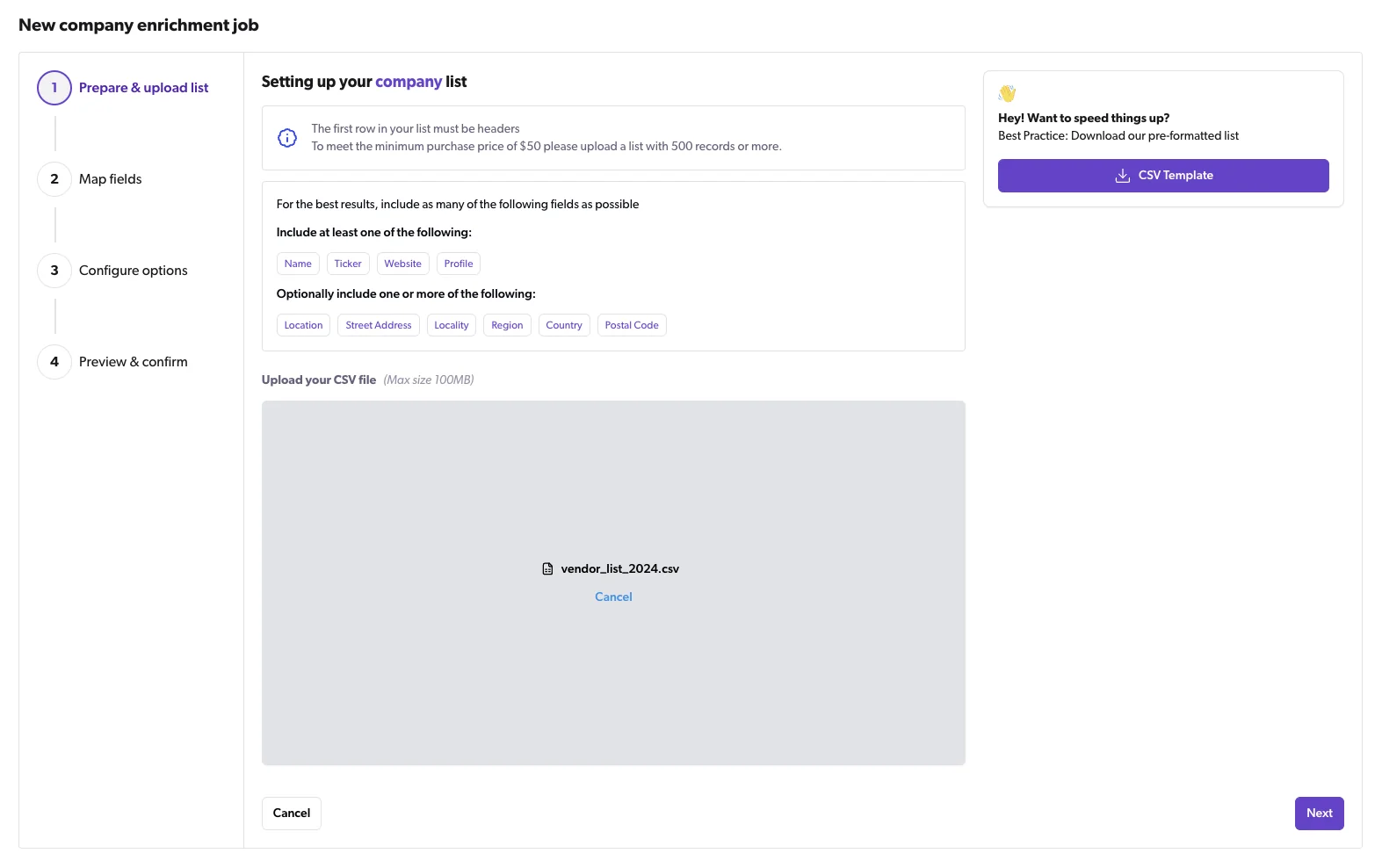
People Data Labs is an API-first source of person and company data for teams building enrichment into their own products or workflows. Its APIs can enrich known records or search the underlying dataset using custom criteria.
Key Features:
- Person Enrichment API: Match existing records against PDL’s person data
- Company Enrichment API: Enrich companies using identifying information such as name or domain
- Bulk Enrichment APIs: Enrich person or company records in batches
- Person Search API: Search PDL’s person dataset using custom criteria
Pricing:
Self-Serve starts at $98/month or $940/year for at least 350 credits a month. Enterprise is custom-priced.
G2 Rating:
4.3/5 (17 reviews).
Pros:
- API-first design gives engineering teams control over how enrichment fits their stack
- Supports both enrichment and search
- Bulk processing suits large datasets
Cons:
- Requires more technical implementation than rep-facing enrichment tools
- Usage-based pricing makes volume important when budgeting
- Has a limited third-party review footprint compared with larger sales-intelligence platforms
8. Coresignal
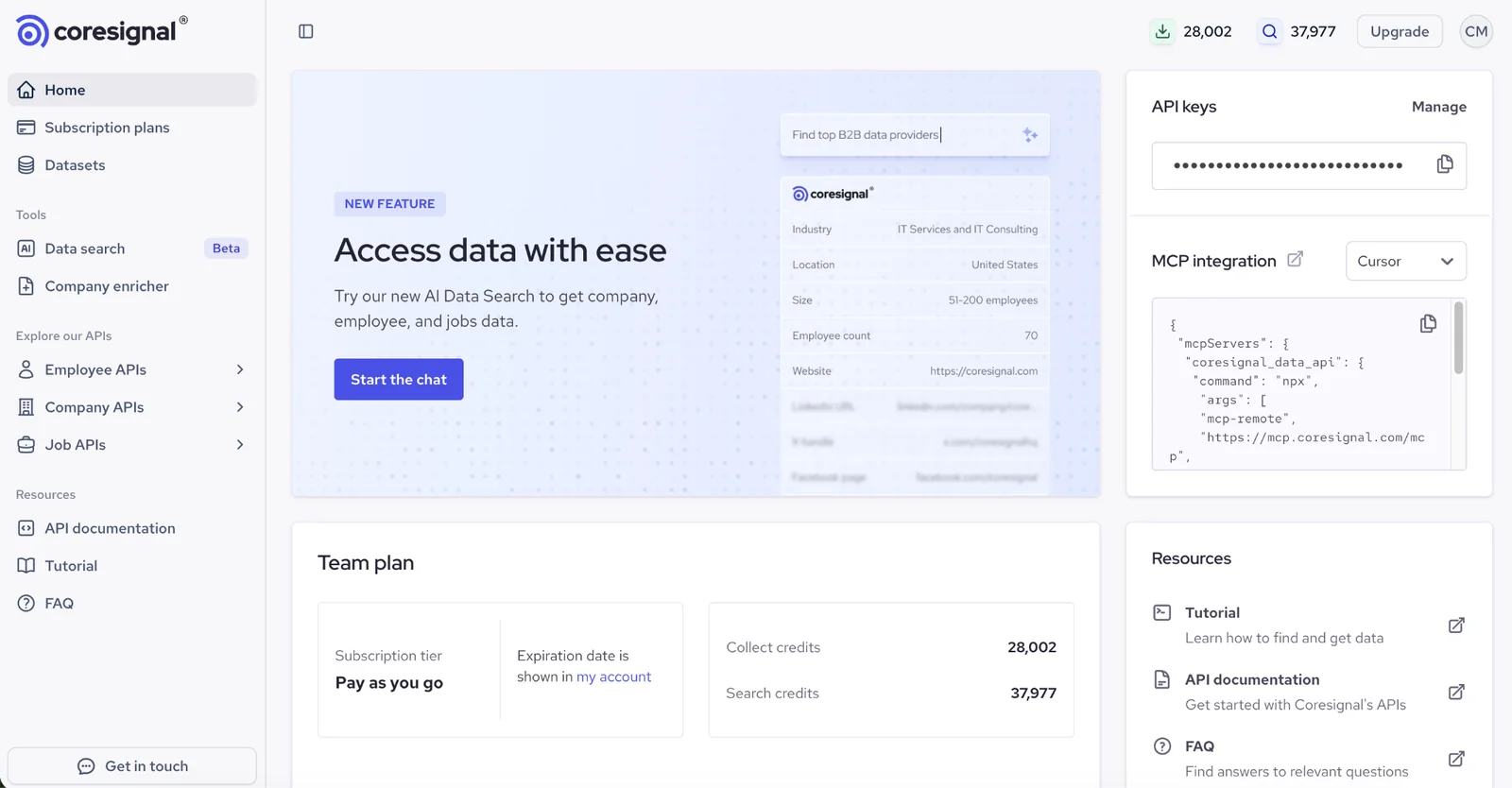
Coresignal sells bulk employee, company, and job-posting data through APIs for data science and large-scale matching. It’s priced by data volume, not by seat.
Key Features:
- Employee API: Employment history and role data across millions of professional profiles
- Company API: Firmographic detail at scale for account matching or scoring
- Jobs API: Track job postings and hiring activity as a prioritization signal
- Dataset Subscription: Regularly updated bulk datasets for large-scale data workflows
Pricing:
Mini’s $49/mo, Starter’s $199/mo, Pro’s $499/mo, Growth’s $1,000/mo, Premium’s $1,500/mo, Scale’s $3,000/mo, and Elite tops out at $5,000/mo for 4 million credits. Annual billing saves about 10%.
G2 Rating:
Not enough reviews to state a rating.
Pros:
- Volume-based pricing scales cleanly for large data workloads
- Dataset subscriptions fit recurring, large-scale research needs
- Published, tiered pricing so you can budget without a sales call
Cons:
- Built for bulk data workflows, overkill for a handful of accounts
- More data infrastructure than a CRM-native enrichment workflow
- Too small a review footprint for a reliable rating yet
CRM-native and Signal-based Enrichment
9. HubSpot Breeze Intelligence
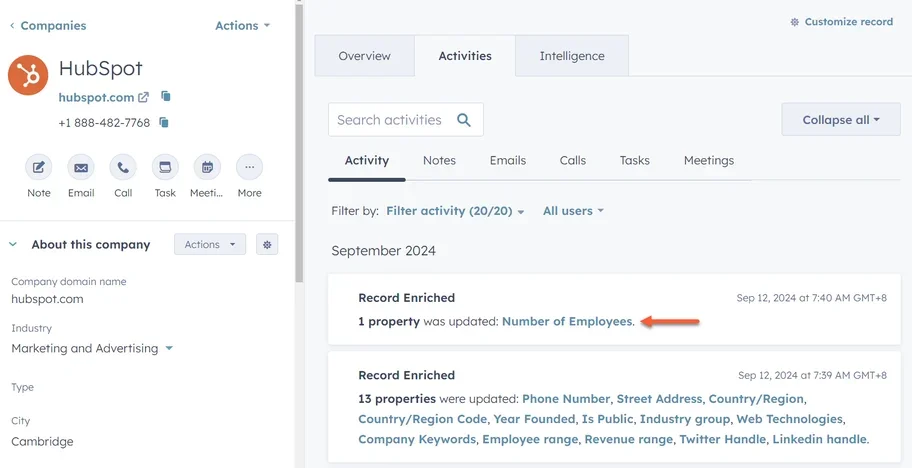
HubSpot Breeze Intelligence is the enrichment product built from Clearbit after HubSpot acquired the company in December 2023. It’s built for teams already running their CRM on HubSpot, not as a standalone enrichment tool.
Data enrichment is included with HubSpot’s Starter and up subscriptions and doesn’t consume HubSpot Credits. That includes individual, automatic, continuous, and bulk enrichment.
Key Features:
- Company and Contact Enrichment: Append firmographic and role data directly onto HubSpot records
- Form Shortening: Hide fields that HubSpot can enrich after a visitor enters their email
- Buyer Intent: Identify companies visiting your site and showing relevant intent
- Native HubSpot Fields: Enriched data populates HubSpot contact and company properties directly
Pricing:
Data enrichment is included with paid Starter-and-up subscriptions and doesn’t consume HubSpot Credits. Credit-consuming features such as Buyer Intent use HubSpot Credits, currently priced at $0.01 each.
G2 Rating:
4.4/5 (632 reviews).
Pros:
- Enriched fields land directly in HubSpot without a separate enrichment platform
- Automatic enrichment fills blank fields without overwriting values entered by your team or another system
- Form shortening uses enrichment to reduce the fields prospects have to complete
Cons:
- Built around HubSpot, so it isn’t a standalone enrichment option for teams using another CRM
- Contact enrichment requires a business email, while company enrichment requires a company domain
- Buyer Intent actions can consume credits even though standard enrichment doesn’t
10. RB2B
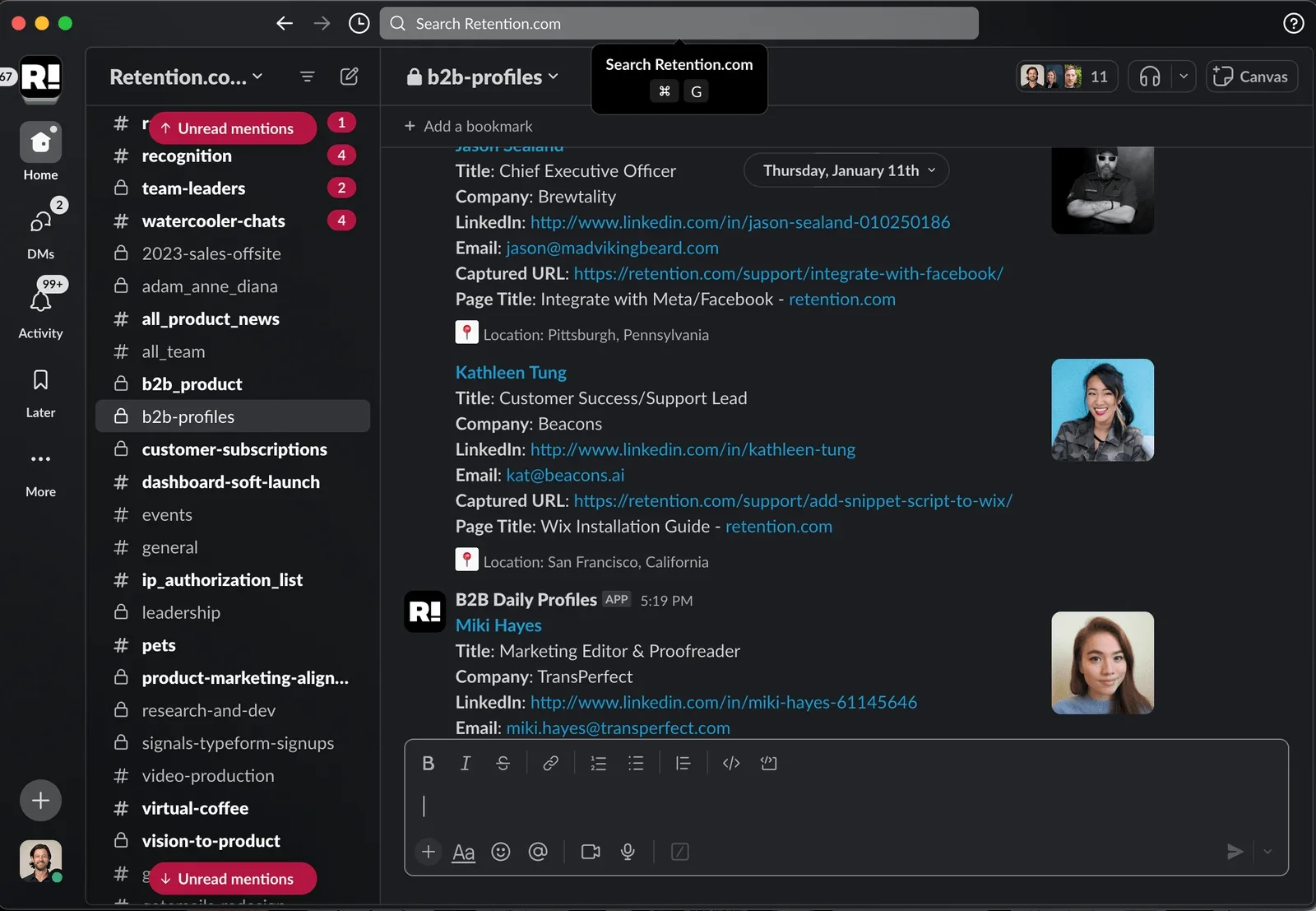
RB2B identifies the people visiting your website, not just the companies. It pushes that straight into Slack or Teams, so a rep sees who’s browsing in real time. It’s the narrowest tool here.
Key Features:
- Person-Level Visitor ID: Identify the individual browsing your site, beyond just the company
- Slack and Teams Push: Send a visitor alert directly into the channel your reps already watch
- LinkedIn URL Matching: Attach a visitor’s LinkedIn profile to the alert automatically
- Business Email Matching (Pro tier): Add a verified business email to the identification
Pricing:
Starter’s $79/mo for 300 resolutions, no email included. Pro’s $149/mo for 600-plus resolutions with business email. Pro+ is $199/mo with enhanced match coverage.
G2 Rating:
4.5/5 (284 reviews).
Pros:
- Free plan is usable from day one; it’s not a trial that expires
- Starter includes company-level and limited contact-level identification without requiring CRM or outbound setup
- Real-time alerts let a rep reach out while someone’s on the site
Cons:
- Contact-level identification on standard plans is US-only
- Match rates on standard plans are limited, so plenty of visits stay anonymous
- It’s narrower than tools offering broader contact, company, and CRM enrichment
Selection Criteria
How We Evaluated the Best Tools
We evaluated B2B data enrichment tools across five criteria, comparing how each one sources, delivers, and acts on enriched data:
- Enrichment method: How a tool sources and matches data affects coverage and cost
- Pricing: Pricing information makes it easier to estimate costs before a sales call
- CRM integration: Enriched data should easily reach the systems reps already use
- Production accuracy: Stale or incorrect fields undermine the point of enrichment
- Enrichment vs. action: Some tools only hand you a clean record, while others use that data to trigger GTM actions
How to Choose the Right B2B Data Enrichment Tool
The best tool should fit your existing systems while offering capabilities your team needs beyond basic enrichment.
If you want enrichment and outreach in one place, Swan and Apollo cover full automated lead qualification. Teams already using HubSpot can add data enrichment through Breeze Intelligence on eligible paid plans, while ZoomInfo combines contact data with org charts, intent signals, and CRM context for broader sales intelligence at scale.
For prospecting in Europe or other markets where compliance is a priority, Cognism focuses on verified, DNC-screened data for regulated environments. If you need to build your own enrichment logic, Clay, People Data Labs, and Coresignal provide the raw data and APIs. And if you just want to identify anonymous website visitors, RB2B focuses on showing you who’s on your site in real-time.
Close the Execution Gap With Swan
B2B data enrichment tools serve different needs. Raw data APIs suit teams building their own enrichment logic, while sales intelligence platforms provide searchable databases. A smaller group, including Swan, goes a step further by acting on enriched data.
If your bottleneck is the time between a buying signal and someone acting on it, that’s where Swan fits. Start a free trial to see how it connects the providers you already use.
FAQs
Is Clearbit still around?
Not as the standalone enrichment product it once was. HubSpot acquired Clearbit in December 2023 and used its technology to build Breeze Intelligence into HubSpot.
How much does B2B data enrichment cost?
Pricing ranges from free tiers to enterprise contracts. RB2B, Lusha, and Clay offer free entry points, while ZoomInfo uses custom pricing.
Can I enrich B2B data for free?
To a point, yes. RB2B’s free plan covers 150 monthly company-level resolutions, Lusha gives 40 credits a month, and Clay includes 100 data credits. However, all free plans cap out fast at volume.
What’s the difference between data enrichment and a prospecting database?
A prospecting database, like ZoomInfo or Apollo’s core product, is a set of contacts you search and pull from. Enrichment fills in what’s missing on a record you already have.
Do I need a separate enrichment tool if I already have ZoomInfo or Apollo?
Not for the enrichment itself, since both already do that job. A tool like Swan comes in when you want the signal to trigger a workflow on its own, not just wait on a rep.