
Playbooks· 12 min read
10 Best Unify GTM Alternatives for 2026
Compare the top 10 Unify GTM alternatives for 2026. See how Swan and 9 top platforms compare on pricing, execution, and full-funnel coverage.
swan teamThe team at Swan ·
Quick Summary
Unify GTM is a strong choice for outbound teams that want to act on buying signals and automate prospecting. Some teams eventually look for an alternative when they need stronger inbound automation or workflows that are easier to build. This list covers 10 tools that fix at least one of those gaps, and these are our top three:
| Tool | Best for | Starting price |
|---|---|---|
| Swan | Full-funnel AI GTM execution across inbound and outbound | Credit-based pricing, starting at $100 for 625 credits |
| Clay | Custom enrichment and workflow building | $185/month |
| 11x (Alice) | Autonomous outbound AI SDR at enterprise scale | Approximately $3,000/month |
Why Teams Are Shopping for Unify Alternatives
Unify can help your team turn buying signals into cold outbound at scale, but the setup can start to feel restrictive as your GTM motion grows.
You may be paying more as contact volume grows, yet still relying on separate tools for inbound routing. New Plays can take weeks to configure, which makes it harder to test ideas quickly or adjust a workflow when your priorities change.
Even after a strong signal appears, the work may stop at a Slack notification. A rep still has to notice it, research the account, decide what to do next, and follow through before the opportunity goes cold.
If any of those cracks show up on your side, keep reading. But first..
Why Listen to Us
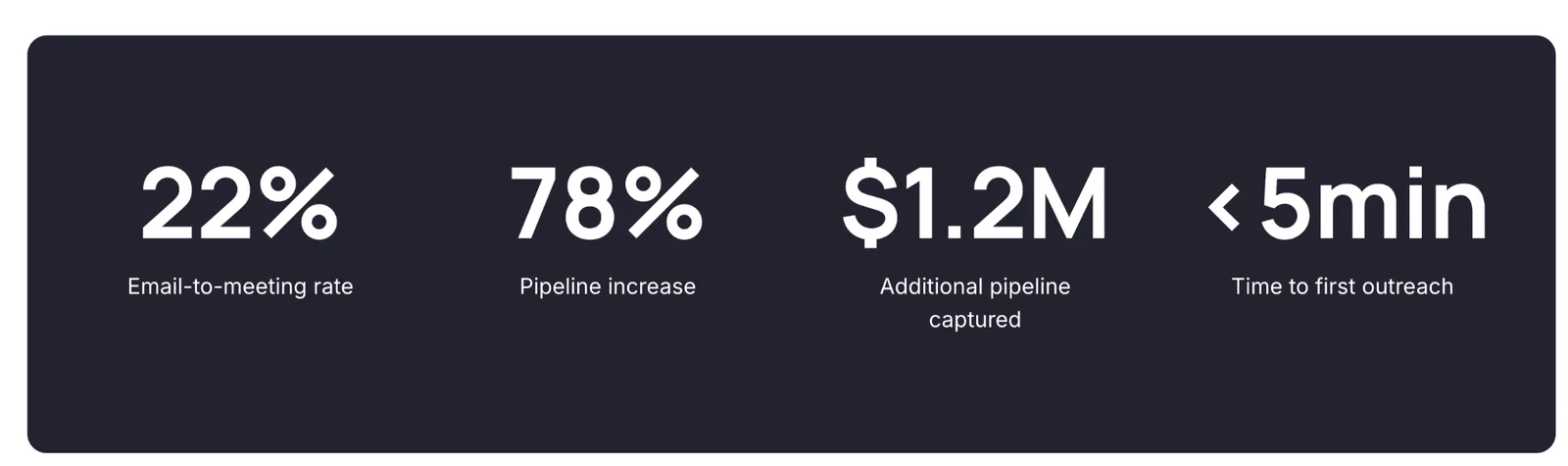
Swan is the AI GTM platform for B2B SaaS revenue teams. Companies like Machinery Partners and Elastic Path use Swan to automate outbound and generate pipeline, with Machinery Partners adding $1.2 million in pipeline within three months without hiring an SDR and Elastic Path automating 90% of outbound while reducing its sales stack from seven tools to Slack.
The Top 10 Unify GTM Alternatives
| Tool | Best for | Starting price | Free plan/trial |
|---|---|---|---|
| Swan | Full-funnel AI GTM execution | Starts at $100 for 625 credits | Free trial |
| Clay | Custom enrichment workflows | $185/month | Free plan |
| Apollo | Contact database and sequencing | $49/user/month | Free plan |
| 11x (Alice) | Autonomous outbound AI SDR | Approximately $3,000/month | Demo only |
| AiSDR | Mid-market AI SDR with published pricing | $900/month | Demo only |
| 6sense | Enterprise ABM and intent data | Approximately $25,000/year | Free plan |
| Common Room | Community and product signal aggregation | $1,700/month | Demo only |
| Warmly | Website visitor identification with orchestration | $700/month | Free plan |
| RB2B | Person-level visitor identification for US traffic | $79/month | Free plan |
| Default | Inbound routing and scheduling | $225/month plus seats | Demo only |
1. Swan

Best For: B2B SaaS and AI-native revenue teams that want to grow pipeline without hiring another SDR.
Swan is an AI GTM platform that turns buying signals into action. Your team sets the strategy, and Swan runs the play without waiting for a rep to notice an alert.
A visit to your pricing page can trigger personalized outreach based on the prospect’s account history. The same process can begin when a company raises funding or another relevant signal appears. Because Swan pulls context from the tools your team already uses, each action builds on what your team already knows about the account.
Plays are built in natural language, so your team can launch or adjust workflows without submitting engineering tickets or creating complicated automation maps.
Pricing: Credits based pricing. Starts at $100 for 625 credits.
Pros
- Executes across the full funnel, inbound and outbound in one platform
- Plays built in natural language, skipping engineering tickets and Zapier maps entirely
- Sits across CRM, Slack, LinkedIn, sequencers, and data providers so context compounds across every tool
- Institutional memory sticks around when reps leave, since every interaction gets logged
Cons
- Best suited to teams with a defined GTM motion rather than solo founders sending their first cold emails
2. Clay
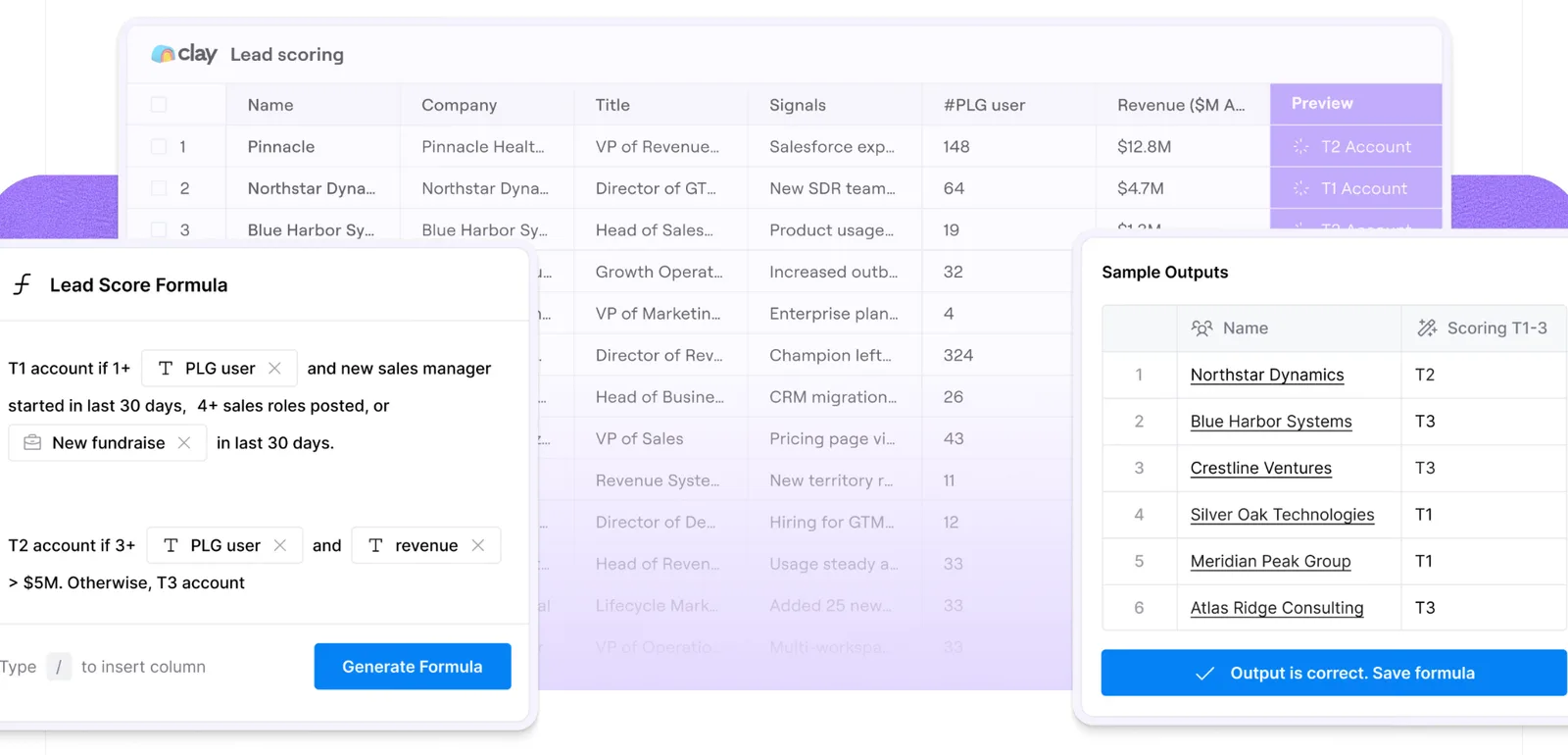
Best For: RevOps teams and GTM engineers with the technical experience to build and maintain custom workflows.
Clay is a data enrichment platform built for teams that want control over how prospect data moves through their GTM stack. You can pull records from more than 150 providers, waterfall across sources for better coverage, and run AI research on each row before sending the results to your CRM or sequencer.
While Clay gives you the building blocks, someone on your team still has to design every table and keep the system running. When that person leaves, the workflows often become harder to maintain.
Pricing: A free plan is available. Launch starts at $185/mo with 2,500 data credits, while Growth starts at $495/mo. Enterprise pricing is available for high-volume teams.
Pros
- Connects to more than 150 enrichment providers
- Gives teams full control through natural language and code
- Active community sharing templates and playbook ideas
- 2026 pricing update cut data costs by 50% to 90%
Cons
- Credits and Actions can burn faster than expected
- A team of 10 or more may spend $2,000 to $5,000+/mo before top-ups
- Steep learning curve for teams without an experienced Clay operator
- Still requires a CRM and sequencer, plus someone to maintain the workflows
3. Apollo.io
Best For: Startups and small sales teams that want the core outbound tools at an accessible per-seat price.
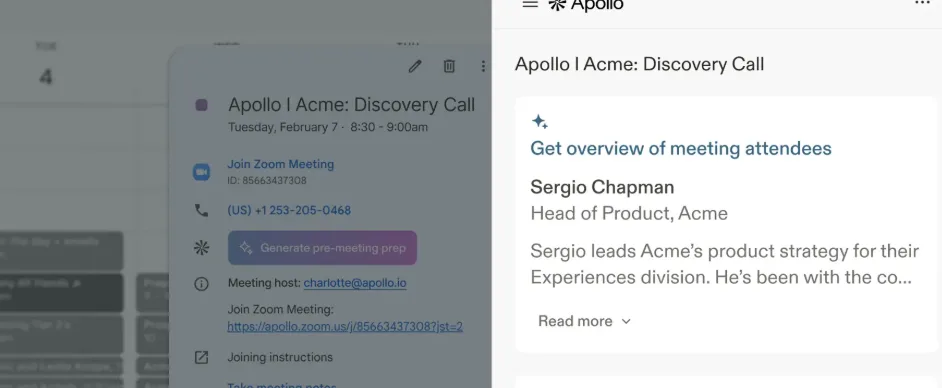
Apollo.io combines a database of more than 210 million contacts with email sequencing, a built-in dialer, and CRM sync. That gives newer outbound teams one place to find prospects and start reaching out without assembling several separate tools.
That said, Apollo covers a wide range of sales tasks, but teams may still need to research accounts and personalize outreach by hand. Data quality can also become less reliable in niche industries or outside the U.S., while heavier usage can push credit costs higher than expected.
Pricing: A free plan is available. Basic costs $49/user/mo, Professional costs $79/user/mo, and Organization costs $119/user/mo. Annual billing receives a discount.
Pros
- Large contact database with global coverage
- Combines prospecting and sequencing in one platform
- Free tier lets teams test the product before paying
- Simple per-seat pricing at the entry level
Cons
- Data accuracy can drop in niche industries and non-U.S. markets
- Credits burn quickly, and phone lookups cost eight times more than email
- Still requires manual research and personalization
- Offers less signal-driven execution than newer GTM platforms
4. 11x (Alice)
Best For: Enterprise companies and well-funded mid-market teams running high-volume cold outbound with a clear ideal customer profile.
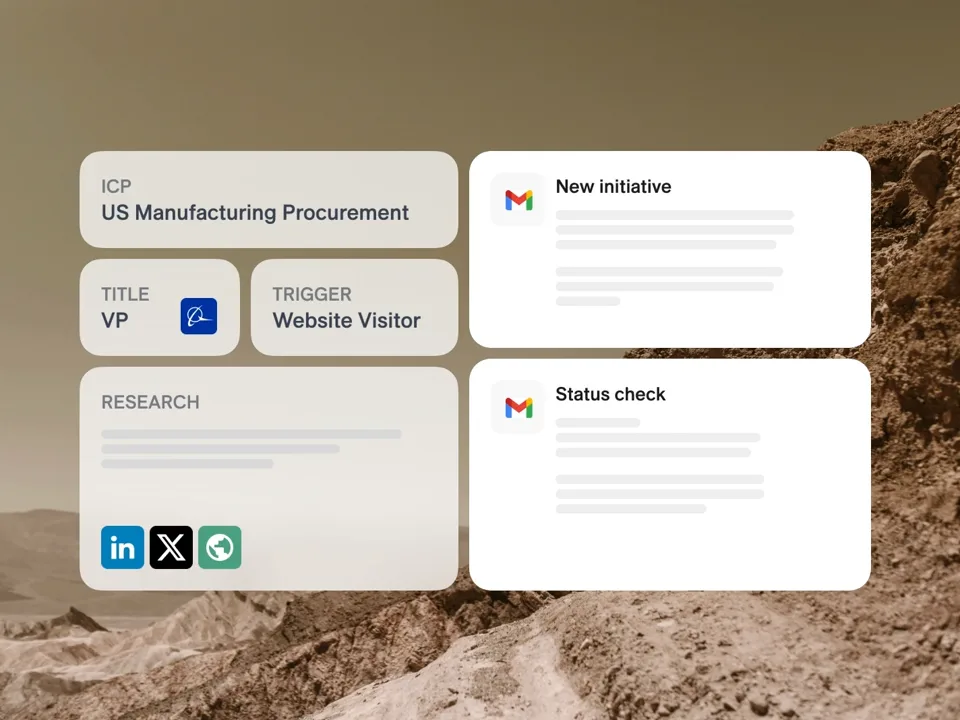
11x’s Alice is an AI SDR that handles outbound with very little input from your team. Give it a list of target accounts, and it researches prospects, sends outreach, and manages replies automatically.
That approach works best if your company already has a mature outbound motion and enough volume to justify the cost. Teams with smaller budgets may find the annual commitment hard to justify.
Alice is built for cold outbound, so you’ll still need separate tools for inbound leads and account growth. That can make the overall setup more expensive as your GTM motion expands.
Pricing: Growth starts at about $3,000/month ($36,000/year), billed annually. Pro and Enterprise plans require a custom quote. Third-party reports estimate first-year costs at around $50,000 to $60,000.
Pros
- Handles outbound from prospect research through reply management
- Can book meetings without adding more SDRs
- May cost less than hiring another SDR if your outbound volume is high
- Frequent product updates from a well-funded company
Cons
- Annual contract with no monthly option
- Separate tools needed for inbound leads and account growth
- AI-generated outreach may get fewer replies as more companies automate outbound
- No native website visitor identification
5. AiSDR
Best For: Small and mid-market teams that want an AI SDR without paying enterprise-level prices.
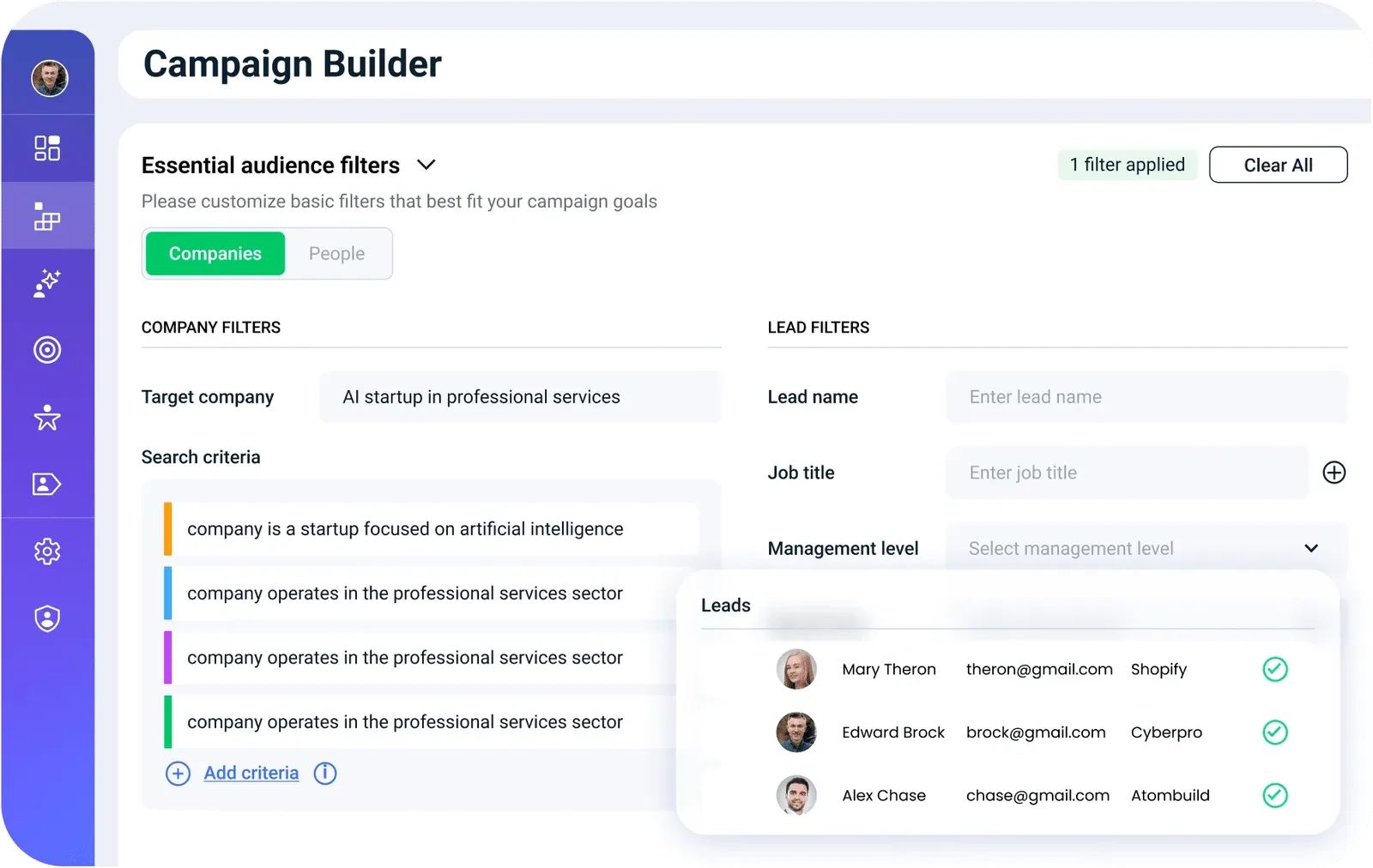
AiSDR is built for teams that want more automation without committing to a large annual contract. It uses data from more than 323 sources to personalize outreach and can manage full email sequences, including replies.
Its pricing is public, which makes it easier to compare with other AI SDR tools. Onboarding also includes help from a dedicated GTM engineer.
Compared with Unify, the main limit is scope. AiSDR focuses on outbound, so you may still need separate tools for inbound intent and account signals.
Pricing: Plans start at $900/month, billed quarterly. The plan includes 1,200 lead search credits and 1,200 AI messages each month. Email setup and 24/7 support are included.
Pros
- Public pricing without a long sales process
- Quarterly billing instead of an annual contract
- Average reply handling time of under 10 minutes
- Personalization based on current prospect data
Cons
- Inbound and account growth require separate tools
- Message quality may drop at higher volume without human review
- No built-in intent module for finding in-market accounts
- Limited native A/B testing
6. 6sense
Best For: Large ABM teams with at least 10 sales reps and a large budget for intent data.
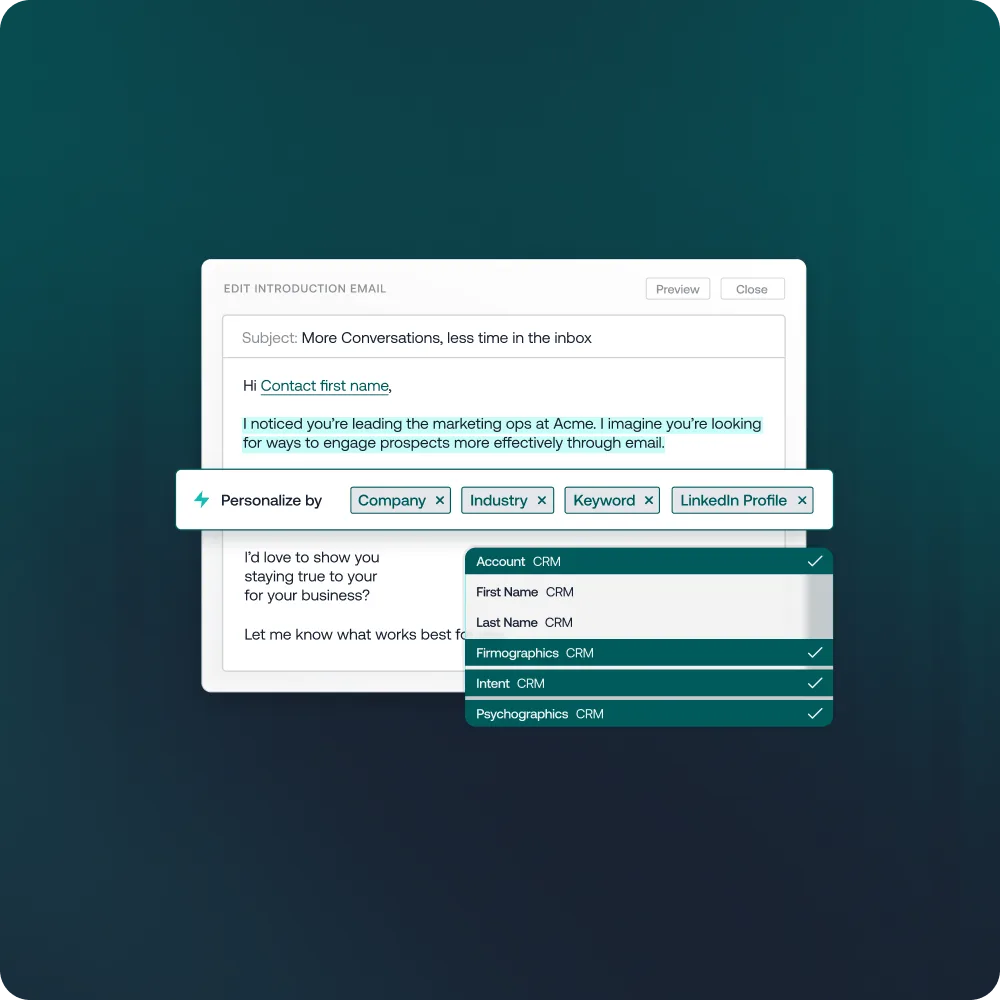
6sense is an enterprise ABM platform that helps teams find accounts that may be ready to buy. It uses AI to score each account by buying stage and pulls intent data from thousands of online sources.
For teams with a large ABM motion and dedicated RevOps, 6sense can make sense. Everywhere else, the price tag makes it hard to justify.
6sense also focuses more on finding opportunities than acting on them. When an account reaches the Decision stage, your sales team still needs another tool to contact the buyer and manage the outreach.
Pricing: A free plan includes 50 credits per month. Paid plans start at around $25,000 per year. Full ABM packages may cost $60,000 to more than $300,000 per year. Multi-year contracts are common.
Pros
- Wide coverage of third-party intent data
- AI scoring shows where accounts may be in the buying process
- Chrome extension helps reps look up accounts quickly
- Well known among large enterprise companies
Cons
- Pricing is too high for many small and mid-market teams
- G2 data puts the average time to see a return at about 11 months
- Setup can take time and may require a dedicated admin
- No built-in dialer or email sequencer
7. Common Room
Best For: Developer tools and product-led SaaS companies with active communities.
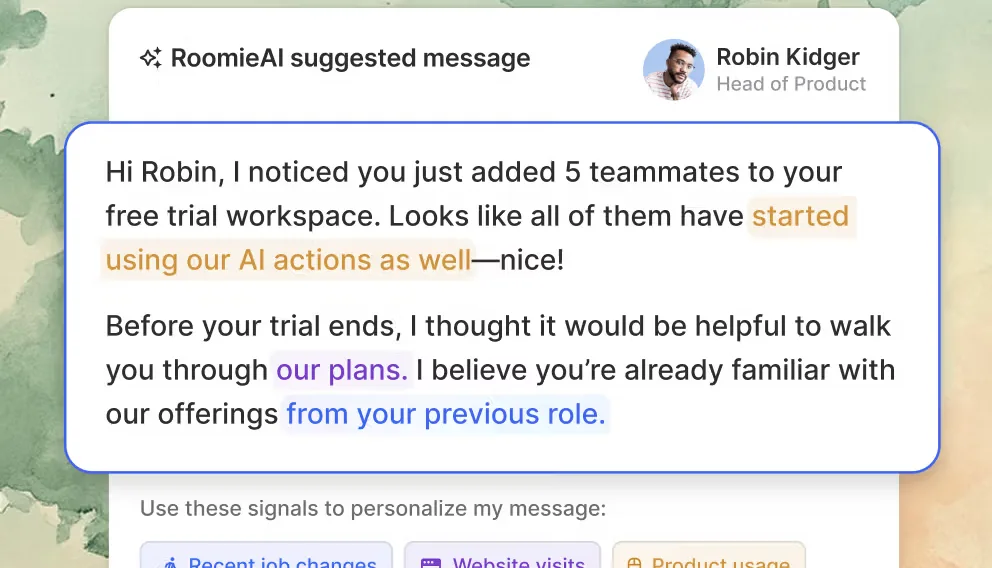
Common Room tracks buying signals from more than 40 sources, including Slack and GitHub. It helps your team spot interest before someone fills out a form or speaks with sales.
RoomieAI builds on those signals by researching prospects and drafting outreach. This makes the platform a strong fit when community activity plays a large role in how customers find and use your product.
For sales-led teams without an active community, though, the tool may not work as well. Many of the signals become less useful, which makes the $20,000-plus annual cost harder to justify.
Pricing: Essential starts at about $1,700/month, or $20,400 per year, and includes 35,000 contacts. Advanced and Enterprise plans require a custom quote. Billing is annual.
Pros
- Strong coverage of community buying signals
- Person360 connects community activity with CRM data
- MCP server available on every plan
- Strong GitHub and Slack integrations
Cons
- Product usage signals may cost extra
- No monthly billing option
- High starting price without an active community
- Less useful for sales-led outbound teams
8. Warmly
Best For: Inbound-heavy B2B SaaS teams that want to respond to website visitors faster.
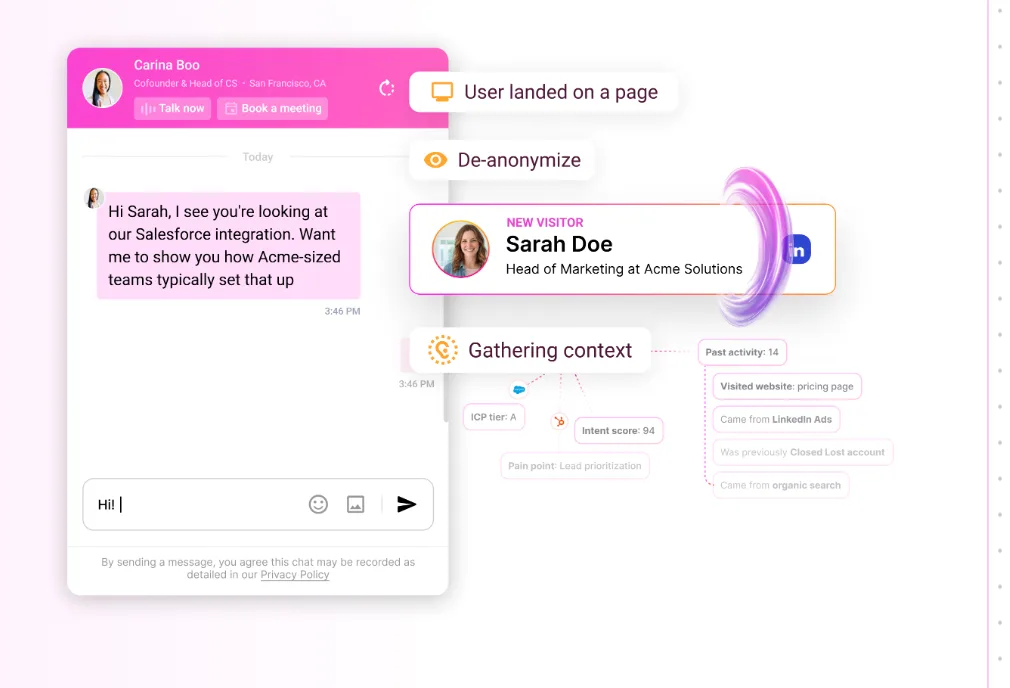
Warmly identifies anonymous companies visiting your website and can trigger an action as soon as they show interest. For example, a visit to your pricing page can prompt a Slack alert or start an AI chat.
This makes Warmly useful for teams that rely heavily on inbound demand. Sales reps can respond while the account is still active instead of waiting for a form submission.
That said, coverage tends to be the friction point. Company-level matches land around 65%, and person-level identification drops to 15-25%. Warmly also only tracks visitors who reach your site, so it cannot see accounts researching other vendors.
Pricing: A free plan covers up to 500 visitors per month. The Startup plan starts at $700/month for companies with up to $2 million in annual revenue. The Data Agent plan costs around $900/month. Paid plans require an annual contract.
Pros
- Free plan available for testing
- Real-time alerts and automated follow-up
- AI chatbot for speaking with identified visitors
- Discounts available across more than 25 partner tools
Cons
- Outbound work requires another tool
- Match rates trail dedicated visitor identification platforms
- Paid plans require an annual contract
- Per-seat pricing becomes more expensive as your team grows
9. RB2B
Best For: U.S.-focused B2B teams that want an affordable way to identify website visitors.
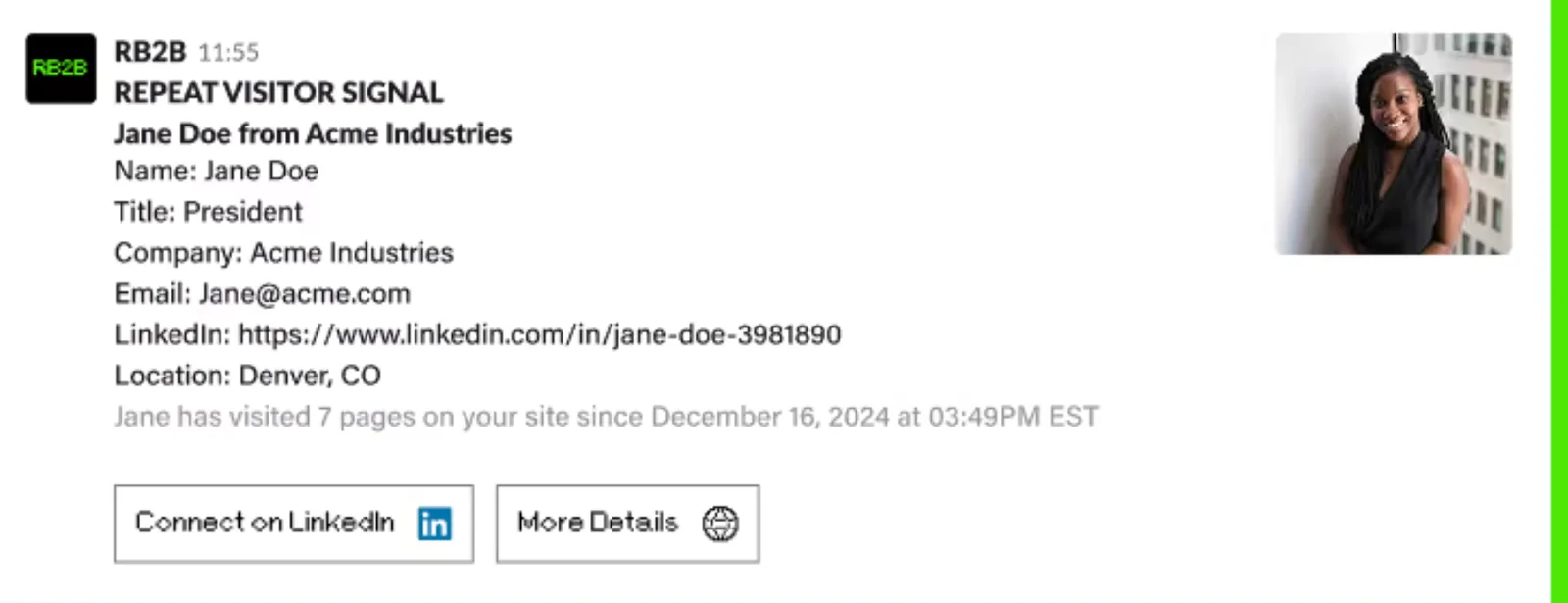
RB2B identifies US website visitors at the person level, matching them to LinkedIn profiles in real time. When someone from a target account hits your pricing page, RB2B pushes their name, title, and LinkedIn URL to Slack.
The free plan makes the platform easy to test. Setup is quick, and the signal can help sales teams follow up while interest is still fresh.
RB2B only handles identification, though. You still need other tools for enrichment and outreach. Coverage is also limited to U.S. traffic, and most visitors will remain anonymous.
Pricing: The free plan includes 150 credits per month. Starter costs $79/month for 300 credits, Pro costs $149/month for 600 credits and business emails, and Pro+ costs $199/month.
Pros
- Free plan makes testing easy
- Person-level identification for some U.S. visitors
- Quick setup with Slack alerts
- Integrates with HubSpot and Salesforce
Cons
- No matches for visitors outside the U.S.
- Enrichment and follow-up require separate tools
- Match rates may range from 5% to 20%
- Overage costs can rise quickly on busy websites
10. Default
Best For: RevOps and demand gen teams that need faster inbound lead routing.
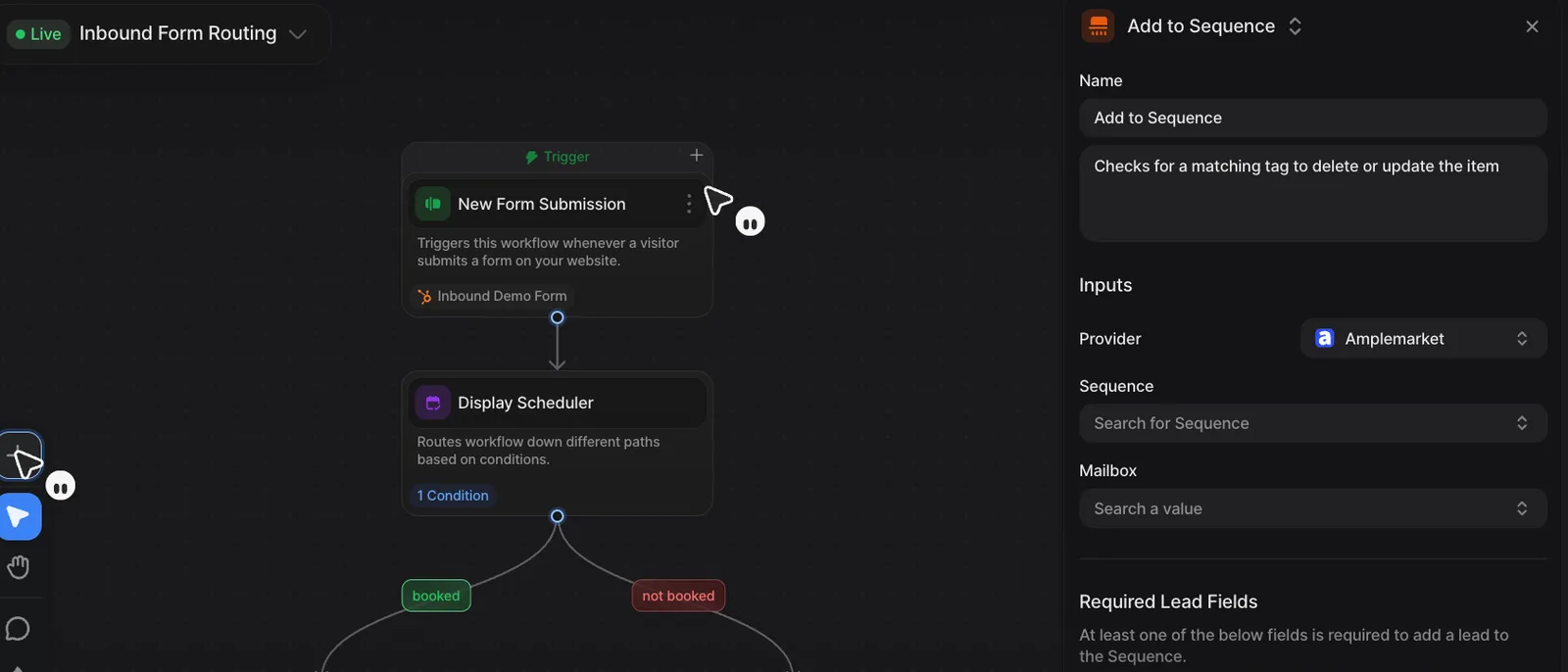
Default brings forms, scheduling, and lead routing into one workflow. Its drag-and-drop builder helps teams qualify inbound leads and send them to the right rep without engineering support.
The platform only handles inbound workflows, and enrichment quality depends on the data provider you connect.
Pricing: The platform fee ranges from $225 to more than $1,500 per month based on inbound volume. Seats cost $45/user/mo. Teams can bundle two products under one platform fee.
Pros
- Built for fast inbound routing
- Drag-and-drop workflow builder
- Connects with Salesforce and HubSpot
- Brings forms and lead handoffs into one platform
Cons
- No outbound execution
- Platform fees start before seat costs
- Enrichment quality depends on the connected provider
- Per-seat costs rise as the team grows
Turn Signals Into Pipeline with Swan
Most GTM tools help you find the signal. Your team still has to research the account, choose the next step, and run the outreach.
Swan handles that work across your stack. It keeps the context in place and turns signals into action without the handoff.
Your team sets the strategy, and Swan runs the plays.