
Playbooks· 11 min read
The 10 Best AiSDR Alternatives for B2B Teams in 2026
The 10 best AiSDR alternatives for 2026, ranked and compared. See real pricing, honest pros and cons, and the right AI SDR platform for your GTM motion.
swan teamThe team at Swan ·
Quick Summary
AiSDR is a solid choice for autonomous outreach across email and LinkedIn, but its outbound-only focus can feel limiting when you need phone coverage or inbound routing. This guide compares 10 alternatives by pricing and GTM coverage, with our top three below:
| Tool | Best For | Starting Price |
|---|---|---|
| Swan | Full-funnel AI GTM execution across inbound and outbound | Free trial, then credits-based pricing. Starts at $100 for 625 credits. |
| 11x (Alice) | Enterprise autonomous AI SDR | ~$36K/year |
| Salesforge (Agent Frank) | Budget-friendly autonomous AI SDR | $499/month |
Why Teams Are Shopping for AiSDR Alternatives
AiSDR works well when your GTM motion revolves around cold email and LinkedIn. As your team grows, though, phone outreach, inbound routing, and CRM workflows often become part of the day-to-day work, leaving you to fill the gaps with additional tools.
Costs can add up too. Follow-ups use monthly credits, so 1,200 AI messages reach fewer new prospects than the number suggests. There is also no free trial, which means getting started requires a $2,700 quarterly commitment.
This guide compares 10 AiSDR alternatives for teams that need wider coverage, a different pricing model, or both.
Why Listen to Us
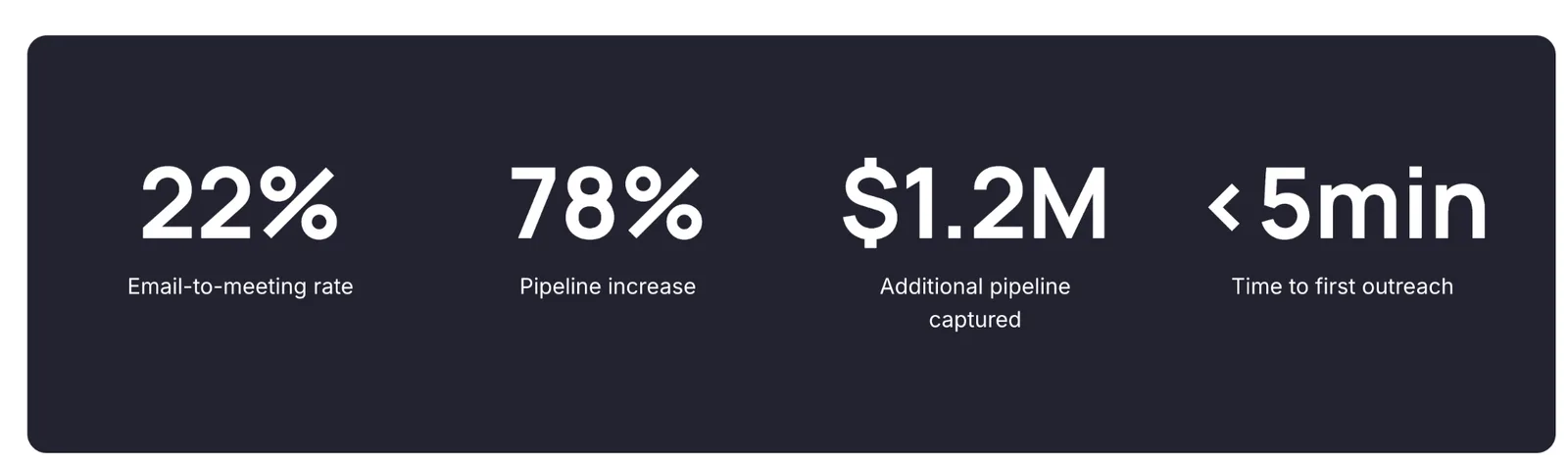
Swan is an AI GTM engineer used by B2B SaaS teams, including Elastic Path and Machinery Partners. With Swan, Elastic Path automated 90% of outbound, and Machinery Partners generated $1.2 million in pipeline in just three months. We’ve seen firsthand what works well for AI-powered outbound and what teams often outgrow.
The 10 Best AiSDR Alternatives
| Tool | Best For | Starting Price |
|---|---|---|
| Swan | Full-funnel AI GTM execution across inbound and outbound | Free trial, then credits-based pricing. Starts at $100 for 625 credits. |
| 11x (Alice) | Enterprise autonomous AI SDR | ~$36K/year |
| Salesforge (Agent Frank) | Budget-friendly autonomous AI SDR | $499/month |
1. Swan
Best For: B2B SaaS and AI-native revenue teams with 30 to 500 employees that want full-funnel automation, not just cold outbound.
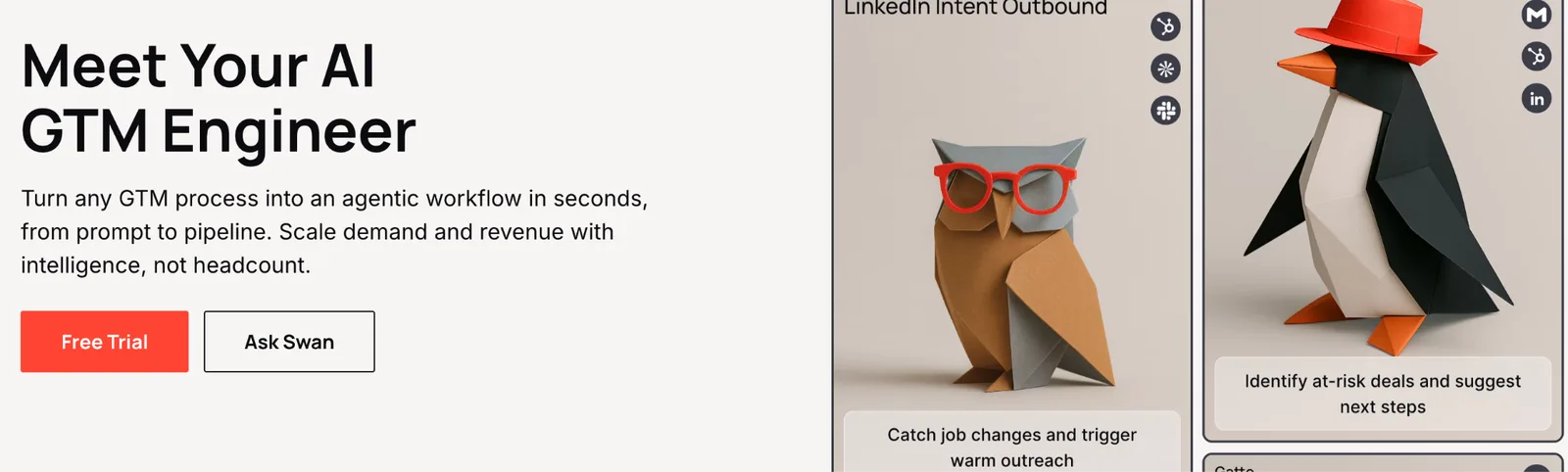
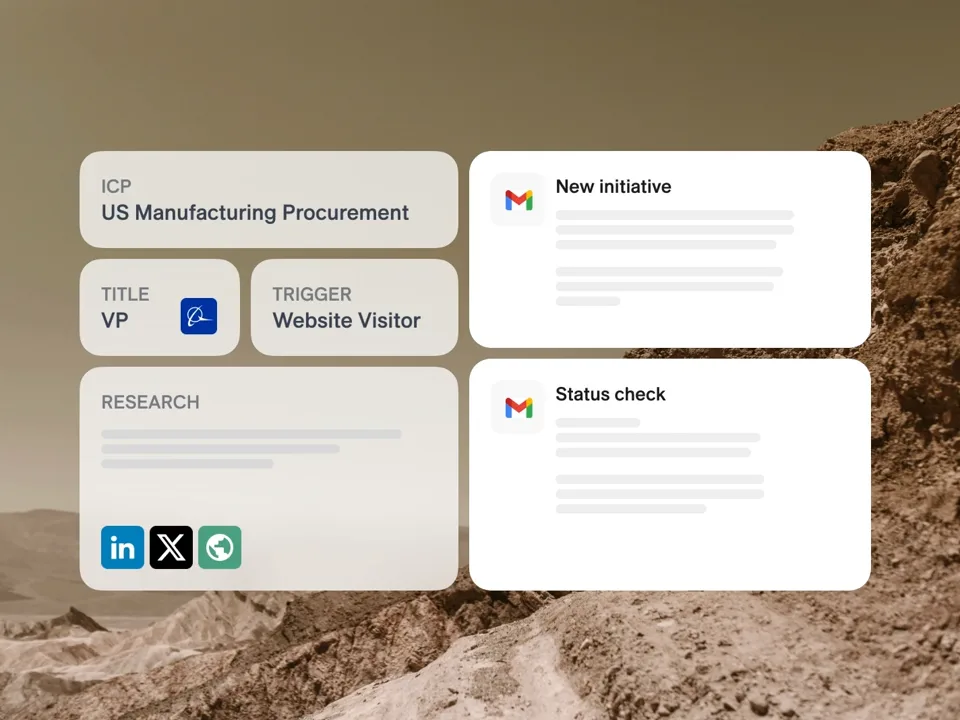
Swan is an AI GTM engineer that monitors signals across your stack. It researches each account, decides what should happen next, and runs the play automatically.
That scope gives revenue teams a clearer path from signal to action. A site visit can trigger account research and personalized outreach. New leads can be routed without waiting for someone to notice them.
As every interaction is logged, your team keeps the full account history even when someone changes roles or leaves the company. GTM teams can also build new plays in natural language, so ideas move from discussion to execution in minutes.
Pricing: Free trial, then credits based pricing. Starts at $100 for 625 credits.
Pros
- Runs inbound and outbound plays from one system
- Acts on signals without waiting for a rep to notice them
- Lets GTM teams build workflows in natural language
- Connects with your CRM, Slack, LinkedIn, and sequencer
- Keeps account context available when ownership changes
- Reduces manual research and CRM updates
- Supports the whole revenue team, not just outbound reps
- Helps teams grow pipeline without adding SDR headcount
Cons
- Newer entrant than 11x or Artisan in the AI SDR space
- Costs more than a pure cold email tool if that’s your only need
2. 11x (Alice)
Best For: Enterprise teams and well-funded mid-market companies looking to reduce SDR headcount.
11x takes a broader approach than AiSDR with Alice, an AI SDR built to handle outbound with minimal day-to-day involvement from your team. The company also offers Julian for inbound voice and chat, although it’s sold as a separate product.
The platform is designed for companies making a larger investment in AI-driven sales. Growth plans start at $36,000 per year, and implementation can push first-year costs into the $50,000 to $60,000 range. That can make sense if you’re replacing one or more SDRs, but it’s often difficult to justify for smaller teams with lower outbound volume.
Pricing: Growth starts at $36,000 per year, billed annually. Pro and Enterprise plans require a custom quote.
Pros
- Automates outbound with minimal day-to-day oversight
- Covers email and LinkedIn out of the box
- Julian extends the platform with inbound voice and chat
- Frequent product updates backed by a well-funded company
Cons
- High annual commitment puts it out of reach for many smaller teams
- Inbound capabilities require a separate product and additional cost
3. Artisan (Ava)
Best For: SaaS founders and mid-market teams that want to automate outbound prospecting.
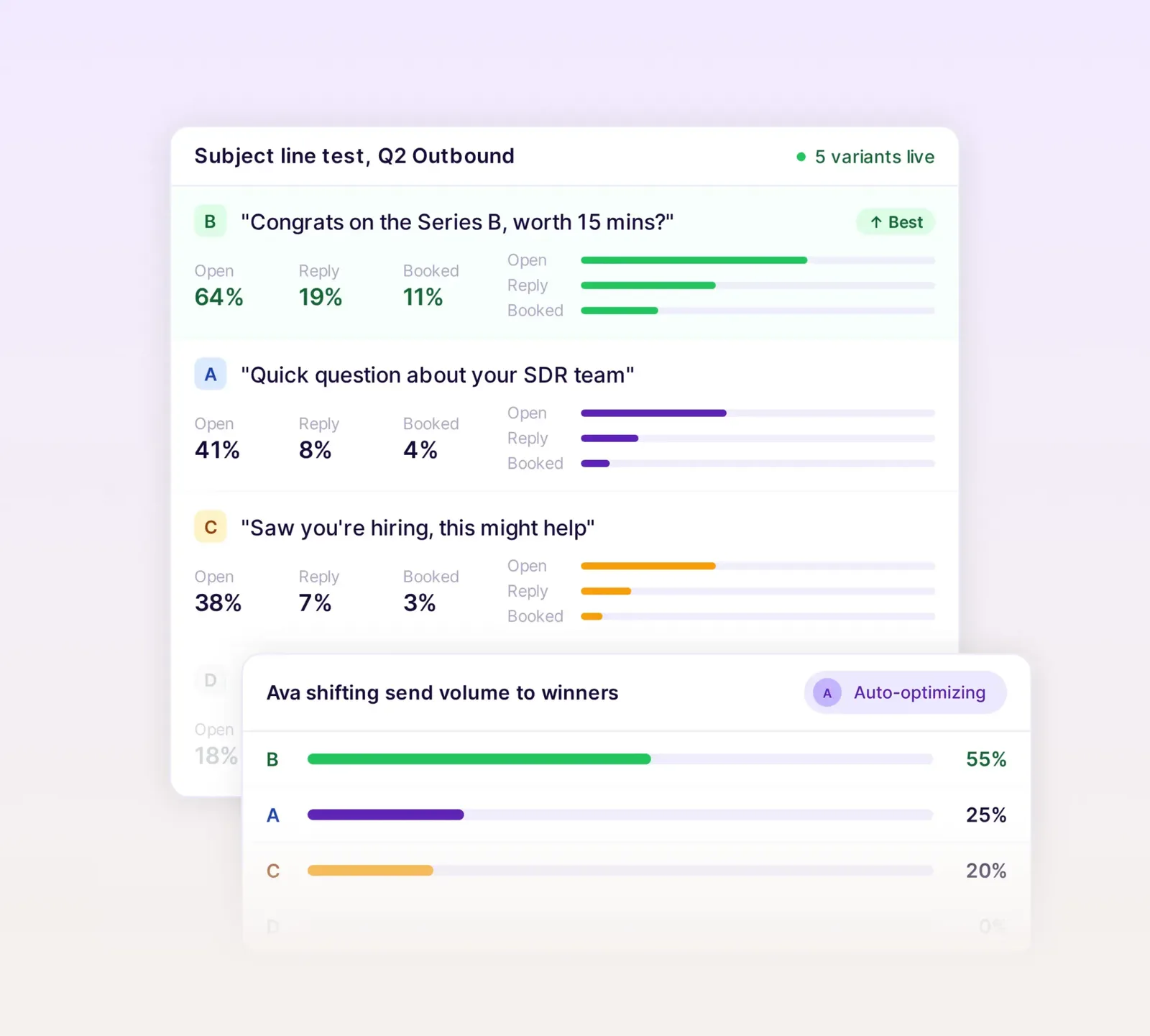
Artisan’s Ava combines prospecting with outreach in one platform. It gives teams access to a database of more than 300 million contacts, then drafts personalized email and LinkedIn sequences with automated follow-ups. Teams can choose between autopilot and copilot modes depending on how much oversight they want.
The platform is built for companies that want AI to handle much of the BDR workload. Its built-in prospect database removes the need for a separate data provider, although teams that rely on phone outreach will still need another solution.
Pricing: Plans start at $600 per month ($7,200 per year), billed annually. Higher-volume plans and Enterprise pricing are available by quote.
Pros
- Includes a database of more than 300 million contacts
- Combines prospecting and outreach in one platform
- Lets teams choose between autopilot and copilot modes
- Clean interface that’s easy to navigate
- Frequent product updates
Cons
- Higher-tier pricing isn’t publicly available
- Phone outreach requires a separate tool
4. Salesforge (Agent Frank)
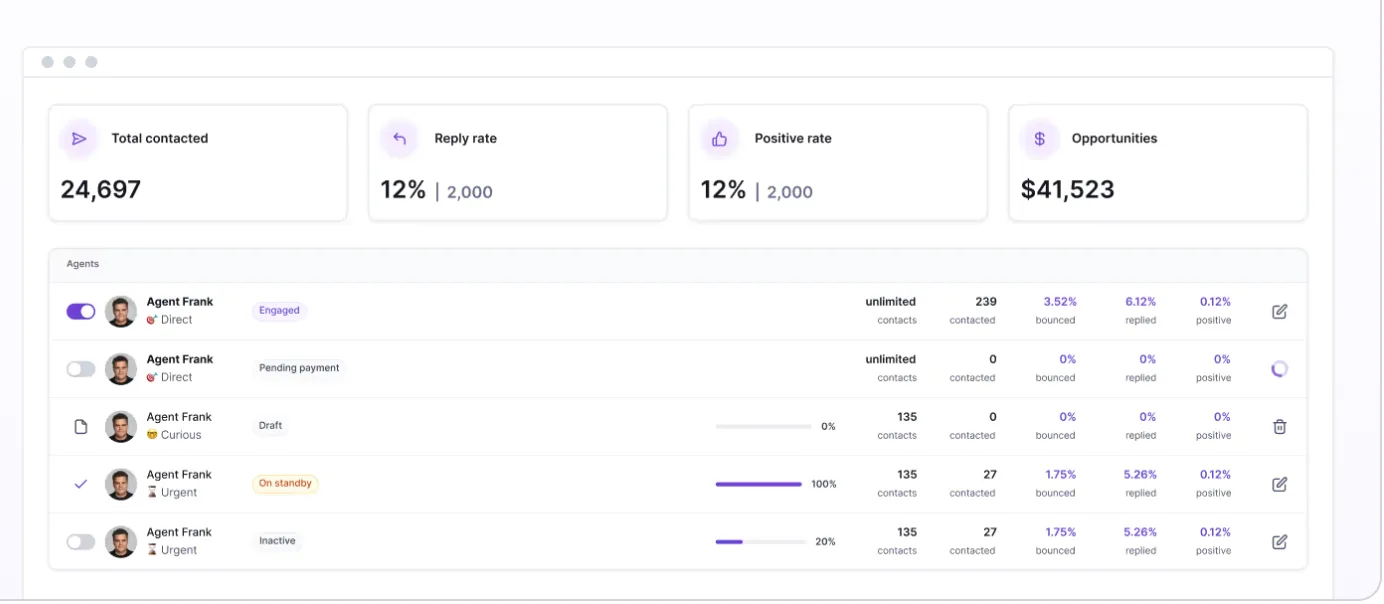
Best For: SMBs and growth-stage B2B teams that want affordable AI-powered outbound.
Salesforge’s Agent Frank focuses on high-volume cold email without the enterprise price tag. It includes a database of more than 500 million contacts, drafts personalized emails, and automates follow-ups. Teams can let Frank run independently or review messages before they go out.
Support for more than 20 languages also makes it a good fit for international outbound. Teams looking for phone outreach or intent-based automation will still need additional tools.
Pricing: $499/mo on annual billing or $599/mo quarterly. The plan covers 1,000 active contacts and 6,000 to 7,500 emails per month. Email infrastructure through Mailforge or Warmforge is sold separately from $33/mo.
Pros
- One of the most affordable autonomous AI SDRs on this list
- 500M+ contact database included in the base subscription
- 20+ languages supported for international outbound
- Two operating modes for adjustable oversight
Cons
- Email-only, so LinkedIn and phone need separate tools
- Lacks buying signal intelligence, so Frank writes to every ICP match regardless of intent
- No free trial available
- Roughly a 0.6 SDR equivalent per independent testing, not a full rep replacement
5. Reply.io (Jason AI)
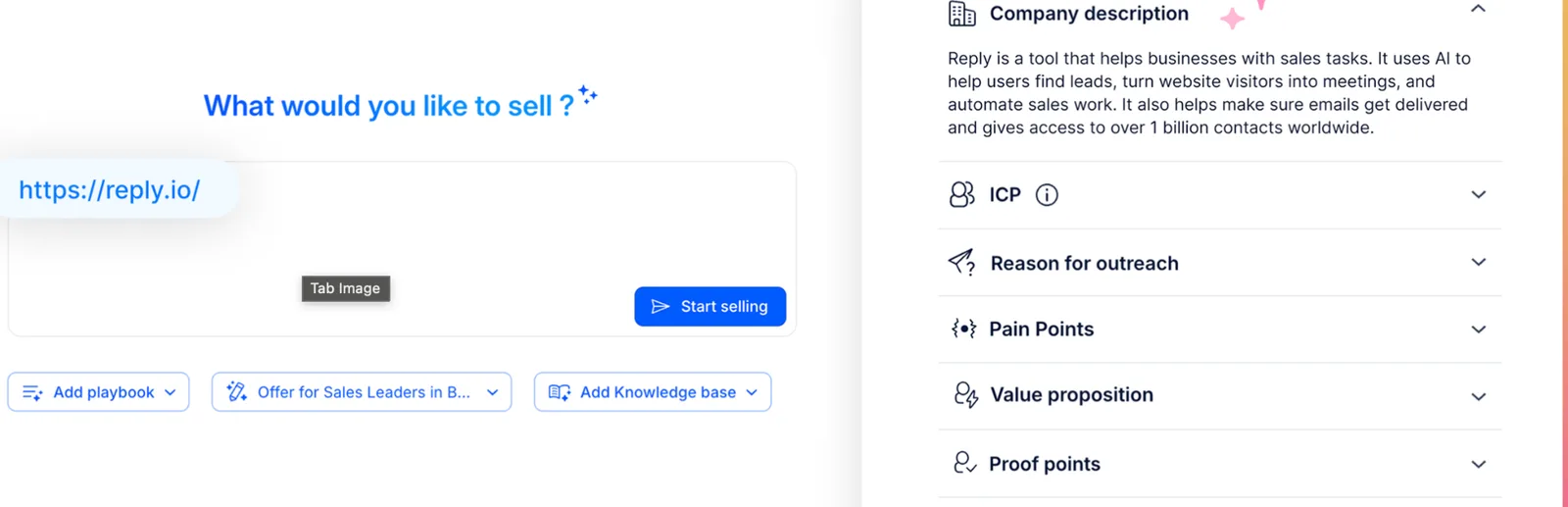
Best For: SDR teams that want AI features inside a multichannel sales engagement platform.
Reply.io combines a traditional sales engagement platform with Jason AI, giving existing customers an easy way to add AI-powered prospecting and outreach. It supports email, LinkedIn, calls, SMS, and WhatsApp from the same sequence, making it one of the strongest options for teams that rely on multiple channels.
Pricing: Email Volume starts at $49/user/mo. Multichannel starts at $89/user/mo. Jason AI Starter adds a $500/mo minimum on top. A 14-day free trial is included.
Pros
- Supports email, LinkedIn, calls, SMS, and WhatsApp
- Jason AI runs inside the same platform, with no separate integration required
- Deep bidirectional CRM sync with Salesforce and HubSpot
- 14-day free trial without a credit card
Cons
- Real cost lands closer to $187/seat once LinkedIn ($69) and calling ($29) add-ons stack up
- Jason AI Growth adds $1,500 to $3,000/mo on top of base seat fees
- UI feels older than newer AI-native platforms
6. Regie.ai
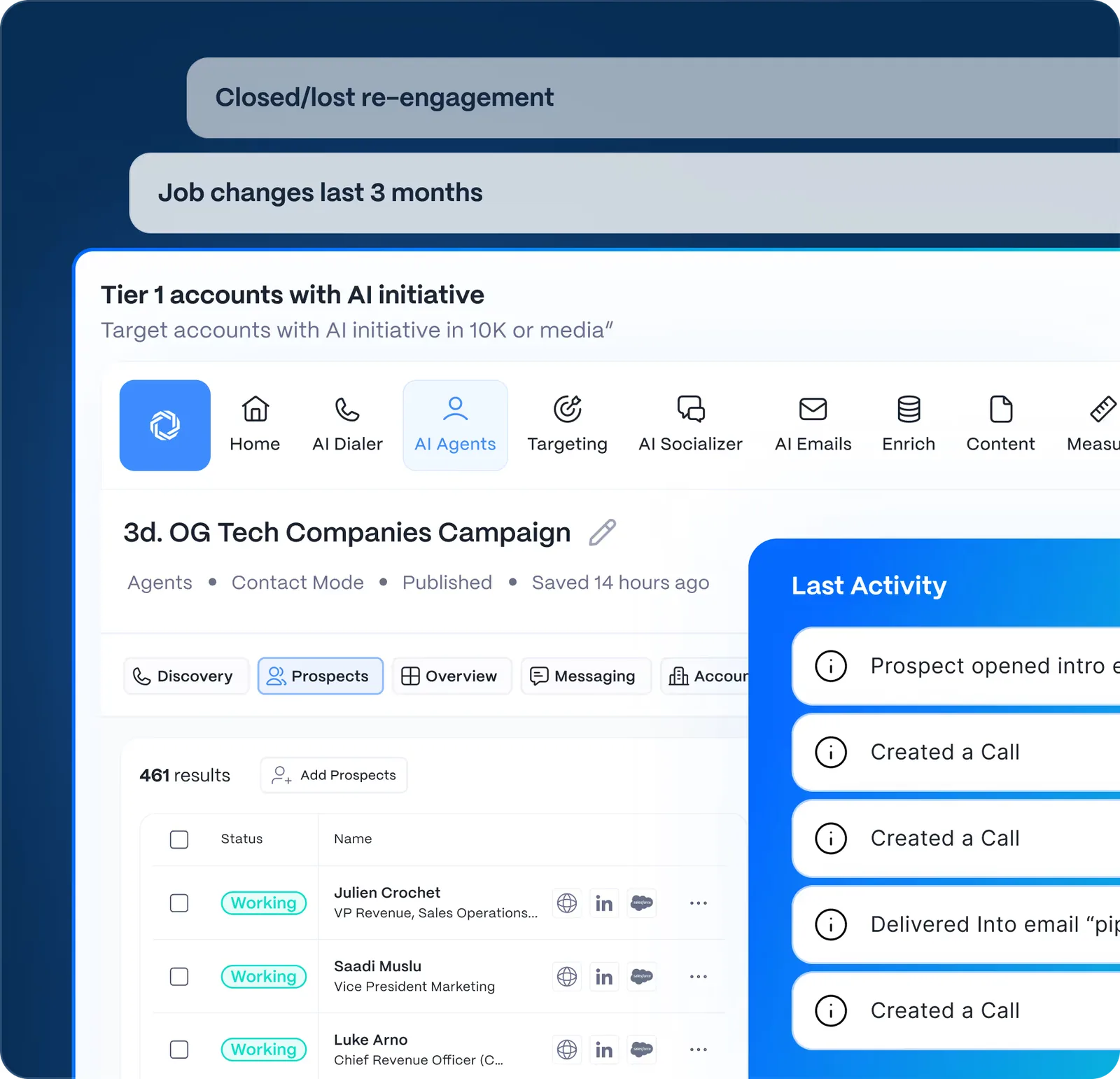
Best For: Mid-market and enterprise sales teams with established SDR functions.
Regie.ai combines AI-powered sequencing with multichannel outreach, including email, LinkedIn, and phone. Built-in intent prioritization helps reps focus on higher-value accounts, making it a strong fit for larger outbound teams.
Pricing: AI SEP starts at $180/user/mo with a 10-seat annual minimum. Force Multiplier Rep costs $499/user/mo. RegieOne enterprise pricing is custom. A free per-rep tier is available for testing.
Pros
- Real multichannel coverage, including email, LinkedIn, and phone
- Nine-line parallel dialer built into higher tiers
- Autonomous sequencing agents with intent-based prioritization
- 220M+ contact database included at the RegieOne tier
Cons
- 10-seat minimum locks out smaller teams
- $21,600 annual entry price with an annual contract required
- Dialer costs an extra $20/rep/mo on the entry tier
- Add-on structure needs a sales conversation to price out
7. Amplemarket
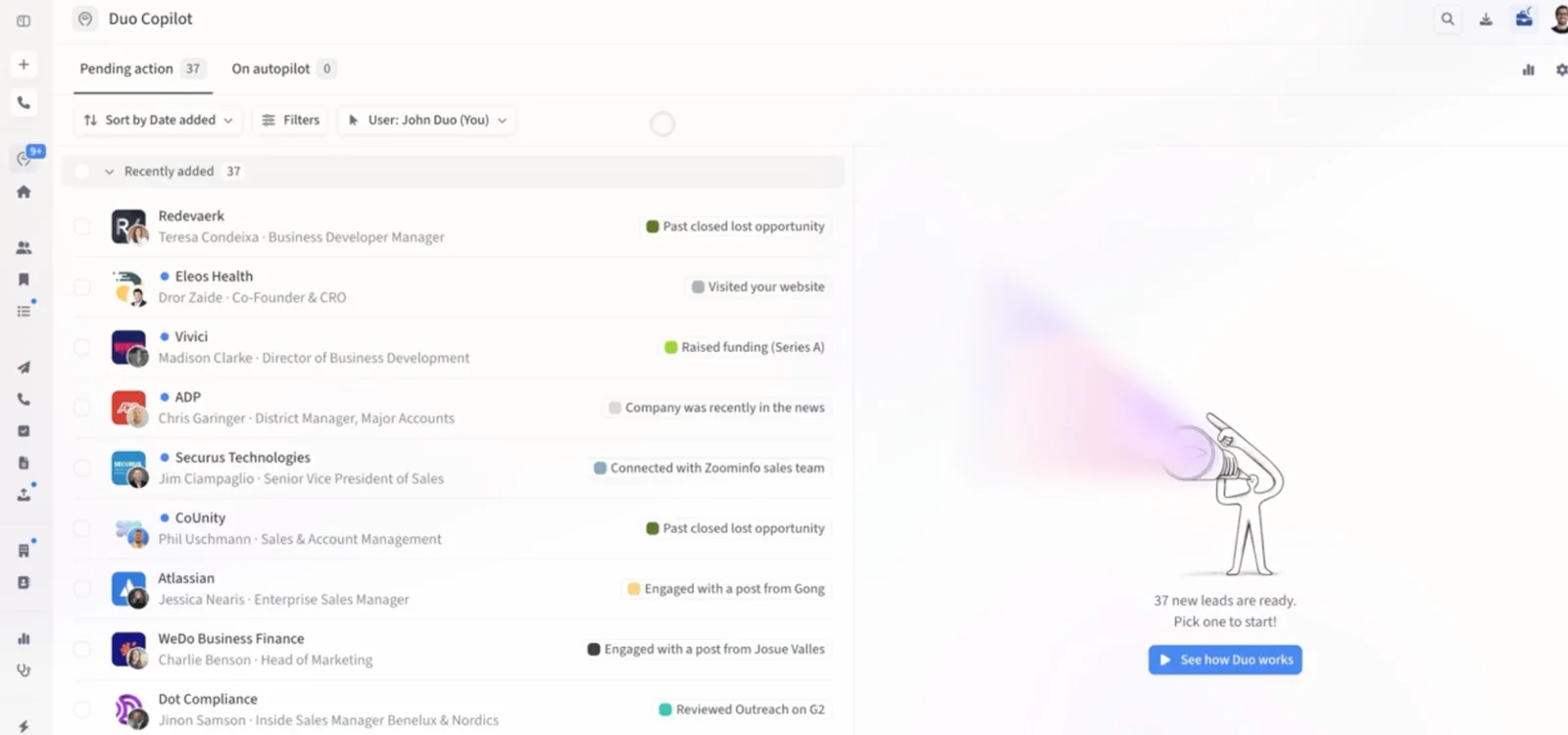
Best For: Mid-market B2B teams that want an outbound platform with AI built in.
Amplemarket combines prospect data, multichannel sequencing, and AI in one platform. Its Duo AI copilot helps identify buying signals, researches accounts, and drafts personalized outreach, making it a good fit for teams that want more automation without replacing their existing sales process. Recent additions like WhatsApp and iMessage also give teams more ways to reach prospects.
The platform is strongest for outbound teams that want one place to manage prospecting and engagement. Companies selling into niche industries may want to evaluate the contact database first, since data coverage can vary by market.
Pricing: Startup starts at $600/mo for two users and 30,000 contacts. Growth is quote-only, with third-party reports putting it at $2,000 to $5,000/mo. Elite is designed for enterprise teams.
Pros
- Data, sequencing, warmup, and AI in one login
- Duo copilot covers signal detection and sequence drafting
- WhatsApp and iMessage recently added to the channel mix
- 200M+ verified contacts with weekly refreshes
Cons
- Annual-only billing across every plan
- Growth and Elite pricing gated behind a sales call
- Deliverability issues flagged in some G2 reviews
- Self-serve trial only available on the entry tier
8. Apollo.io
Best For: Startups and small sales teams that want an affordable outbound platform.
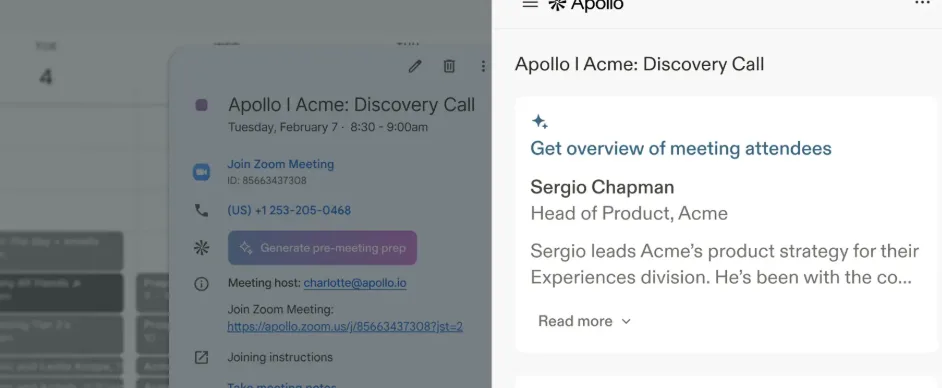
Apollo.io combines a large B2B contact database with email sequencing, a built-in dialer, and CRM integrations. It gives sales teams the tools to find prospects and launch outbound campaigns from one platform, which is why it’s often one of the first tools growing teams adopt.
The platform is much less hands-off than AI SDRs like AiSDR. Reps still build lists, adjust sequences, and manage most of the workflow themselves, making Apollo a better fit for teams that want flexibility over full automation.
Pricing: A free plan is available. Basic costs $49/user/mo, Professional costs $79/user/mo, and Organization costs $119/user/mo. Annual billing receives a discount.
Pros
- Free tier lets teams pilot without spending
- Contact database and sequencer share one login
- Per-seat pricing keeps entry accessible
- Broad integration ecosystem across popular CRMs
Cons
- Reps run outbound manually, with no autonomous agent included
- Credits mount quickly, and phone lookups cost eight times more than email
- Data accuracy drops for niche verticals and non-US markets
- Feature depth is thinner than category leaders in each area
9. Instantly
Best For: Agencies and outbound teams that rely heavily on cold email.
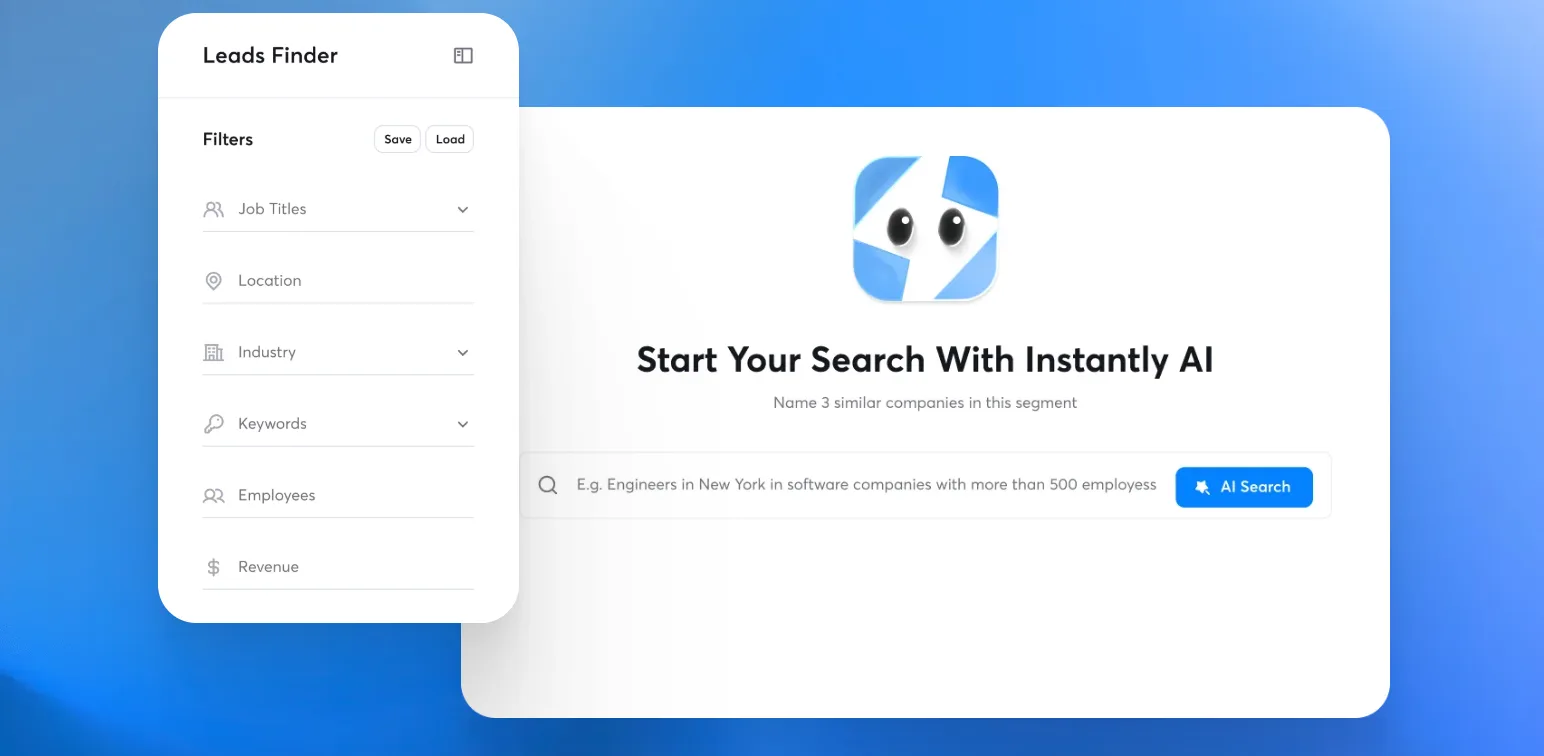
Instantly is built for high-volume email outreach, with more than 40,000 teams using the platform. Its newer AI agent can source prospects from Instantly’s database and automate email campaigns, while unlimited sending accounts and built-in warmup help teams scale without paying for separate deliverability tools.
The platform is still centered on email, which helps keep pricing low. Teams that need deeper AI automation across LinkedIn, phone, or inbound workflows may outgrow it as their GTM motion expands.
Pricing: Growth starts at $37.60/mo with annual billing. Hypergrowth costs $77.60/mo, while Light Speed costs $286.30/mo. Instantly Credits, CRM, and Inbox Placement are priced separately. A 14-day free trial is available.
Pros
- One of the cheapest entry points on this list
- Unlimited email accounts included on every plan
- Free warmup, with no separate warmup subscription needed
- 14-day free trial without a credit card
Cons
- AI agents are newer and less mature than dedicated AI SDR platforms
- Real cost climbs fast once add-ons stack up
- Weaker LinkedIn and multichannel coverage than Reply.io
- Data quality is thinner than Apollo, ZoomInfo, or Clay
10. Clay
Best For: RevOps teams and GTM engineers that want to build custom AI-powered outbound workflows.
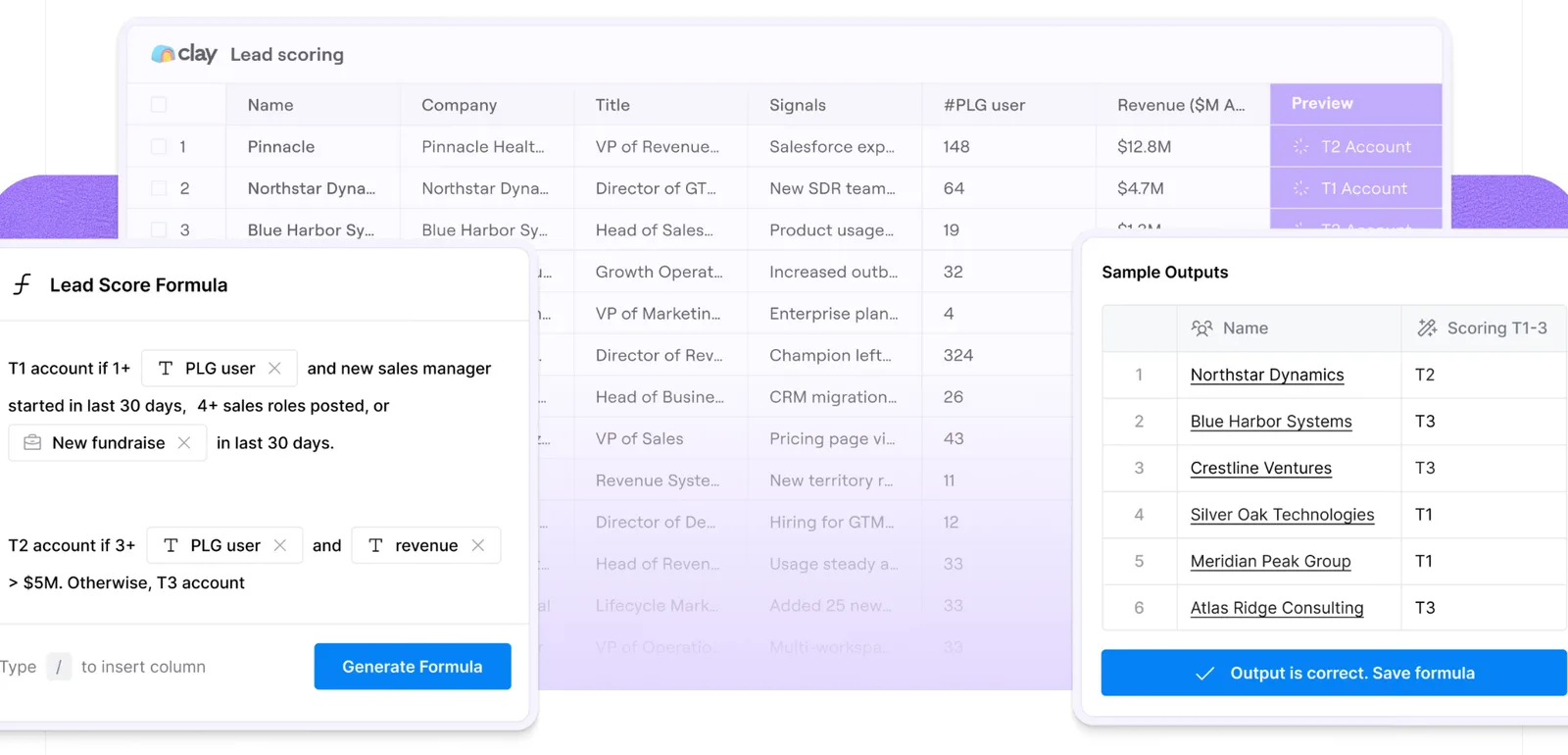
Clay gives teams the building blocks to create their own AI SDR. Sculptor lets you build workflows in natural language, while Claygent researches prospects and accounts using AI. Behind the scenes, Clay connects to more than 150 enrichment providers, making it one of the most flexible platforms for custom outbound.
That flexibility comes with more responsibility. You’re building the system yourself, so someone has to design every table and keep it running. When your Clay power user leaves, the whole thing usually goes with them.
Pricing: A free plan is available. Launch starts at $185/mo with 2,500 data credits, while Growth starts at $495/mo. Enterprise is available for high-volume teams.
Pros
- Deepest enrichment marketplace, with 150+ providers in one tool
- Natural language workflow building through Sculptor
- Active community sharing templates and playbook ideas
- 2026 pricing update cut data costs by 50% to 90%
Cons
- You’re building the AI SDR yourself, not buying one off the shelf
- Credits and Actions burn faster than most teams expect
- Steep learning curve if nobody on the team has built Clay tables before
- Real budget for a team of 10 or more runs $2,000 to $5,000+/mo before top-ups
Ready to Move Past Outbound-Only?
AI SDRs automate cold outreach, which is only one part of your GTM motion. Swan takes over the work that happens before and after the first email, so your team can spend less time managing tools and more time building pipeline.
With Swan, you can:
- Turn buying signals into action automatically
- Run inbound and outbound plays from one platform
- Keep account context in one place as your team grows
- Build new GTM plays in natural language without engineering support